The impact of cooking classes on food-related preferences, attitudes, and behaviors of school-aged children: a systematic review of the evidence, 2003-2014
- PMID: 25376015
- PMCID: PMC4222785
- DOI: 10.5888/pcd11.140267
The impact of cooking classes on food-related preferences, attitudes, and behaviors of school-aged children: a systematic review of the evidence, 2003-2014
Abstract
Introduction: Cooking programs have been used to promote healthful eating among people of all ages. This review assesses the evidence on childhood cooking programs and their association with changes in food-related preferences, attitudes, and behaviors of school-aged children.
Methods: We systematically searched PubMed, Ovid-Medline, and CINAHL (Cumulative Index to Nursing and Allied Health Literature) databases. We included primary research articles that involved cooking education programs for children and searched reference lists for eligible articles. Studies considered for review contained a hands-on cooking intervention; had participants aged 5 to 12 years; were published in a peer-reviewed journal on or after January 1, 2003; and were written in English. We used the Effective Public Health Practice Project Quality Assessment Tool for Quantitative Studies to rate the strength of each article and assess bias. The following information was extracted from each study: study design, sample size, location, duration, intervention components, data collection methods, and outcomes.
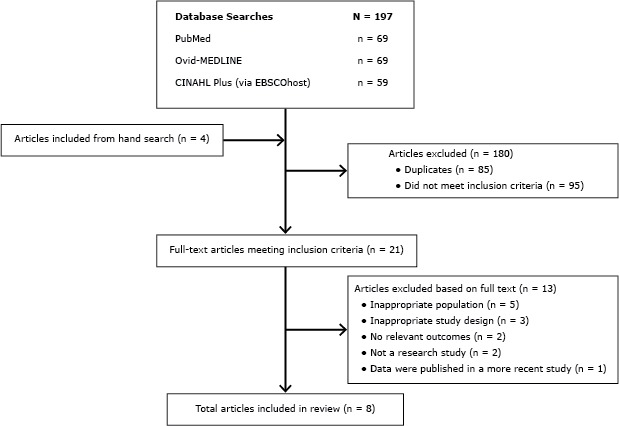
Results: Eight studies met the inclusion criteria and used cooking education to influence children's food-related preferences, attitudes, and behaviors. Programs varied in duration, evaluation methods, and outcomes of interest. Self-reported food preparation skills, dietary intake, cooking confidence, fruit and vegetable preferences, attitudes toward food and cooking, and food-related knowledge were among the outcomes measured. Program exposure ranged from 2 sessions to regular instruction over 2 years, and the effect of cooking programs on children's food-related preferences, attitudes, and behaviors varied among the reviewed studies.
Conclusions: Findings suggest that cooking programs may positively influence children's food-related preferences, attitudes, and behaviors. However, because study measurements varied widely, determining best practices was difficult. Further research is needed to fill knowledge gaps on ideal program length, long-term effects, and usefulness of parent engagement, tasting lessons, and other intervention components.
Figures
References
-
- Condrasky MD, Hegler M. How culinary nutrition can save the health of a nation. J Ext 2010;48(2):2COM1.
-
- Michaud P, Condrasky M, Griffin S. Review and application of current literature related to culinary programs for nutrition educators. Top Clin Nutr 2007;22(4).
Publication types
MeSH terms
LinkOut - more resources
Full Text Sources
Other Literature Sources
Miscellaneous