


Updated canine infection rates for Dirofilaria immitis in areas of Brazil previously identified as having a high incidence of heartworm-infected dogs
- PMID: 25376238
- PMCID: PMC4229606
- DOI: 10.1186/s13071-014-0493-7
Updated canine infection rates for Dirofilaria immitis in areas of Brazil previously identified as having a high incidence of heartworm-infected dogs
Abstract
Background: Canine heartworm infections were frequently diagnosed in Brazil before the new millennium. After the year 2000, the frequency of diagnosis showed a sharp decline; however, a few years later, new evidence indicated that the parasite was still present and that canine infection rates seemed to be increasing. Therefore, an updated survey of canine heartworm prevalence was conducted in several locations in south, southeast, and northeast Brazil.
Methods: Dogs from 15 locations having previously reported a high prevalence of heartworm infection were included in the survey according to defined criteria, including the absence of treatment with a macrocyclic lactone for at least 1 year. Blood samples from 1531 dogs were evaluated by an in-clinic immunochromatography test kit (Witness® Heartworm, Zoetis, USA) for detection of Dirofilaria immitis antigen. At each location, epidemiologic data, including physical characteristics and clinical signs reported by owners or observed by veterinarians, were recorded on prepared forms for tabulation of results by location, clinical signs, and physical characteristics.
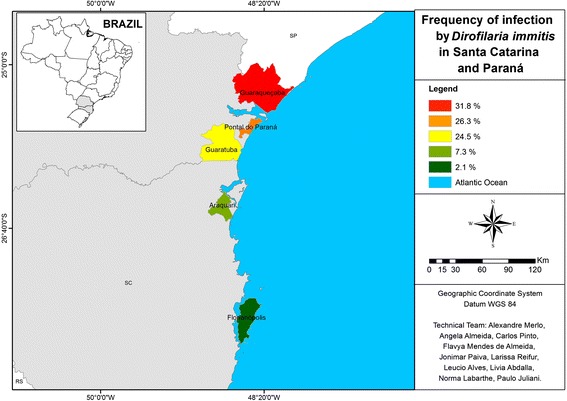
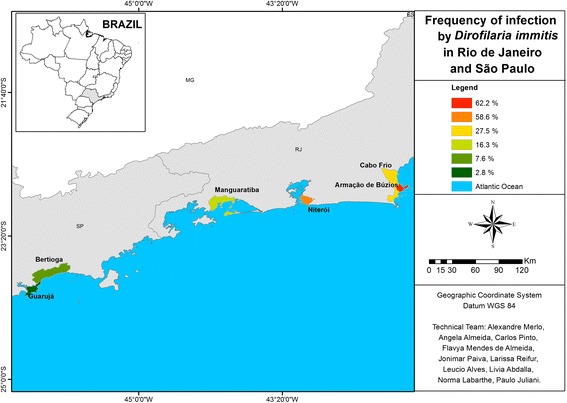
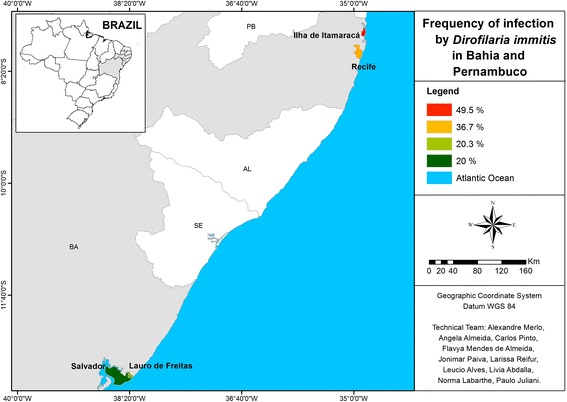
Results: The overall prevalence of canine heartworm infection was 23.1%, with evidence of heartworm-infected dogs detected in all 15 locations studied. There was a tendency for higher prevalence rates in environmentally protected areas, despite some locations having less-than-ideal environmental temperatures for survival of vector mosquitoes. Among physical characteristics, it was noted that dogs with predominantly white hair coats and residing in areas with a high (≥20%) prevalence of heartworm were less likely to have heartworm infection detected by a commercial heartworm antigen test kit than were dogs with other coat colors. In general, dogs older than 2 years were more frequently positive for D. immitis antigen than were younger dogs. Clinical signs of heartworm infections were rare or owners were unable to detect them, and could not be used for reliable prediction of the presence of heartworm.
Conclusions: These results indicate that the prevalence of D. immitis has increased in these areas of Brazil over the past few years. Small animal practitioners in these areas should include routine screening tests for heartworm infections in every dog's annual evaluation protocol and make sure to have uninfected dogs on prevention.
Figures
References
-
- Guerrero J, Vezzoni A, Ducos-de-Lahitte, Bussieras J, Rojo FA, Ortega LM, Rodenas A, Bulman GM, Larson MH, Labarthe NV, Charles T, Bordin EL. Distribution of Dirofilaria immitis in selected areas of Europe and South America. In: Otto GF, editor. Proceedings of Heartworm Symposium'89. Washington DC: American Heartworm Society; 1989. pp. 13–18.
-
- Duque-Araujo AM, Labarthe NV, Luvisário SL, Reina D: Filariose canina no Estado de São Paulo-Brasil. In Proceedings of IV Congresso Ibérico de Parasitologia 1995 Santiago de Compostela, Espanha. Edited by Congresso Ibérico de Parasitologia. Congresso Ibérico de Parasitologia; 1995:93–95
-
- Labarthe NV, Araujo AM, Bordin EL, Larsson ME, Guerrero J. Update on the distribution of Dirofilaria immitis in dogs in Brazil. Proceedings of the WSAVA World Congress '92. 1992;1:287–289.
-
- Reifur L, Soccol VT, Montiani-Ferreira F. Proceedings of the 10th Triennial Heartworm Symposium. Batavia, IL: American Heartworm Society; 2001. Prevalence of filariosis in dogs from the coast of Parana State Brasil: Emphasizing Dirofilaria immitis; pp. 243–251.
Publication types
MeSH terms
Substances
LinkOut - more resources
Full Text Sources
Other Literature Sources
Miscellaneous
