. 2015 Mar;45(3):218-29.
doi: 10.3109/00498254.2014.973930. Epub 2014 Nov 7.

Echinacea purpurea up-regulates CYP1A2, CYP3A4 and MDR1 gene expression by activation of pregnane X receptor pathway

Affiliations

Echinacea purpurea up-regulates CYP1A2, CYP3A4 and MDR1 gene expression by activation of pregnane X receptor pathway

Charles Awortwe et al. Xenobiotica. 2015 Mar.

Abstract

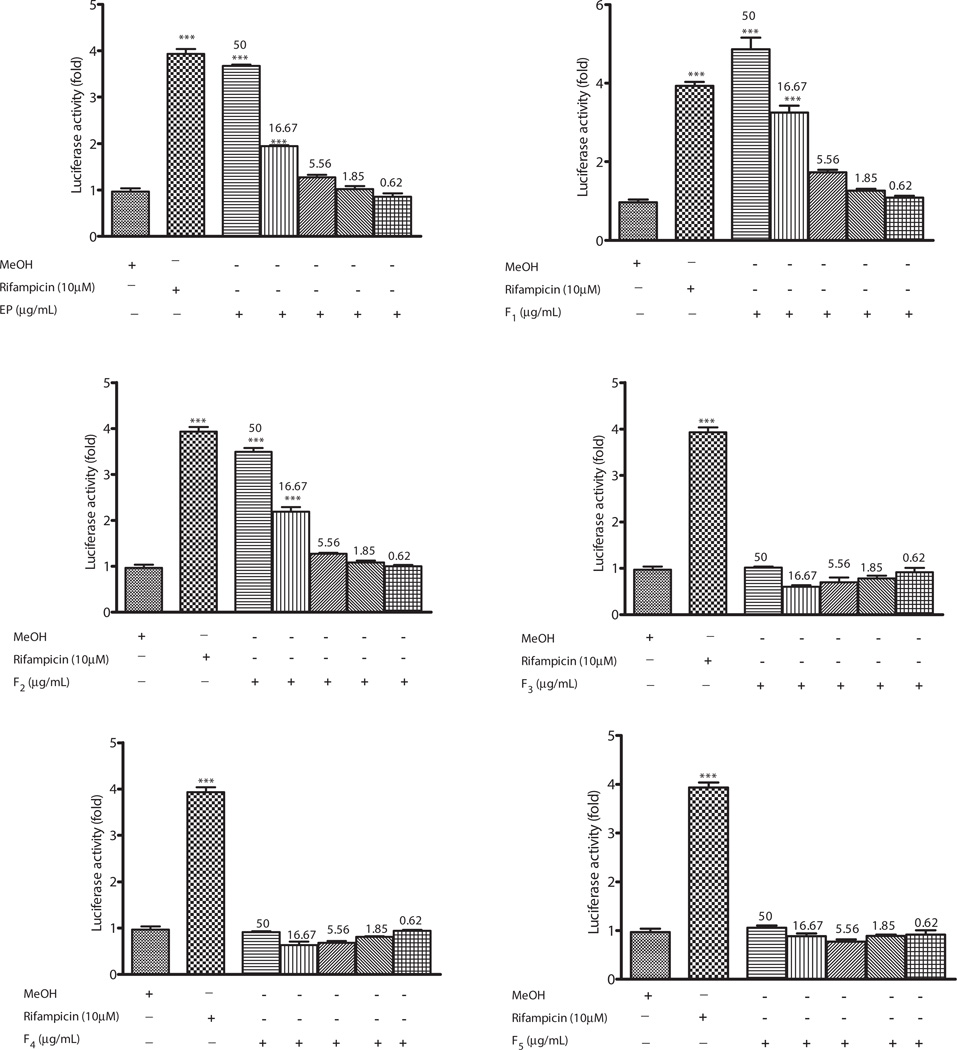
1.This study investigated the mechanism underlying Echinacea-mediated induction of CYP1A2, CYP3A4 and MDR1 in terms of human pregnane X receptor (PXR) activation. 2.Crude extracts and fractions of Echinacea purpurea were tested for PXR activation in HepG2 cells by a reporter gene assay. Quantitative real-time PCR was carried out to determine their effects on CYP1A2 and CYP3A4 mRNA expressions. Capsules and fractions were risk ranked as high, intermediate and remote risk of drug-metabolizing enzymes induction based on EC50 values determined for respective CYPs. 3. Fractions F1, F2 and capsule (2660) strongly activated PXR with 5-, 4- and 3.5-fold increase in activity, respectively. Echinacea preparations potentiated up-regulation of CYP1A2, CYP3A4 and MDR1 via PXR activation. 4.Thus E. purpurea preparations cause herb-drug interaction by up-regulating CYP1A2, CYP3A4 and P-gp via PXR activation.

Keywords: Activation; E. purpurea; cytochrome P450 enzymes (CYPs); human liver carcinoma (HepG2); human pregnane xenobiotic receptor (hPXR).


Figures
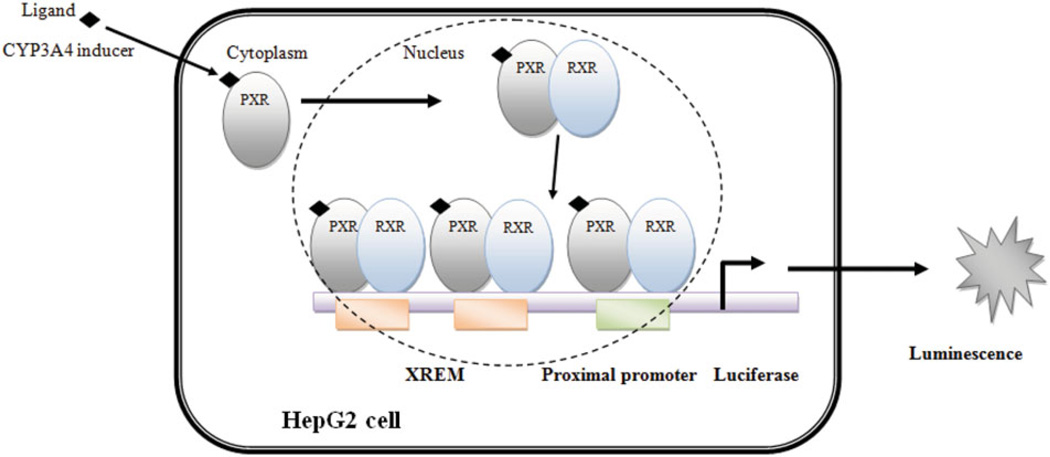
Figure 1
Figure 1
Measurement of PXR activation via luciferase reporter gene assay.
Figure 2
Figure 2
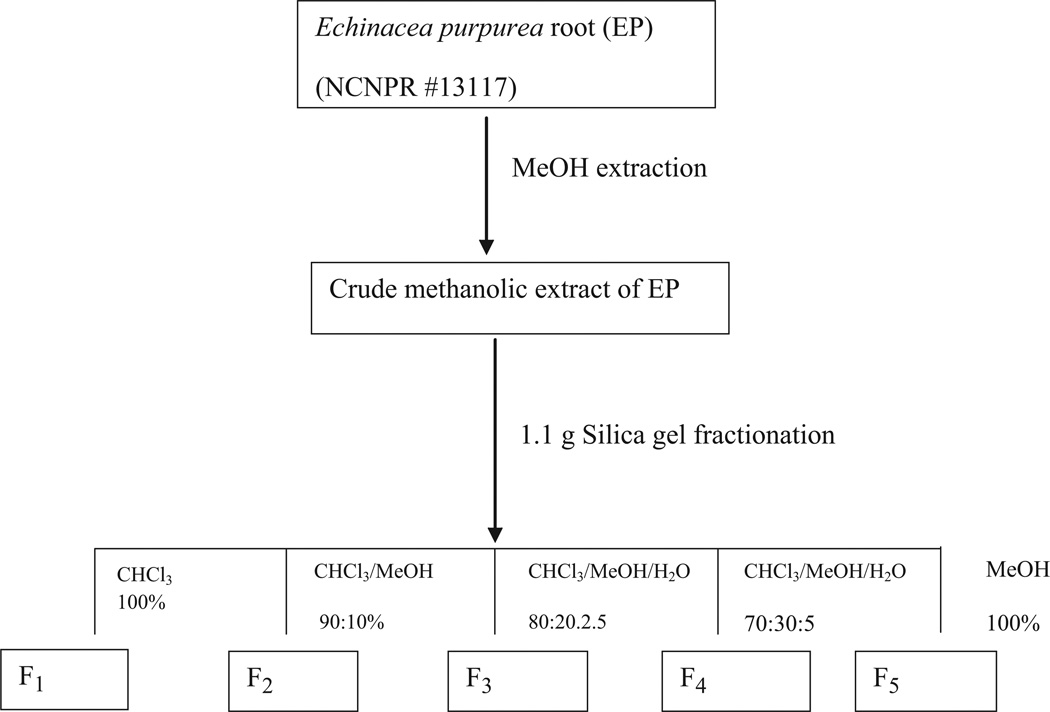
Schematic representation of fractionation of methanolic crude extract of E. purpurea.
Figure 3
Figure 3
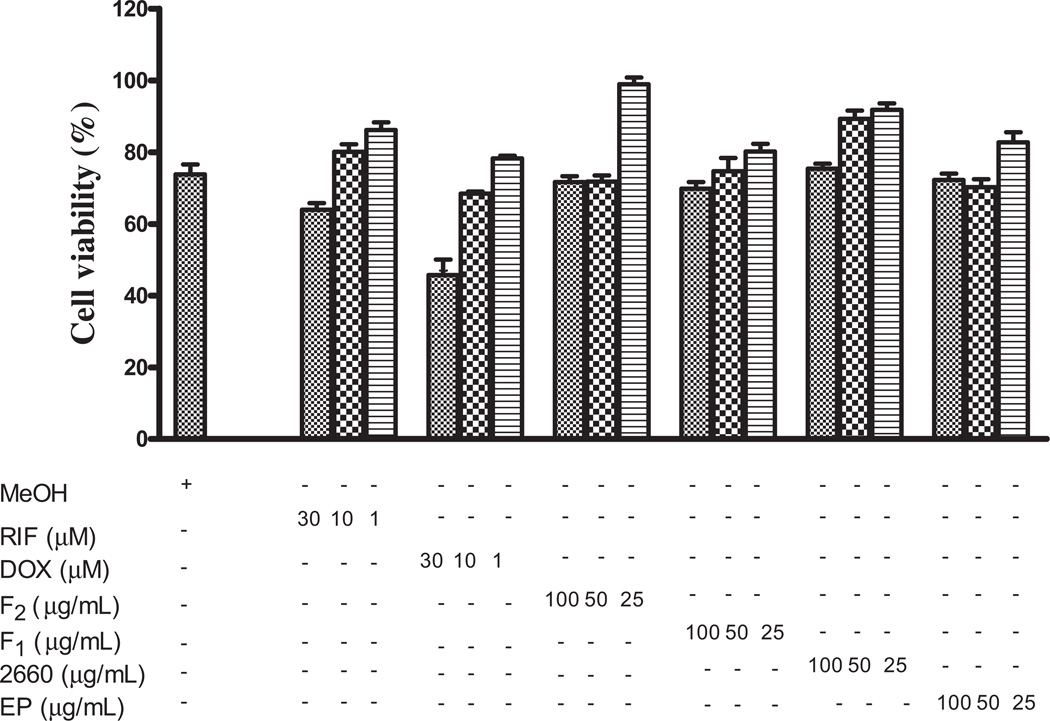
Effect of Echinacea on HepG2 cell viability. HepG2 cells were treated for 24 h Echinacea (100, 50 and 25 µg/mL) or rifampicin or doxorubicin (30, 10 and 1 µM). At the end of this period, cell viability was measured as described under Materials and methods. The figure shows the mean of duplicate treatments expressed as a percentage of the value in MeOH-treated cells.
Figure 4
Figure 4
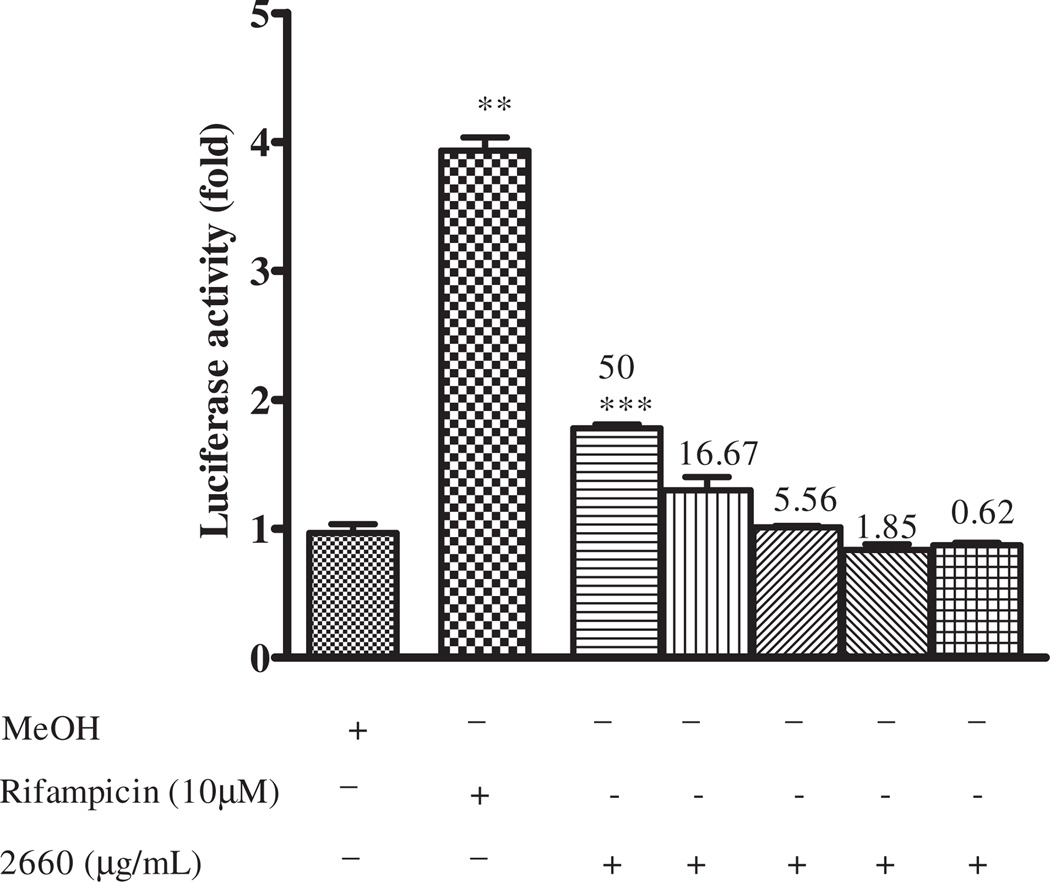
Effect of Echinacea purpurea on PXR-mediated transactivation of CYP3A4 promoter PXR response elements. HepG2 cells were transiently transfected with p3A4-luc reporter construct containing the basal promoter (−362/−53) with proximal PXR response element and the distal xenobiotic responsive enhancer module (−7836/−7208) of CYP3A4 (0.4 µg/well) and pSG5-PXR expression vector (50 ng) using the manufacturer’s instructions. Transfected HepG2 cells were maintained in medium containing Echinacea purpurea at the indicated concentrations for 24 h. Luciferase activities are normalized to protein concentration and expressed as fold activation of non-treated cells transfected with p3A4-luc. Results are expressed as mean ± SEM. One-way ANOVA was used to compare the mean value between the vehicle and the treatment groups and Bonferroni multiple comparison was conducted for multiple comparison between the treatment groups when the p < 0.05. **p = 0.01 and ***p = 0.001; 2660 refers to methanol extract of Echinacea purpurea capsule.
Figure 4
Figure 4
Effect of Echinacea purpurea on PXR-mediated transactivation of CYP3A4 promoter PXR response elements. HepG2 cells were transiently transfected with p3A4-luc reporter construct containing the basal promoter (−362/−53) with proximal PXR response element and the distal xenobiotic responsive enhancer module (−7836/−7208) of CYP3A4 (0.4 µg/well) and pSG5-PXR expression vector (50 ng) using the manufacturer’s instructions. Transfected HepG2 cells were maintained in medium containing Echinacea purpurea at the indicated concentrations for 24 h. Luciferase activities are normalized to protein concentration and expressed as fold activation of non-treated cells transfected with p3A4-luc. Results are expressed as mean ± SEM. One-way ANOVA was used to compare the mean value between the vehicle and the treatment groups and Bonferroni multiple comparison was conducted for multiple comparison between the treatment groups when the p < 0.05. **p = 0.01 and ***p = 0.001; 2660 refers to methanol extract of Echinacea purpurea capsule.
Figure 5
Figure 5
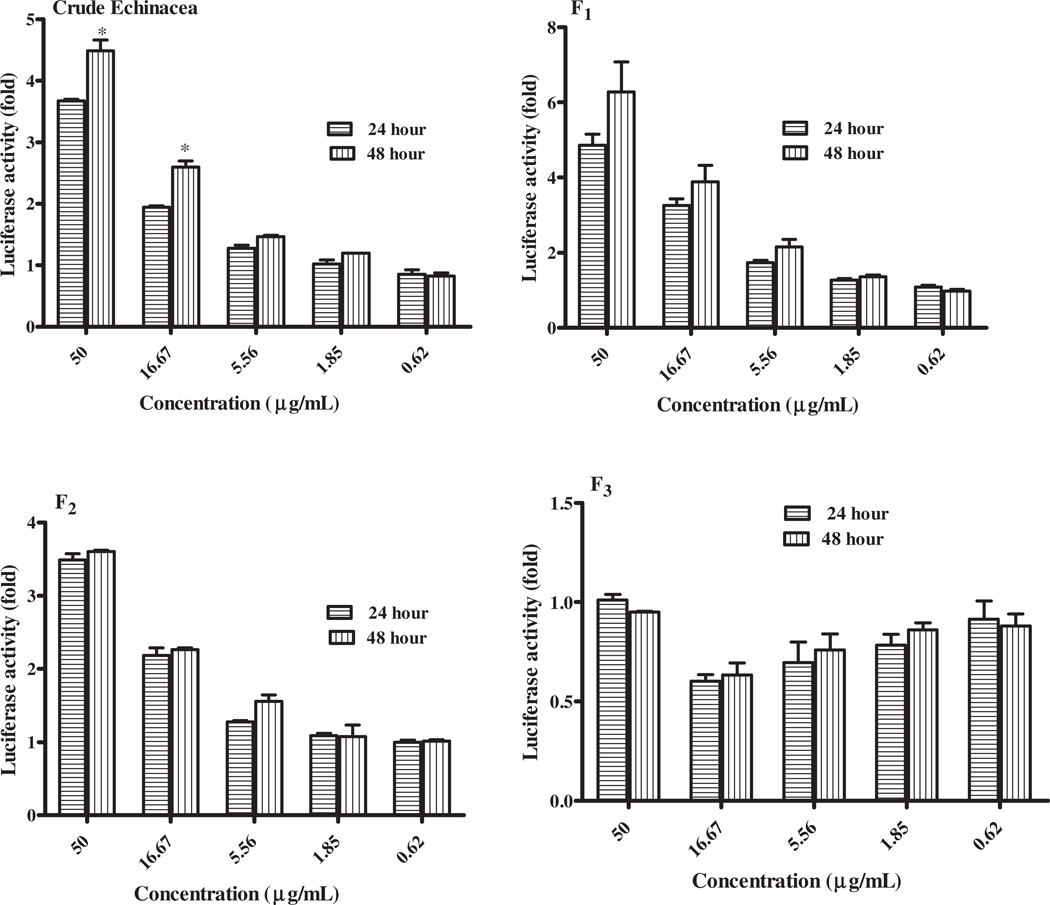
Effect of time on PXR- Echinacea purpurea mediated transactivation of CYP3A4. HepG2 cells were transiently transfected with p3A4-luc reporter construct containing the basal promoter (−362/−53) with proximal PXR response element and the distal xenobiotic-responsive enhancer module (−7836/−7208) of CYP3A4 (0.4 µg/well) and pSG5-PXR expression vector (50 ng) using the manufacturer’s instructions. Transfected HepG2 cells were maintained in medium containing Echinacea purpurea at the indicated concentrations for 24 and 48 h. Luciferase activities are normalized to protein concentration and expressed as fold activation of non-treated cells transfected with p3A4-luc. Two-tailed t test was performed to compare the PXR activation for 24 and 48 h, respectively. *p = 0.047 was noted for EP.
Figure 6
Figure 6
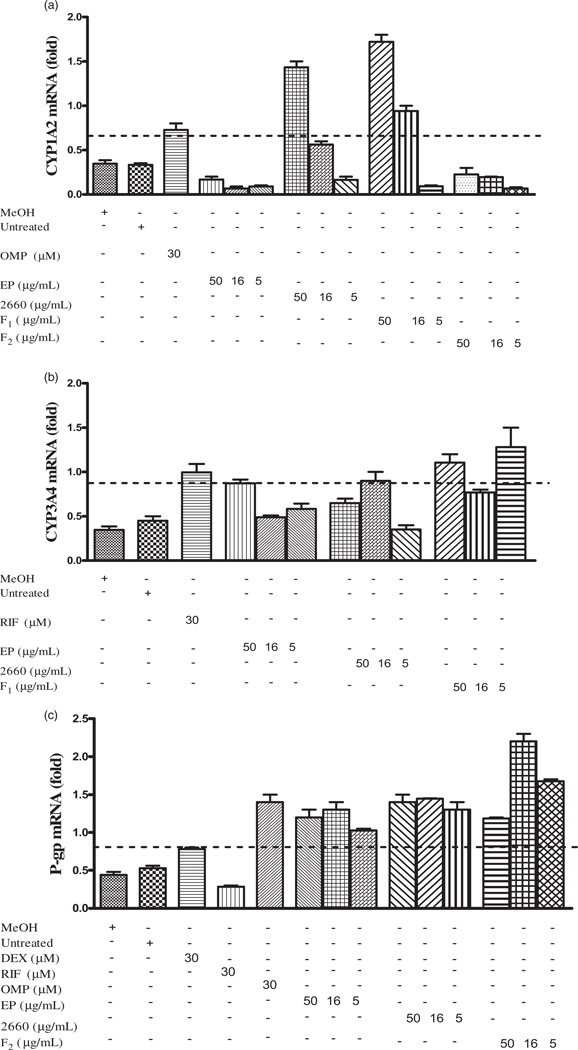
Analysis of Echinacea-mediated up-regulation of CYP3A4, CYP1A2 and P-gp mRNAs. HepG2 cells were transfected with pSG5-PXR expression plasmids (400 ng/well) using the manufacturer’s instructions and exposed to different concentrations of Echinacea (5.6–50 µg/mL) for 48 h. mRNA expression of tested genes was determined using real-time RT-PCR and normalized to HPRT housekeeping gene. The effect of Echinacea on CYP1A2 (A), CYP3A4 (B) and P-gp (C) mRNA expression is presented as fold increase to HPRT. Test samples with mRNA expression ≥2-fold of untreated is considered as an inducer.
Figure 7
Figure 7
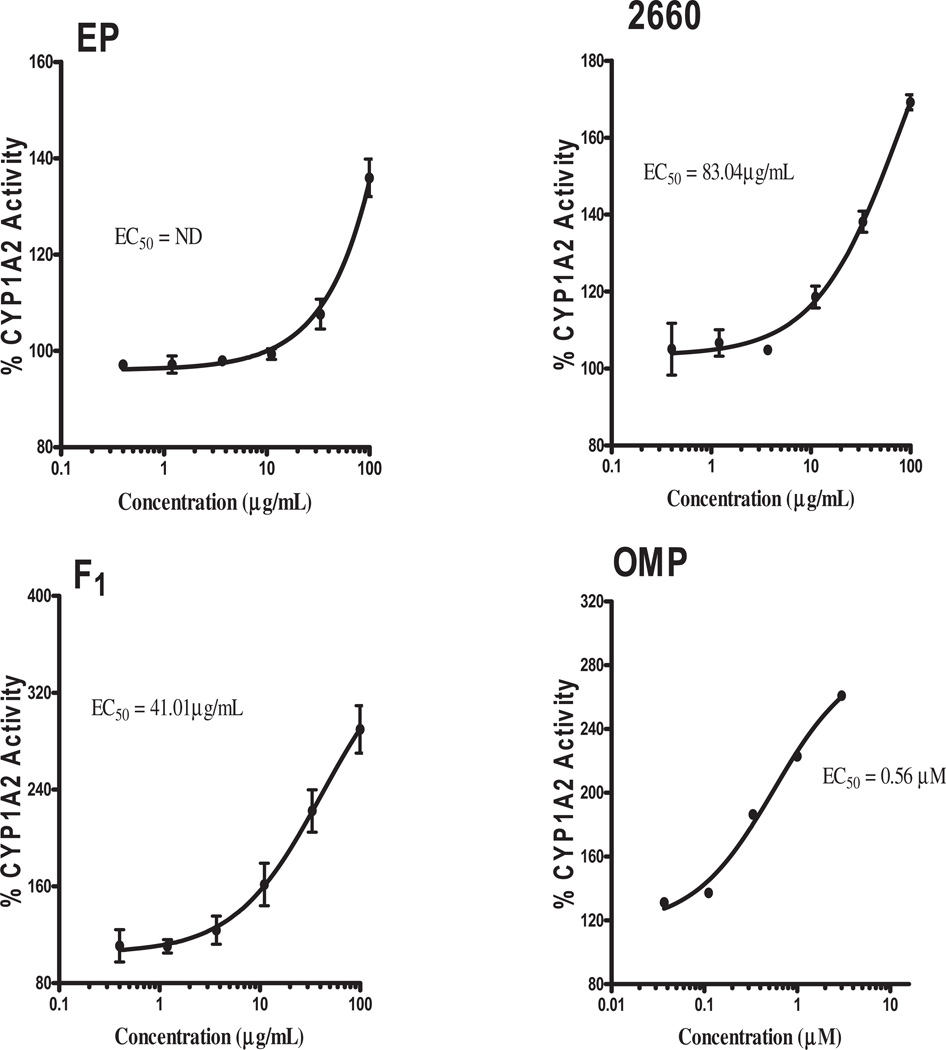
Determination of CYP1A2 catalytic activity. PXR-transfected cell was incubated with EP fractions for 48 h and CYP1A2 fluorescence substrate –NADPH mixture prepared according to BD Gentest protocol added to the cell for 30 min after aspirating the media containing test samples. Fluorescence of 3-cyano-7-hydroxycoumarin (CHC) was measured and expressed as a percentage of the untreated group to determine fold induction. Log transformation of test sample concentrations against % activity was fitted using non-linear regression and EC50 determined. ND: not determined.

References

    1. Akhlaghi F, Trull AK. Distribution of cyclosporin in organ transplant recipients. Clin Pharmacokinet. 2002;41:615–637. - PubMed
    1. Awortwe C, Bouic PJ, Masimirembwa CM, Rosenkranz B. Inhibition of major drug metabolizing CYPs by common herbal medicines used by HIV/AIDS patients in Africa: implications for herb-drug interactions. Drug Metab Lett. 2014;7:83–95. - PMC - PubMed
    1. Bauer R, Remiger P. TLC and HPLC analysis of alkamides in Echinacea drugs. Planta Med. 1989;55:367–371. - PubMed
    1. Behm Dillon DM, Penzak SR, Bailey Klepser T. The use of herbals by patients with HIV. Adv Pharm. 2004;2:41–60.
    1. Bjornsson TD, Callaghan JT, Einolf HJ, et al. Pharmaceutical Research and Manufacturers of America (PhRMA) Drug Metabolism/Clinical Pharmacology Technical Working Group; FDA Center for Drug Evaluation and Research (CDER) The conduct of in vitro and in vivo drug-drug interaction studies: a Pharmaceutical Research and Manufacturers of America (PhRMA) perspective. Drug Metab Dispos. 2003;31:815–832. - PubMed

Publication types

MeSH terms

LinkOut - more resources