. 2015 Feb;56(2):319-30.
doi: 10.1194/jlr.M054544. Epub 2014 Nov 6.

Relative roles of ABCG5/ABCG8 in liver and intestine

Affiliations

Relative roles of ABCG5/ABCG8 in liver and intestine

Jin Wang et al. J Lipid Res. 2015 Feb.

Abstract

ABCG5 (G5) and ABCG8 (G8) form a sterol transporter that acts in liver and intestine to prevent accumulation of dietary sterols. Mutations in either G5 or G8 cause sitosterolemia, a recessive disorder characterized by sterol accumulation and premature coronary atherosclerosis. Hepatic G5G8 mediates cholesterol excretion into bile, but the function and relative importance of intestinal G5G8 has not been defined. To determine the role of intestinal G5G8, we developed liver-specific (L-G5G8(-/-)), intestine-specific (I-G5G8(-/-)), and total (G5G8(-/-)) KO mice. Tissue levels of sitosterol, the most abundant plant sterol, were >90-fold higher in G5G8(-/-) mice than in WT animals. Expression of G5G8 only in intestine or only in liver decreased tissue sterol levels by 90% when compared with G5G8(-/-) animals. Biliary sterol secretion was reduced in L-G5G8(-/-) and G5G8(-/-) mice, but not in I-G5G8(-/-) mice. Conversely, absorption of plant sterols was increased in I-G5G8(-/-) and G5G8(-/-) mice, but not in L-G5G8(-/-) mice. Reverse cholesterol transport, as assessed from the fraction of intravenously administered (3)H-cholesterol that appeared in feces, was reduced in G5G8(-/-), I-G5G8(-/-), and L-G5G8(-/-) mice. Thus, G5G8 expression in both the liver and intestine protects animals from sterol accumulation, and intestinal G5G8 contributes to extrahepatic cholesterol efflux in mice.

Keywords: bile; cholesterol/absorption; sterols; transport.


Figures

Fig. 1.
Fig. 1.
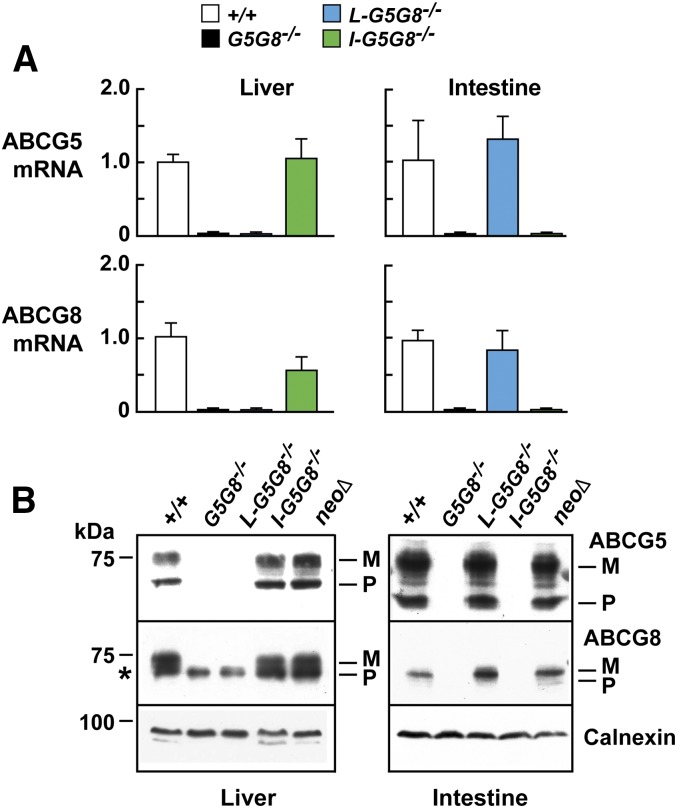
Expression of G5 and G8 mRNA (A) and protein (B) in the liver and intestine of WT, liver-specific (L-G5G8−/−), intestine-specific (I-G5G8−/−), and total G5G8−/− KO mice. A: RT-PCR was performed to quantitate levels of G5 and G8 mRNA in mice of the designated genotypes (five female mice/group, 12–15 weeks old). Cyclophilin was used as an internal control for mRNA expression. The mean values of the WT mice were set to 1. Standardized means ± SEM are shown. B: Immunoblot analysis of G5 and G8 in membranes isolated from the liver and intestine of mice was performed as described in the Materials and Methods. M, mature; P, precursor. The asterisk indicates a nonspecific band.
Fig. 2.
Fig. 2.
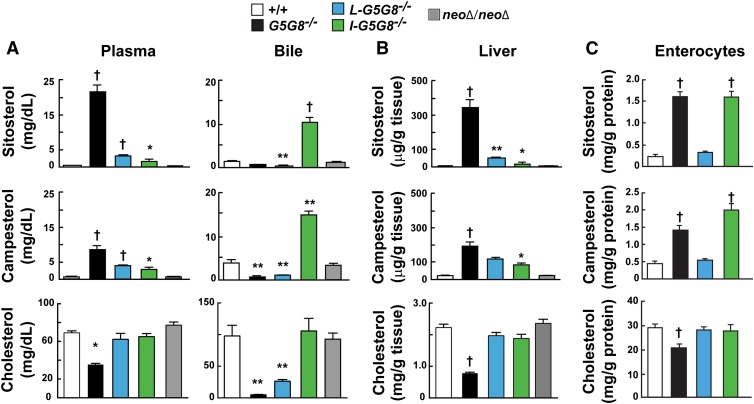
Sterol levels in the plasma and gallbladder bile (A), liver (B), and enterocytes (C) of tissue-specific G5G8−/− mice. Tissues and cells were collected as described in the Materials and Methods. Mice in which the Neo cassette had been removed were used as controls (NeoΔ/NeoΔ). Female mice (n = 5/group, 10–12 weeks old) were fed a chow (Diet 7001) for 6 weeks before being euthanized. Tissue sterols were analyzed using GC-MS as described the Materials and Methods. This experiment was repeated three times, and the results were similar. Values are means ± SEMs. All statistical comparisons are to the WT animals. * P < 0.05, ** P < 0.01, and P < 0.001.
Fig. 3.
Fig. 3.
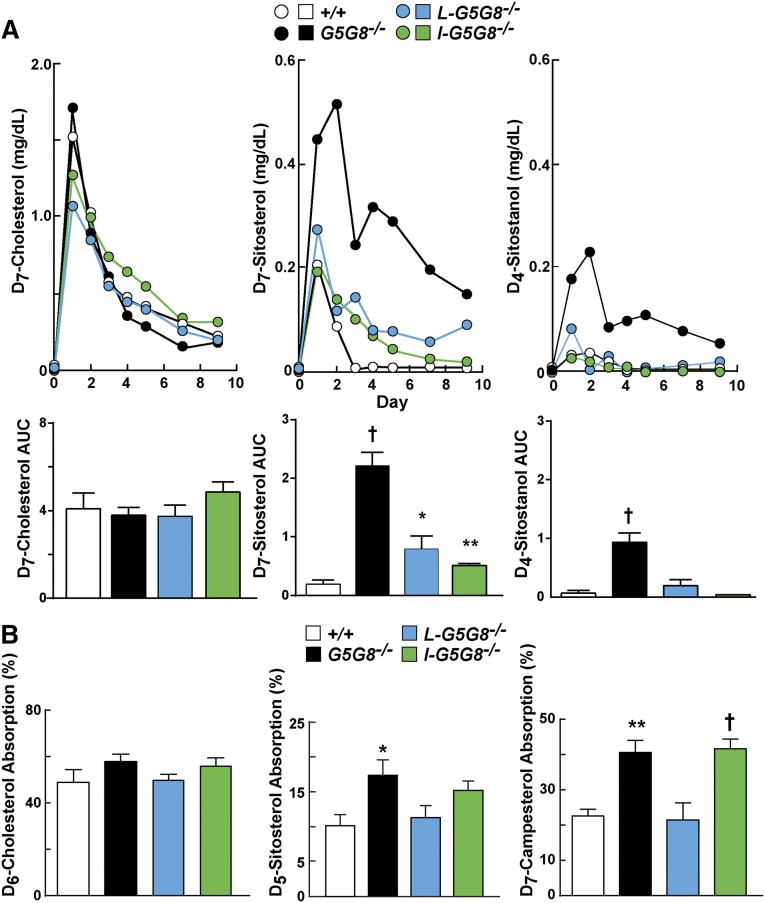
Appearance of deuterated dietary sterols in plasma (A) and fractional sterol absorption (B) in tissue-specific G5G8−/− mice. A: Male mice (n = 6/group, 10–13 weeks old) were individually housed for 7 days. Venous blood was sampled from the tail vein prior to the mice being gavaged with medium-chain triglycerides (100 µl) containing D7-cholesterol (200 µg), D7-sitosterol (100 µg), and D4-sitostanol (100 µg). Blood samples were collected daily for 9 days, and the sterols were extracted, separated by GC, and quantitated, as described in the Materials and Methods. The AUCs of the plasma sterol levels are provided. B: Fractional absorption of sterols. Female mice (n = 5/group, 23–25 weeks old) were individually housed in wire-bottom cages, and the fractional absorption of the indicated sterols was performed using D6-cholesterol, D5-sitosterol, and D7-campesterol. Feces were collected for 3 days prior to and after being gavaged with the labeled sterols. Sterols were processed and measured as described in A. Values are means ± SEMs.
Fig. 4.
Fig. 4.
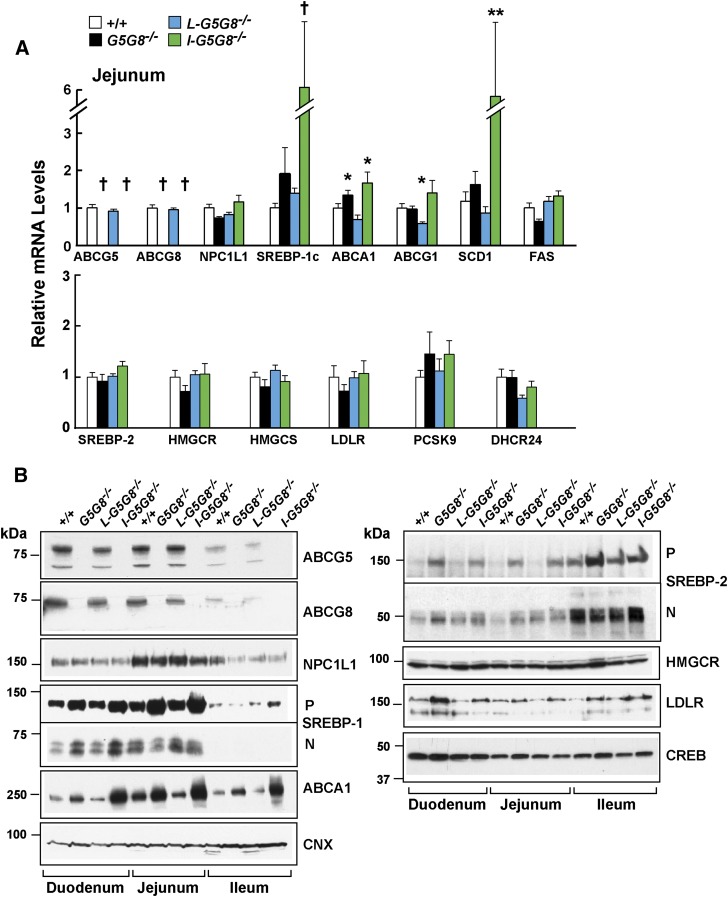
Levels of selected mRNAs (A) in the jejunum (enterocytes) and proteins in the intestine (B) of WT, G5G8−/−, L-G5G8−/−, and I-G5G8−/− female mice (n = 5/group, 23–25 weeks old). Total RNA was isolated from the jejunum of each mouse and the relative mRNA levels were measured using quantitative real-time PCR as described in the Materials and Methods. Cyclophilin was used as an internal control, and the level was expressed relative to the level of the transcript in the WT animals, which was set to 1. Values are means ± SEMs. B: Enterocytes were isolated from the three sections of intestine as described in the Materials and Methods. Membrane and nuclear fractions were prepared as described in the Materials and Methods. A total of 35 μg of protein was subjected to SDS-PAGE and immunoblotted with Abs to the indicated proteins as described in the Materials and Methods. This experiment was repeated three times, and the results were similar. CNX, calnexin; CREB, cAMP response element binding protein; DHCR24, desmosterol reductase; FPPS, farnesyl pyrophosphate synthase; SCD1, stearolyl-CoA desaturase-1; SS, squalene synthase.
Fig. 5.
Fig. 5.
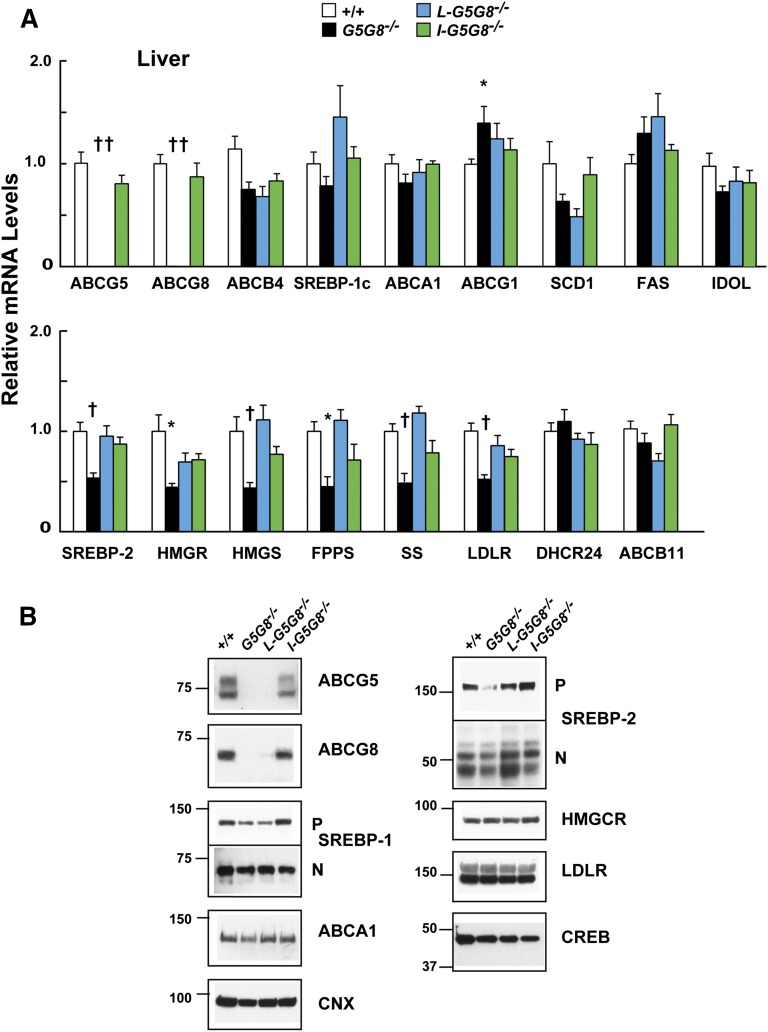
Levels of selected mRNAs (A) and proteins (B) in the livers of WT, G5G8−/−, L-G5G8−/−, and I-G5G8−/−female mice (n = 5/group, 23–25 weeks old). Total RNA was isolated from the liver of each mouse, and the relative mRNA levels were measured using quantitative real-time PCR as described in the Materials and Methods. Cyclophilin was used as an internal control, and the level was expressed relative to the level of the transcript in the WT animals, which was set to 1. Values are means ± SEMs. B: Membrane and nuclear fractions were prepared as described in the Materials and Methods. A total of 35 μg of hepatic protein was subjected to SDS-PAGE and immunoblotted with Abs to the indicated proteins as described in the Materials and Methods. This experiment was repeated twice, and the results were similar.
Fig. 6.
Fig. 6.
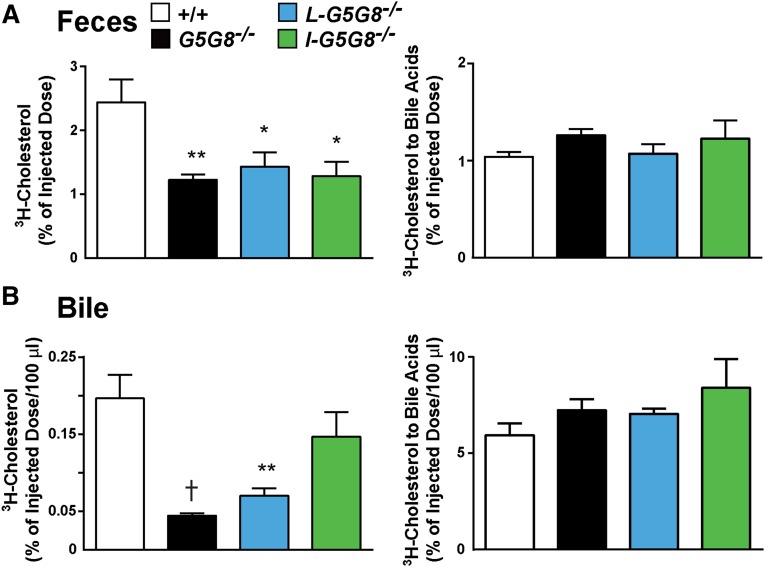
Contribution of G5G8 to fecal excretion of cholesterol. A total of 60 µCi of 3H-labeled cholesterol were dried and dissolved in 6 ml of 20% Intralipid (Baxter Healthcare). The lipid mixture was sonicated, and 0.2 ml was injected into the tail veins of six male mice/group (21–24 weeks old). Each mouse received 40 mg of triglyceride and 13 ng of cholesterol (2 μCi). The feces were collected for 3 days, and the fraction of the radiolabeled cholesterol that was injected and appeared as sterol or bile acid in the feces (A) or gallbladder bile (B) was quantitated. This experiment was repeated twice, and the results were similar. Values are means ± SEMs. * P < 0.05, ** P < 0.01, and P < 0.001.
Fig. 7.
Fig. 7.
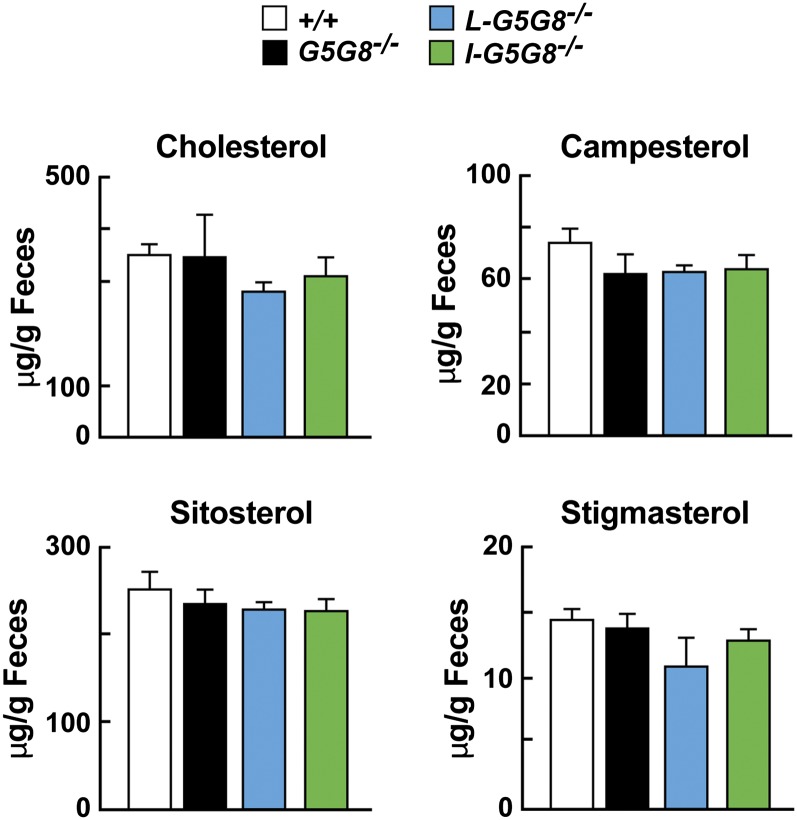
Total sterol excretion in G5G8/− mice. Mice were individually housed for 7 days prior to the experiment. Feces were collected from 12- to 14-week-old male mice (n = 5/group) for 3 days while they consumed a chow diet. Sterols were processed and measured as described in the Materials and Methods. The experiment was repeated three times, and the results were similar. Values are means ± SEMs.

Comment in

References

    1. Miettinen T. A. 1980. Phytosterolaemia, xanthomatosis and premature atherosclerotic arterial disease: a case with high plant sterol absorption, impaired sterol elimination and low cholesterol synthesis. Eur. J. Clin. Invest. 10: 27–35. - PubMed
    1. Berge K. E., Tian H., Graf G. A., Yu L., Grishin N. V., Schultz J., Kwiterovich P., Shan B., Barnes R., Hobbs H. H. 2000. Accumulation of dietary cholesterol in sitosterolemia caused by mutations in adjacent ABC transporters. Science. 290: 1771–1775. - PubMed
    1. Lee M. H., Lu K., Hazard S., Yu H., Shulenin S., Hidaka H., Kojima H., Allikmets R., Sakuma N., Pegoraro R., et al. 2001. Identification of a gene, ABCG5, important in the regulation of dietary cholesterol absorption. Nat. Genet. 27: 79–83. - PMC - PubMed
    1. Yang C., Yu L., Li W., Xu F., Cohen J. C., Hobbs H. H. 2004. Disruption of cholesterol homeostasis by plant sterols. J. Clin. Invest. 114: 813–822. - PMC - PubMed
    1. Solca C., Tint G. S., Patel S. B. 2013. Dietary xenosterols lead to infertility and loss of abdominal adipose tissue in sterolin-deficient mice. J. Lipid Res. 54: 397–409. - PMC - PubMed

Publication types

MeSH terms

Substances