


Review
doi: 10.3390/molecules191118033.
Deciphering the role of phytoalexins in plant-microorganism interactions and human health
Affiliations
- PMID: 25379642
- PMCID: PMC6271817
- DOI: 10.3390/molecules191118033
Item in Clipboard
Review
Deciphering the role of phytoalexins in plant-microorganism interactions and human health
Molecules.
.
Abstract
Phytoalexins are low molecular weight antimicrobial compounds that are produced by plants as a response to biotic and abiotic stresses. As such they take part in an intricate defense system which enables plants to control invading microorganisms. In this review we present the key features of this diverse group of molecules, namely their chemical structures, biosynthesis, regulatory mechanisms, biological activities, metabolism and molecular engineering.
Conflict of interest statement
The authors declare no conflict of interest.
Figures
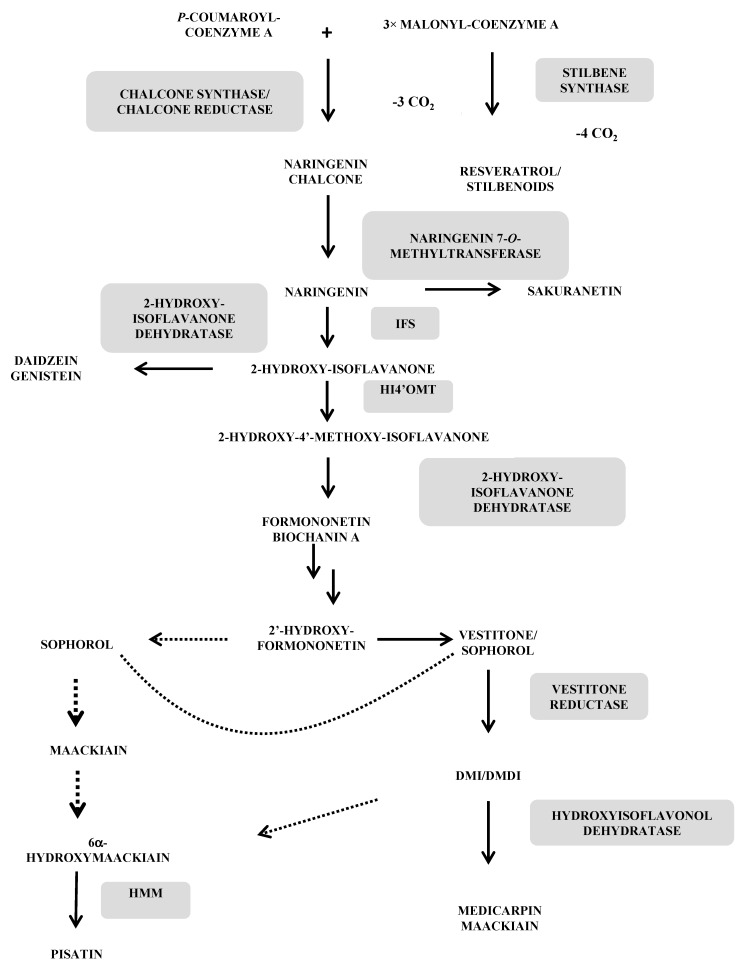
Biosynthetic pathways to the main flavonoid and stilbenoid phytoalexins from the Leguminosae family. (adapted from [10,38,39]). The dashed arrows represent hypothetical steps and the solid arrows denote reactions for which the catalyzing enzymes have been cloned.
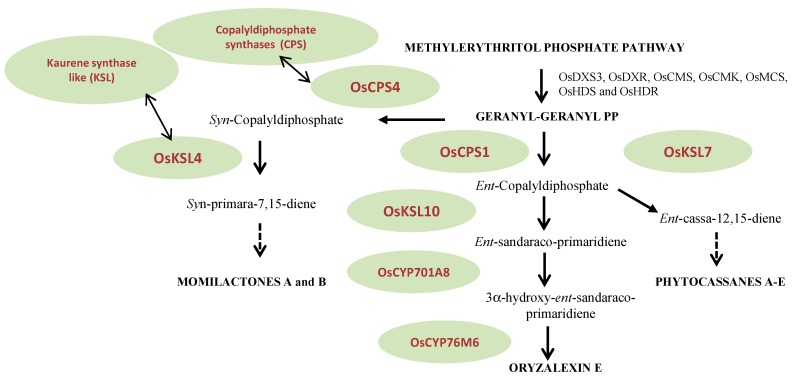
Biosynthetic pathway of diterpenoid phytoalexins.
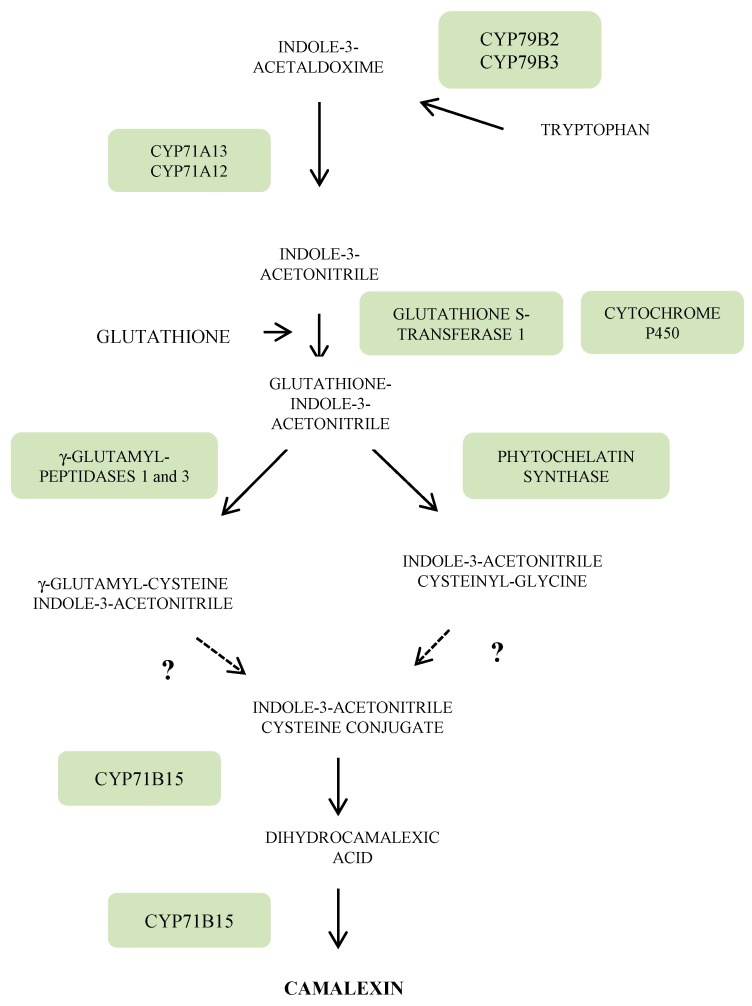
Biosynthetic pathway from tryptophan to camalexin (adapted from [2]).
References
-
- Müller K.O., Börger H. Experimentelle Untersuchungen über die Phytophthora Resistenz der Kartoffel. Arb. Biol. Reichsanst. Land Forstwirtsch. 1940;23:189–231.
-
- Deverall B.J. Introduction. In: Bailey J.A., Mansfield J.W., editors. Phytoalexins. Blackie; Glasgow/London, UK: 1982. pp. 1–20.
-
- Ingham J.L. Phytoalexins from the Leguminosae. In: Bailey J.A., Mansfield J.W., editors. Phytoalexins. Blackie; Glasgow/London, UK: 1982. pp. 21–80.
Publication types
MeSH terms
Substances
LinkOut - more resources
Full Text Sources
Other Literature Sources
Research Materials
