


Taurolidine lock is superior to heparin lock in the prevention of catheter related bloodstream infections and occlusions
- PMID: 25379781
- PMCID: PMC4224385
- DOI: 10.1371/journal.pone.0111216
Taurolidine lock is superior to heparin lock in the prevention of catheter related bloodstream infections and occlusions
Abstract
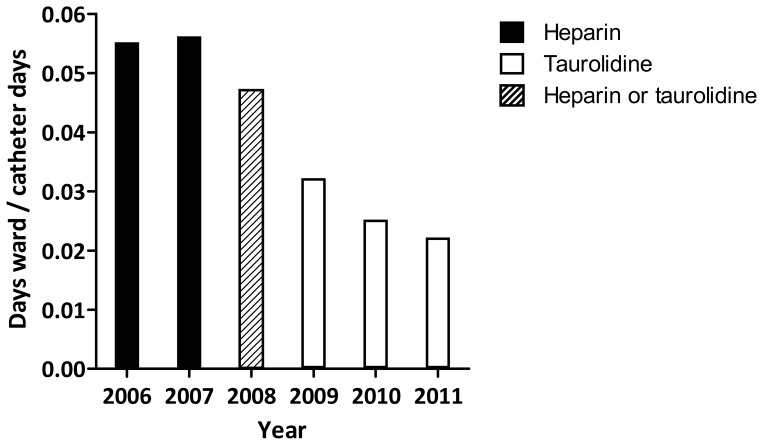
Background and aims: Patients on home parenteral nutrition (HPN) are at risk for catheter-related complications; mainly infections and occlusions. We have previously shown in HPN patients presenting with catheter sepsis that catheter locking with taurolidine dramatically reduced re-infections when compared with heparin. Our HPN population therefore switched from heparin to taurolidine in 2008. The aim of the present study was to compare long-term effects of this catheter lock strategy on the occurrence of catheter-related bloodstream infections and occlusions in HPN patients.
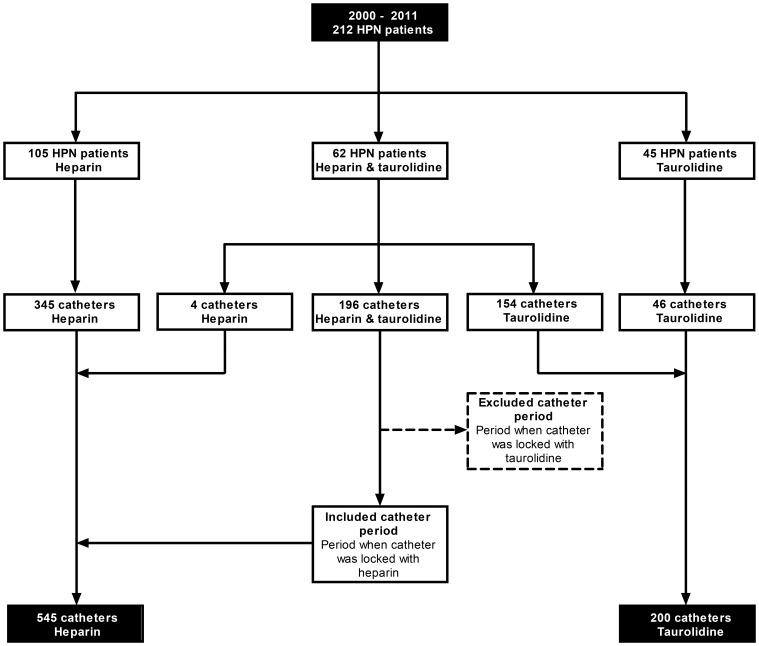
Methods: Data of catheter-related complications were retrospectively collected from 212 patients who received HPN between January 2000 and November 2011, comprising 545 and 200 catheters during catheter lock therapy with heparin and taurolidine, respectively. We evaluated catheter-related bloodstream infection and occlusion incidence rates using Poisson-normal regression analysis. Incidence rate ratios were calculated by dividing incidence rates of heparin by those of taurolidine, adjusting for underlying disease, use of anticoagulants or immune suppressives, frequency of HPN/fluid administration, composition of infusion fluids, and duration of HPN/fluid use before catheter creation.
Results: Bloodstream infection incidence rates were 1.1/year for heparin and 0.2/year for taurolidine locked catheters. Occlusion incidence rates were 0.2/year for heparin and 0.1/year for taurolidine locked catheters. Adjusted incidence ratios of heparin compared to taurolidine were 5.9 (95% confidence interval, 3.9-8.7) for bloodstream infections and 1.9 (95% confidence interval, 1.1-3.1) for occlusions.
Conclusions: Given that no other procedural changes than the catheter lock strategy were implemented during the observation period, these data strongly suggest that taurolidine decreases catheter-related bloodstream infections and occlusions in HPN patients compared with heparin.
Conflict of interest statement
Figures
References
-
- Wanten G, Calder PC, Forbes A (2011) Managing adult patients who need home parenteral nutrition. BMJ 342: d1447. - PubMed
-
- Dreesen M, Foulon V, Spriet I, Goossens GA, Hiele M, et al. (2013) Epidemiology of catheter-related infections in adult patients receiving home parenteral nutrition: a systematic review. Clin Nutr 32: 16–26. - PubMed
-
- O'Keefe SJ, Burnes JU, Thompson RL (1994) Recurrent sepsis in home parenteral nutrition patients: an analysis of risk factors. JPEN J Parenter Enteral Nutr 18: 256–263. - PubMed
-
- Wanten GJA, Calder PC (2007) Immune modulation by parenteral lipid emulsions. Am J Clin Nutr 85: 1171–1184. - PubMed
-
- Versleijen MW, Huisman-de Waal GJ, Kock MC, Elferink AJ, van Rossum LG, et al. (2009) Arteriovenous fistulae as an alternative to central venous catheters for delivery of long-term home parenteral nutrition. Gastroenterology 136: 1577–1584. - PubMed
Publication types
MeSH terms
Substances
LinkOut - more resources
Full Text Sources
Other Literature Sources
Medical
