


Demonstration of the usefulness of epigenetic cancer risk prediction by a multicentre prospective cohort study
- PMID: 25379950
- PMCID: PMC4345890
- DOI: 10.1136/gutjnl-2014-307094
Demonstration of the usefulness of epigenetic cancer risk prediction by a multicentre prospective cohort study
Abstract
Background: Epigenetic alterations accumulate in normal-appearing tissues of patients with cancer, producing an epigenetic field defect. Cross-sectional studies show that the degree of the defect may be associated with risk in some types of cancer, especially cancers associated with chronic inflammation.
Objective: To demonstrate, by a multicentre prospective cohort study, that the risk of metachronous gastric cancer after endoscopic resection (ER) can be predicted by assessment of the epigenetic field defect using methylation levels.
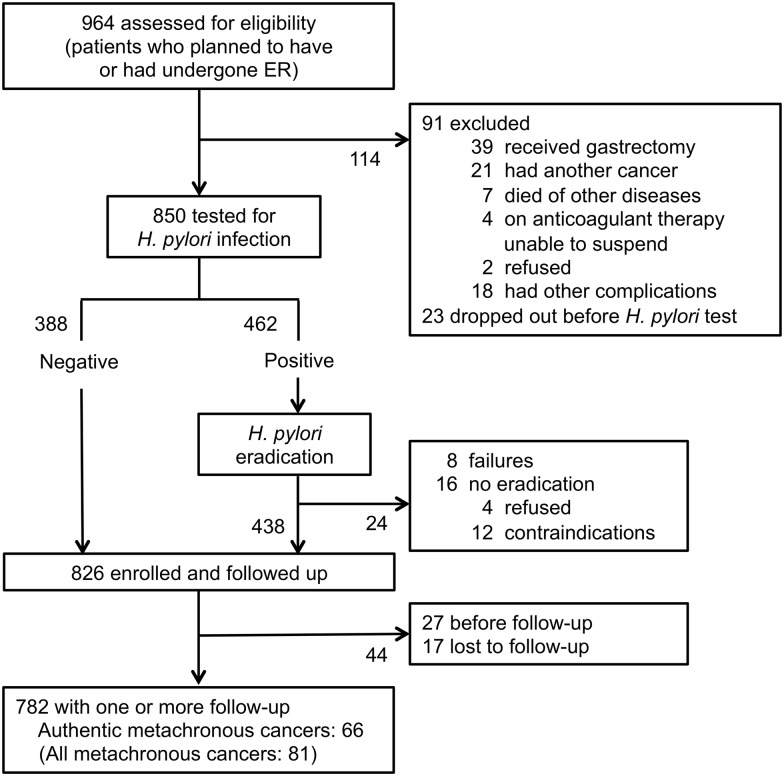
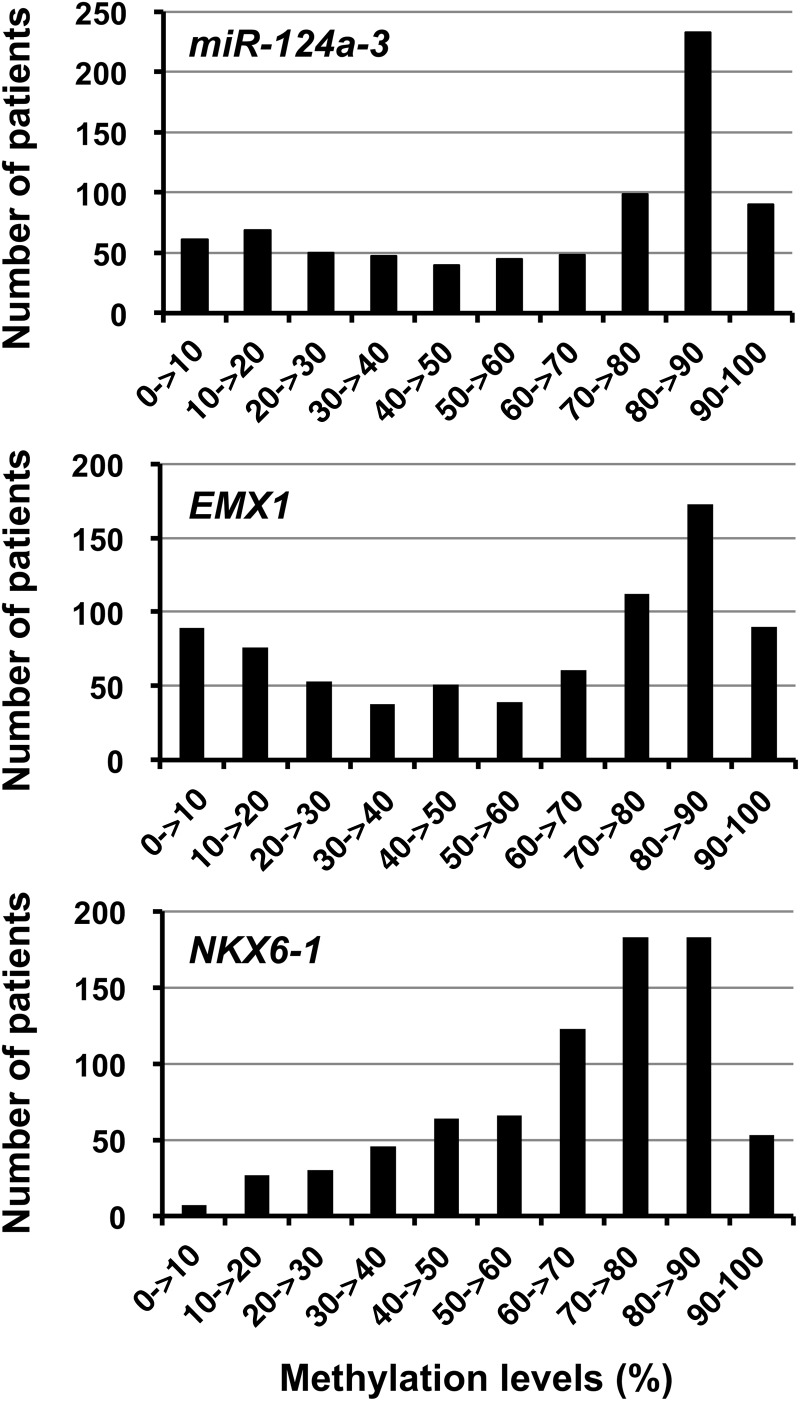
Design: Patients with early gastric cancer, aged 40-80 years, who planned to have, or had undergone, ER, were enrolled at least 6 months after Helicobacter pylori infection discontinued. Methylation levels of three preselected genes (miR-124a-3, EMX1 and NKX6-1) were measured by quantitative methylation-specific PCR. Patients were followed up annually by endoscopy, and the primary endpoint was defined as detection of a metachronous gastric cancer. Authentic metachronous gastric cancers were defined as cancers excluding those detected within 1 year after the enrolment.
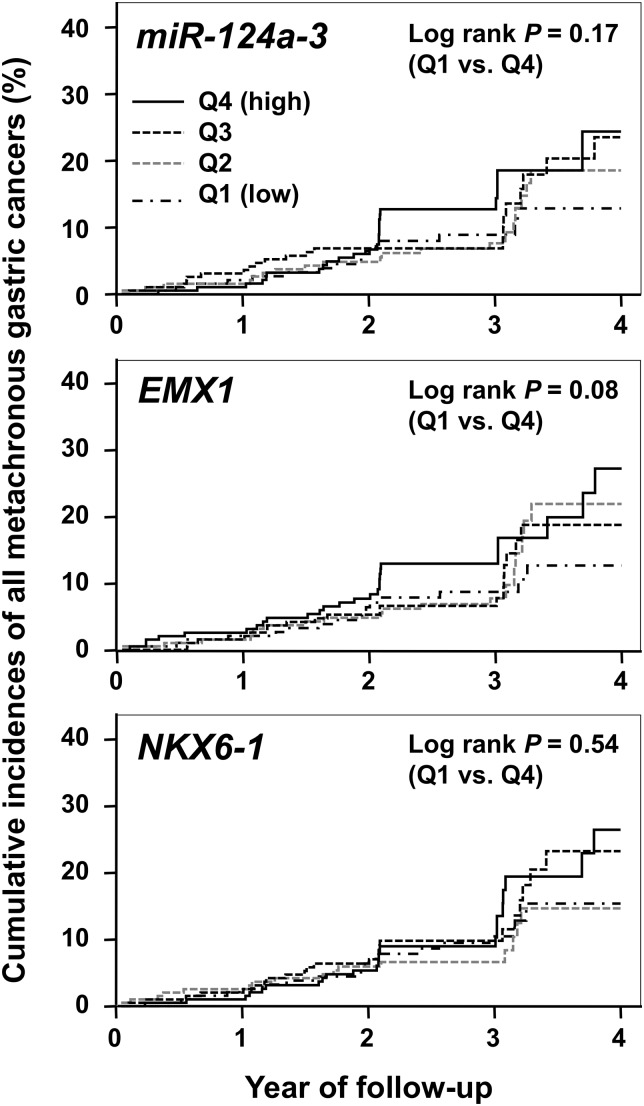
Results: Among 826 patients enrolled, 782 patients had at least one follow-up, with a median follow-up of 2.97 years. Authentic metachronous gastric cancers developed in 66 patients: 29, 16 and 21 patients at 1-2, 2-3 and ≥3 years after the enrolment, respectively. The highest quartile of the miR-124a-3 methylation level had a significant univariate HR (95% CI) (2.17 (1.07 to 4.41); p=0.032) and a multivariate-adjusted HR (2.30 (1.03 to 5.10); p=0.042) of developing authentic metachronous gastric cancers. Similar trends were seen for EMX1 and NKX6-1.
Conclusions: Assessment of the degree of an epigenetic field defect is a promising cancer risk marker that takes account of life history.
Keywords: GASTRIC CANCER; METHYLATION.
Published by the BMJ Publishing Group Limited. For permission to use (where not already granted under a licence) please go to http://group.bmj.com/group/rights-licensing/permissions.
Figures
Comment in
-
High impact of methylation accumulation on metachronous gastric cancer: 5-year follow-up of a multicentre prospective cohort study.Gut. 2017 Sep;66(9):1721-1723. doi: 10.1136/gutjnl-2016-313387. Epub 2016 Dec 21. Gut. 2017. PMID: 28003322 Free PMC article. No abstract available.
References
-
- Rodriguez-Paredes M, Esteller M. Cancer epigenetics reaches mainstream oncology. Nat Med 2011;17:330–9. - PubMed
-
- Ushijima T. Epigenetic field for cancerization. J Biochem Mol Biol 2007;40:142–50. - PubMed
-
- Grabsch HI, Tan P. Gastric cancer pathology and underlying molecular mechanisms. Dig Surg 2013;30:150–8. - PubMed
-
- Kondo Y, Kanai Y, Sakamoto M, et al. Genetic instability and aberrant DNA methylation in chronic hepatitis and cirrhosis–a comprehensive study of loss of heterozygosity and microsatellite instability at 39 loci and DNA hypermethylation on 8 CpG islands in microdissected specimens from patients with hepatocellular carcinoma. Hepatology 2000;32:970–9. - PubMed
Publication types
MeSH terms
Substances
LinkOut - more resources
Full Text Sources
Other Literature Sources
Medical
Molecular Biology Databases
