. 2014 Nov 7;9(11):e111599.
doi: 10.1371/journal.pone.0111599. eCollection 2014.

25-Hydroxyvitamin D3-deficiency enhances oxidative stress and corticosteroid resistance in severe asthma exacerbation

Affiliations

25-Hydroxyvitamin D3-deficiency enhances oxidative stress and corticosteroid resistance in severe asthma exacerbation

Nan Lan et al. PLoS One. .

Abstract

Oxidative stress plays a significant role in exacerbation of asthma. The role of vitamin D in oxidative stress and asthma exacerbation remains unclear. We aimed to determine the relationship between vitamin D status and oxidative stress in asthma exacerbation. Severe asthma exacerbation patients with 25-hydroxyvitamin D3-deficiency (V-D deficiency) or 25-hydroxyvitamin D-sufficiency (V-D sufficiency) were enrolled. Severe asthma exacerbation with V-D-deficiency showed lower forced expiratory volume in one second (FEV1) compared to that with V-D-sufficiency. V-D-deficiency intensified ROS release and DNA damage and increased TNF-α, OGG1 and NFκB expression and NFκB phosphorylation in severe asthma exacerbation. Supplemental vitamin D3 significantly increased the rates of FEV1 change and decreased ROS and DNA damage in V-D-deficiency. Vitamin D3 inhibited LPS-induced ROS and DNA damage and were associated with a decline in TNF-α and NFκB in epithelial cells. H2O2 reduces nuclear translocation of glucocorticoid receptors in airway epithelial cell lines. V-D pretreatment enhanced the dexamethasone-induced nuclear translocation of glucocorticoid receptors in airway epithelial cell lines and monocytes from 25-hydroxyvitamin D3-deficiency asthma patients. These findings indicate that V-D deficiency aggravates oxidative stress and DNA damage, suggesting a possible mechanism for corticosteroid resistance in severe asthma exacerbation.


Conflict of interest statement

Competing Interests: The authors have declared that no competing interests exist.

Figures

Figure 1
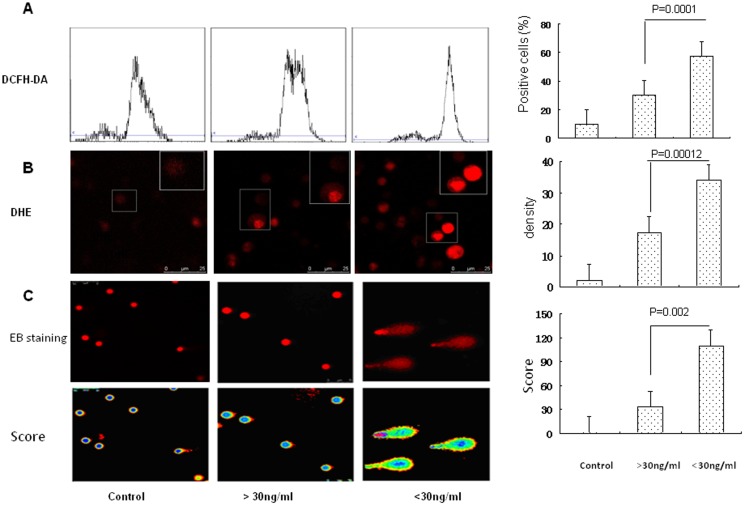
Figure 1. Oxidative stress and DNA damage in severe asthma exacerbation.
A: The intracelluar ROS levels in PBMCs from the normal controls, severe asthma exacerbation and V-D-deficiency (vitamin D3 <30 ng/ml) or V-D-sufficiency (vitamin D3>30 ng/ml) were detected by flow cytometry using DCFH-DA, which is oxidized to DCF in the presence of ROS. The ROS level was represented by the percentage of ROS positive cells. B: The intracellular ROS levels in PBMCs from these asthmatic participants were detected by a confocal microscope using a DHE probe. The ROS level in PBMCs from these asthmatic participants was represented by the fluorescence intensity (X400). C: The DNA damage in PBMCs from these asthmatic participants was detected by comet assay using a confocal microscope(X400). The DNA damage score was analyzed with Comet Assay IV software.
Figure 2
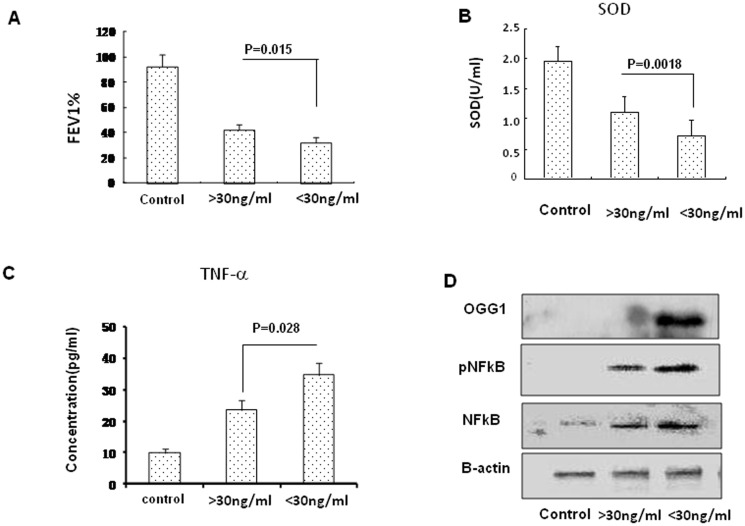
Figure 2. FEV1%, SOD activity, TNF-α, OGG1 and NFκB in severe asthma exacerbation.
A: FEV1% in severe asthma exacerbation with V-D-deficiency and V-D-sufficiency. B: The serum SOD activity was measured using an SOD assay kit. C: Standard ELISA was performed to determine the levels of TNF-α in serum. D: OGG1 and NFκB in PBMC from severe asthma exacerbation with V-D-deficiency and V-D-sufficiency were analyzed by western blot. β-actin was used as the loading controls. The data are the means ± SEM.
Figure 3
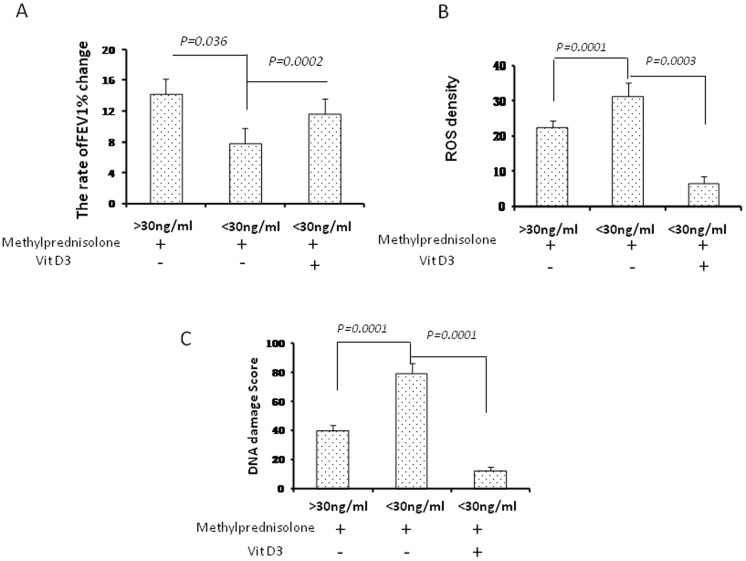
Figure 3. The change in FEV1%, ROS and DNA damage in severe asthma exacerbation treated with methylprednisolone and vitamin D3.
A: The rates of the FEV1 change in severe asthma exacerbation treated with methylprednisolone and vitamin D3. B: The intracellular ROS in PBMCs from these asthmatic participants were detected by confocal microscopy using a DCFH-DA probe. The ROS levels were represented by the fluorescence intensity. The quantification of the ROS positive cell density in 10-random cell fields containing 500 cells(X400). C: The DNA damage in PBMCs from these asthmatic participants was detected by comet assay using confocal microscopy (X400). The DNA damage score was analyzed with Comet Assay IV software.
Figure 4
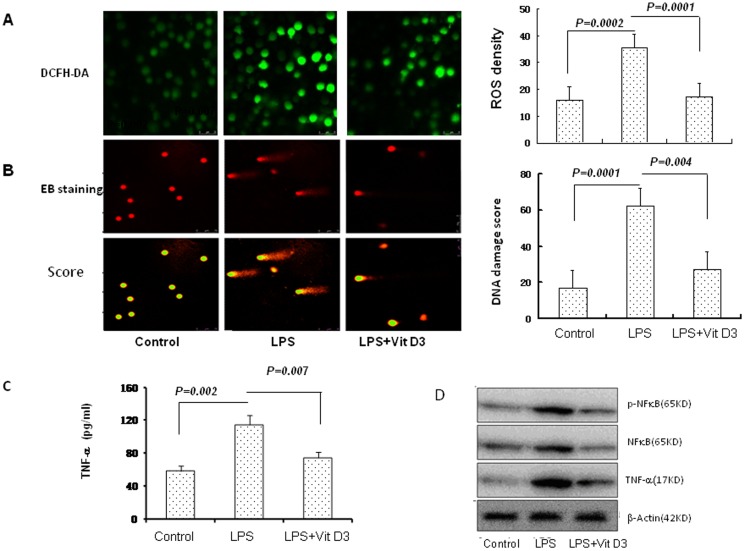
Figure 4. The effect of vitamin D3 on oxidative stress, DNA damage, TNF-α and NFκB in LPS-primed airway epithelial cells.
The ROS and DNA damage in airway epithelial cells was measured in the presence or absence of vitamin D3 and treated with LPS for 24 hours. A: ROS was detected by confocal microscopy using a DCFH-DA probe. The ROS level was represented by fluorescence intensity (X400). B: The DNA damage was measured by comet assay. The DNA damage score was analyzed with Comet Assay IV software. C: Standard ELISA was performed to determine the levels of TNF-α. D: NFκB were analyzed by western blot. β-actin was used as the loading controls.
Figure 5
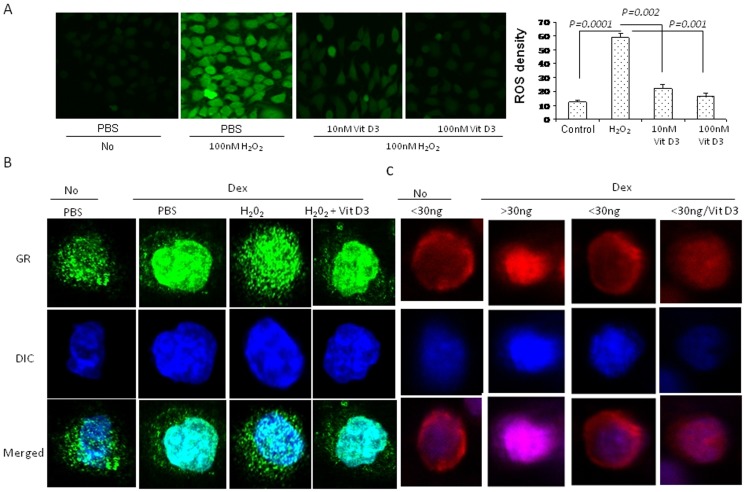
Figure 5. The effect of vitamin-D3 on oxidative stress and the nuclear translocation of the glucocorticoid receptor.
A: The ROS in airway epithelial cells was detected by confocal microscopy using a DCFH-DA probe. The ROS level was represented by fluorescence intensity (X400).B: The nuclear translocation of GR was assessed by immunocytochemistry of the airway epithelial cells treated with Dex for 30 minutes. FITC- conjugated anti-rabbit secondary Abs (X400). C: The PBMC in severe asthma exacerbation with V-D-deficiency or V-D-sufficiency were incubated with or without vitamin D3 for 12 hours. The nuclear translocation of GR was assessed by immunocytochemistry of the PBMC treated with Dex for 30 minutes. TRITC–conjugated anti-rabbit secondary Abs (X400).

References

    1. Papiris S, Kotanidou A, Malagari K, Roussos C (2002) Clinical review: severe asthma. Crit Care 6: 30–44. - PMC - PubMed
    1. Williams LK, Peterson EL, Wells K, Ahmedani BK, Kumar R, et al. (2011) Quantifying the proportion of severe asthma exacerbations attributable to inhaled corticosteroid nonadherence. J Allergy Clin Immunol 128 1185–1191: e1182. - PMC - PubMed
    1. Chung KF, Wenzel SE, Brozek JL, Bush A, Castro M, et al. (2014) International ERS/ATS guidelines on definition, evaluation and treatment of severe asthma. The European respiratory journal: official journal of the European Society for Clinical Respiratory Physiology 43: 343–373. - PubMed
    1. Bozzetto S, Carraro S, Giordano G, Boner A, Baraldi E (2012) Asthma, allergy and respiratory infections: the vitamin D hypothesis. Allergy 67: 10–17. - PubMed
    1. Berry DJ, Hesketh K, Power C, Hypponen E (2011) Vitamin D status has a linear association with seasonal infections and lung function in British adults. Br J Nutr 106: 1433–1440. - PubMed

Publication types

MeSH terms