


The Results of the "Positive Action for Today's Health" (PATH) Trial for Increasing Walking and Physical Activity in Underserved African-American Communities
- PMID: 25385203
- PMCID: PMC4426390
- DOI: 10.1007/s12160-014-9664-1
The Results of the "Positive Action for Today's Health" (PATH) Trial for Increasing Walking and Physical Activity in Underserved African-American Communities
Abstract
Background: The "Positive Action for Today's Health" (PATH) trial tested an environmental intervention to increase walking in underserved communities.
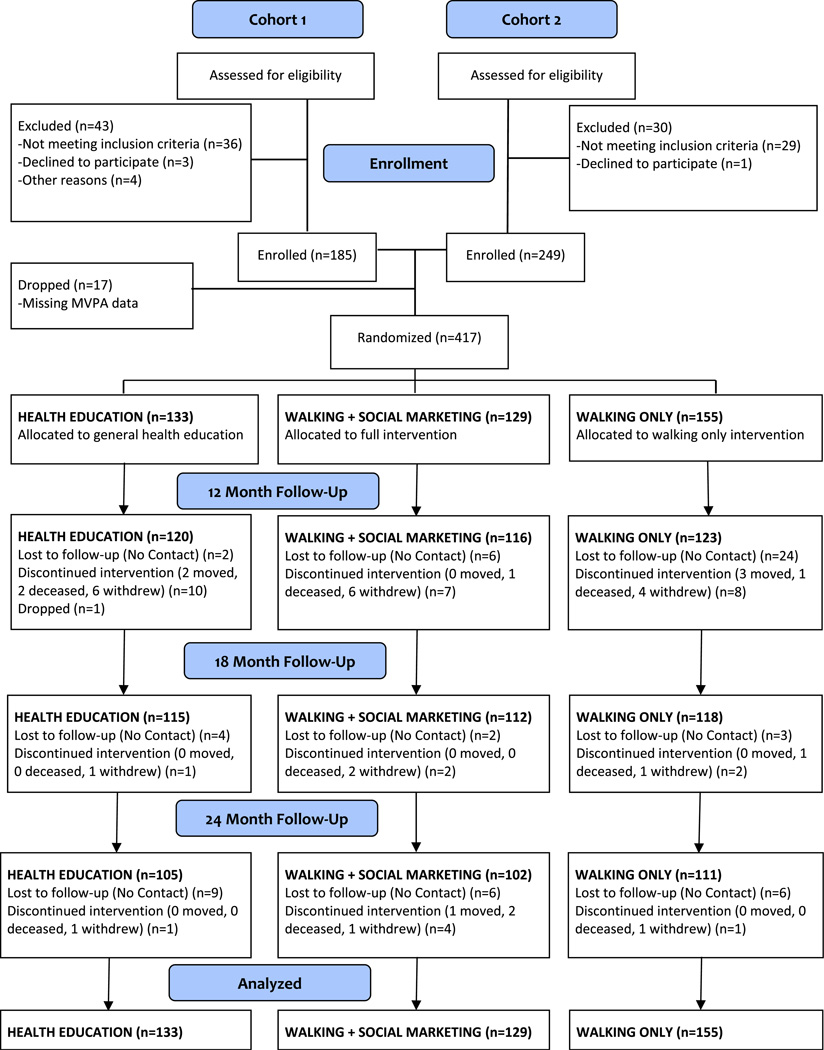
Methods: Three matched communities were randomized to a police-patrolled walking plus social marketing, a police-patrolled walking-only, or a no-walking intervention. The 24-month intervention addressed safety and access for physical activity (PA) and utilized social marketing to enhance environmental supports for PA. African-Americans (N=434; 62% females; aged 51±16 years) provided accelerometry and psychosocial measures at baseline and 12, 18, and 24 months. Walking attendance and trail use were obtained over 24 months.
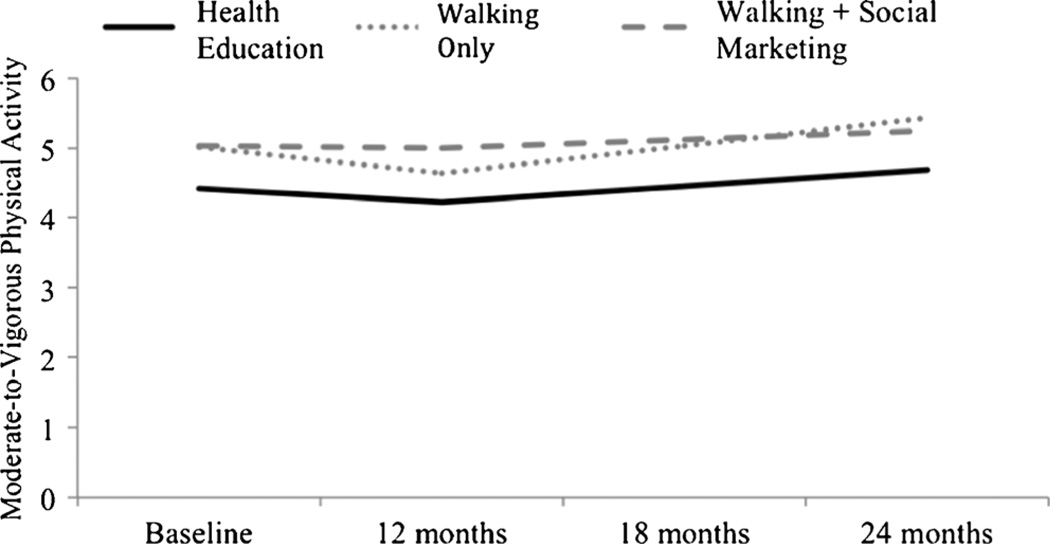
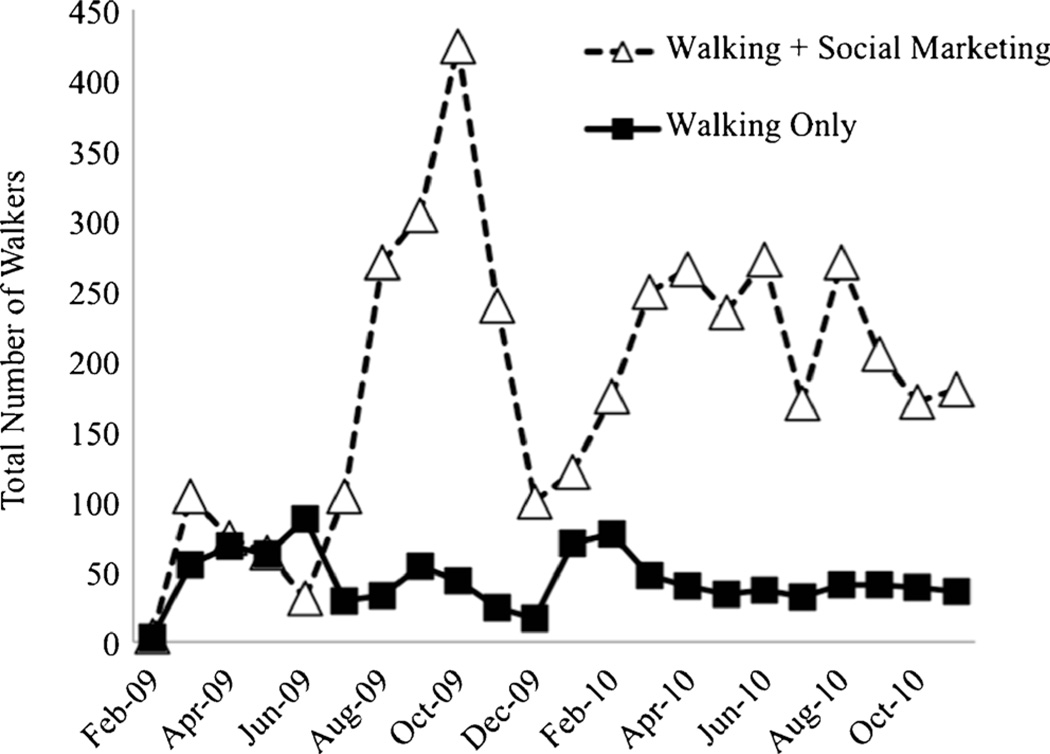
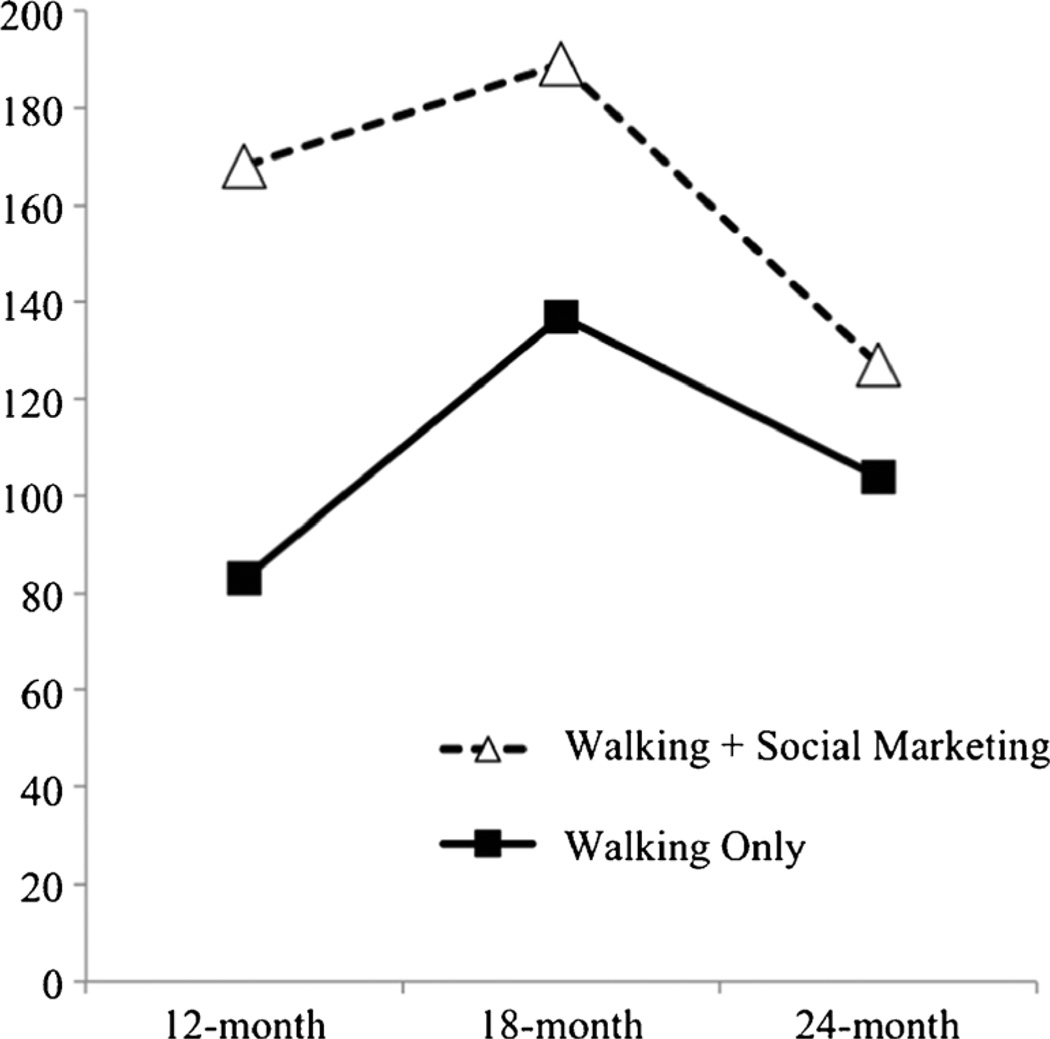
Results: There were no significant differences across communities over 24 months for moderate-to-vigorous PA. Walking attendance in the social marketing community showed an increase from 40 to 400 walkers per month at 9 months and sustained ~200 walkers per month through 24 months. No change in attendance was observed in the walking-only community.
Conclusions: Findings support integrating social marketing strategies to increase walking in underserved African-Americans (ClinicalTrials.gov #NCT01025726).
Conflict of interest statement
Figures
References
-
- Haskell WL, Lee IM, Pate RR, et al. Physical activity and public health: Updated recommendation for adults from the American College of Sports Medicine and the American Heart Association. Med Sci Sports Exerc. 2007;39:1423–1434. - PubMed
-
- Dunn AL, Marcus BH, Kampert JB, et al. Comparison of lifestyle and structured interventions to increase physical activity and cardiorespiratory fitness: A randomized trial. JAMA. 1999;281:327–334. - PubMed
-
- Pate RR, Pratt M, Blair SN, et al. Physical activity and public health A recommendation from the Centers for Disease Control and Prevention and the American College of Sports Medicine. JAMA. 1995;273:402–407. - PubMed
-
- Jones DA, Ainsworth BA, JB C, et al. Moderate leisure time physical activity: Who is meeting the public health recommendations? A national cross-sectional study. Arch Family Med. 1998;7:285–289. - PubMed
Publication types
MeSH terms
Associated data
Grants and funding
LinkOut - more resources
Full Text Sources
Other Literature Sources
Medical
