


Promoting evidence-based practice through a research training program for point-of-care clinicians
- PMID: 25390076
- PMCID: PMC4263611
- DOI: 10.1097/NNA.0000000000000151
Promoting evidence-based practice through a research training program for point-of-care clinicians
Abstract
Objectives: The purpose of this study was to evaluate the effect of a research training program on clinicians' knowledge, attitudes, and practices related to research and evidence-based practice (EBP).
Background: EBP has been shown to improve patient care and outcomes. Innovative approaches are needed to overcome individual and organizational barriers to EBP.
Methods: Mixed-methods design was used to evaluate a research training intervention with point-of-care clinicians in a Canadian urban health organization. Participants completed the Knowledge, Attitudes, and Practice Survey over 3 timepoints. Focus groups and interviews were also conducted.
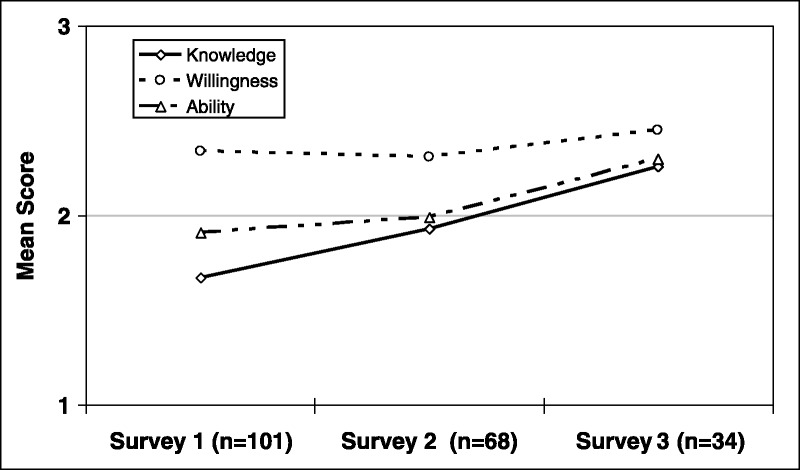
Results: Statistically significant improvement in research knowledge and ability was demonstrated. Participants and administrators identified benefits of the training program, including the impact on EBP.
Conclusions: Providing research training opportunities to point-of-care clinicians is a promising strategy for healthcare organizations seeking to promote EBP, empower clinicians, and showcase excellence in clinical research.
Conflict of interest statement
The authors declare no conflicts of interest.
Figures
References
-
- Fineout-Overholt E, Melnyk B, & Schultz A. Transforming health care from the inside out: advancing evidence-based practice in the 21st century. J Prof Nurs. 2005; 21: 335- 344. - PubMed
-
- Peterson ED, Bynum DZ, & Roe MT. Association of evidence-based care processes and outcomes among patients with acute coronary syndromes: performance matters. J Cardiovasc Nurs. 2008; 23( 1): 50- 55. - PubMed
-
- Considine J, & McGillivray B. An evidence-based practice approach to improving nursing care of acute stroke in an Australian emergency department. J Clin Nurs. 2010; 19( 1-2): 138- 144. - PubMed
-
- de Pedro-Gomez J, Morales-Asencio JM, & Bennasar-Veny M. Determining factors in evidence-based clinical practice among hospital and primary care nursing staff. J Adv Nurs. 2012; 68( 2): 452- 459. - PubMed
Publication types
MeSH terms
LinkOut - more resources
Full Text Sources
Medical
