


Molecular epidemiology of seal parvovirus, 1988-2014
- PMID: 25390639
- PMCID: PMC4229121
- DOI: 10.1371/journal.pone.0112129
Molecular epidemiology of seal parvovirus, 1988-2014
Abstract
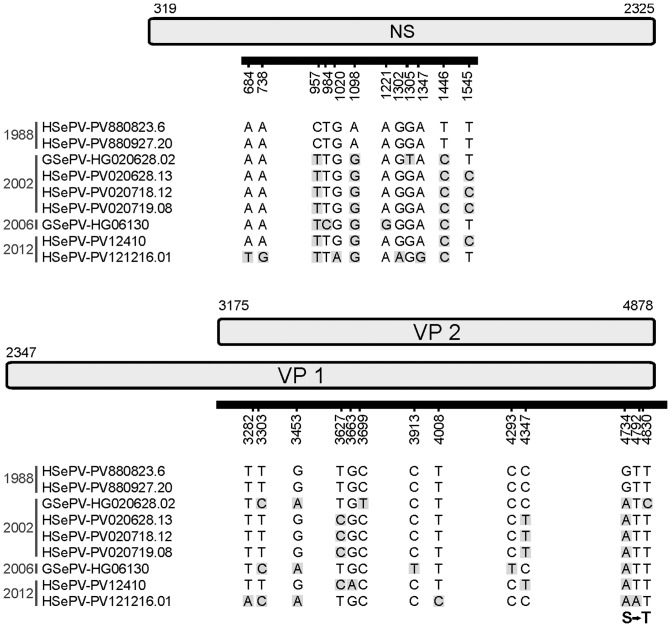
A novel parvovirus was discovered recently in the brain of a harbor seal (Phoca vitulina) with chronic meningo-encephalitis. Phylogenetic analysis of this virus indicated that it belongs to the genus Erythroparvovirus, to which also human parvovirus B19 belongs. In the present study, the prevalence, genetic diversity and clinical relevance of seal parvovirus (SePV) infections was evaluated in both harbor and grey seals (Halichoerus grypus) that lived in Northwestern European coastal waters from 1988 to 2014. To this end, serum and tissue samples collected from seals were tested for the presence of seal parvovirus DNA by real-time PCR and the sequences of the partial NS gene and the complete VP2 gene of positive samples were determined. Seal parvovirus DNA was detected in nine (8%) of the spleen tissues tested and in one (0.5%) of the serum samples tested, including samples collected from seals that died in 1988. Sequence analysis of the partial NS and complete VP2 genes of nine SePV revealed multiple sites with nucleotide substitutions but only one amino acid change in the VP2 gene. Estimated nucleotide substitution rates per year were 2.00 × 10(-4) for the partial NS gene and 1.15 × 10(-4) for the complete VP2 gene. Most samples containing SePV DNA were co-infected with phocine herpesvirus 1 or PDV, so no conclusions could be drawn about the clinical impact of SePV infection alone. The present study is one of the few in which the mutation rates of parvoviruses were evaluated over a period of more than 20 years, especially in a wildlife population, providing additional insights into the genetic diversity of parvoviruses.
Conflict of interest statement
Figures

References
-
- Cotmore SF, Tattersall P (2007) Parvoviral Host Range and Cell Entry Mechanisms. In: Karl Maramorosch AJS, Frederick AM, editors. Advances in Virus Research: Academic Press. pp. 183–232. - PubMed
-
- International Committee on Taxonomy of Viruses (2013) Virus Taxonomy: 2013 Release. Available: http://www.ictvonline.org/virusTaxonomy.asp.
-
- Broliden K, Tolfvenstam T, Norbeck O (2006) Clinical aspects of parvovirus B19 infection. J Intern Med 260: 285–304. - PubMed
Publication types
MeSH terms
Substances
LinkOut - more resources
Full Text Sources
Other Literature Sources
Miscellaneous
