. 2015 Apr;27(3):229-45.
doi: 10.1007/s12640-014-9501-0. Epub 2014 Nov 13.

The role of adenosine A1 and A2A receptors in the caffeine effect on MDMA-induced DA and 5-HT release in the mouse striatum

Affiliations

The role of adenosine A1 and A2A receptors in the caffeine effect on MDMA-induced DA and 5-HT release in the mouse striatum

A M Górska et al. Neurotox Res. 2015 Apr.

Abstract

3,4-Methylenedioxymethamphetamine (MDMA, "ecstasy") popular as a designer drug is often used with caffeine to gain a stronger stimulant effect. MDMA induces 5-HT and DA release by interaction with monoamine transporters. Co-administration of caffeine and MDMA may aggravate MDMA-induced toxic effects on DA and 5-HT terminals. In the present study, we determined whether caffeine influences DA and 5-HT release induced by MDMA. We also tried to find out if adenosine A1 and A2A receptors play a role in the effect of caffeine by investigating the effect of the selective adenosine A1 and A2A receptor antagonists, DPCPX and KW 6002 on DA and 5-HT release induced by MDMA. Mice were treated with caffeine (10 mg/kg) and MDMA (20 or 40 mg/kg) alone or in combination. DA and 5-HT release in the mouse striatum was measured using in vivo microdialysis. Caffeine exacerbated the effect of MDMA on DA and 5-HT release. DPCPX or KW 6002 co-administered with MDMA had similar influence as caffeine, but KW 6002 was more potent than caffeine or DPCPX. To exclude the contribution of MAO inhibition by caffeine in the caffeine effect on MDMA-induced increase in DA and 5-HT, we also tested the effect of the nonxanthine adenosine receptor antagonist CGS 15943A lacking properties of MAO activity modification. Our findings indicate that adenosine A1 and A2A receptor blockade may account for the caffeine-induced exacerbation of the MDMA effect on DA and 5-HT release and may aggravate MDMA toxicity.


Figures
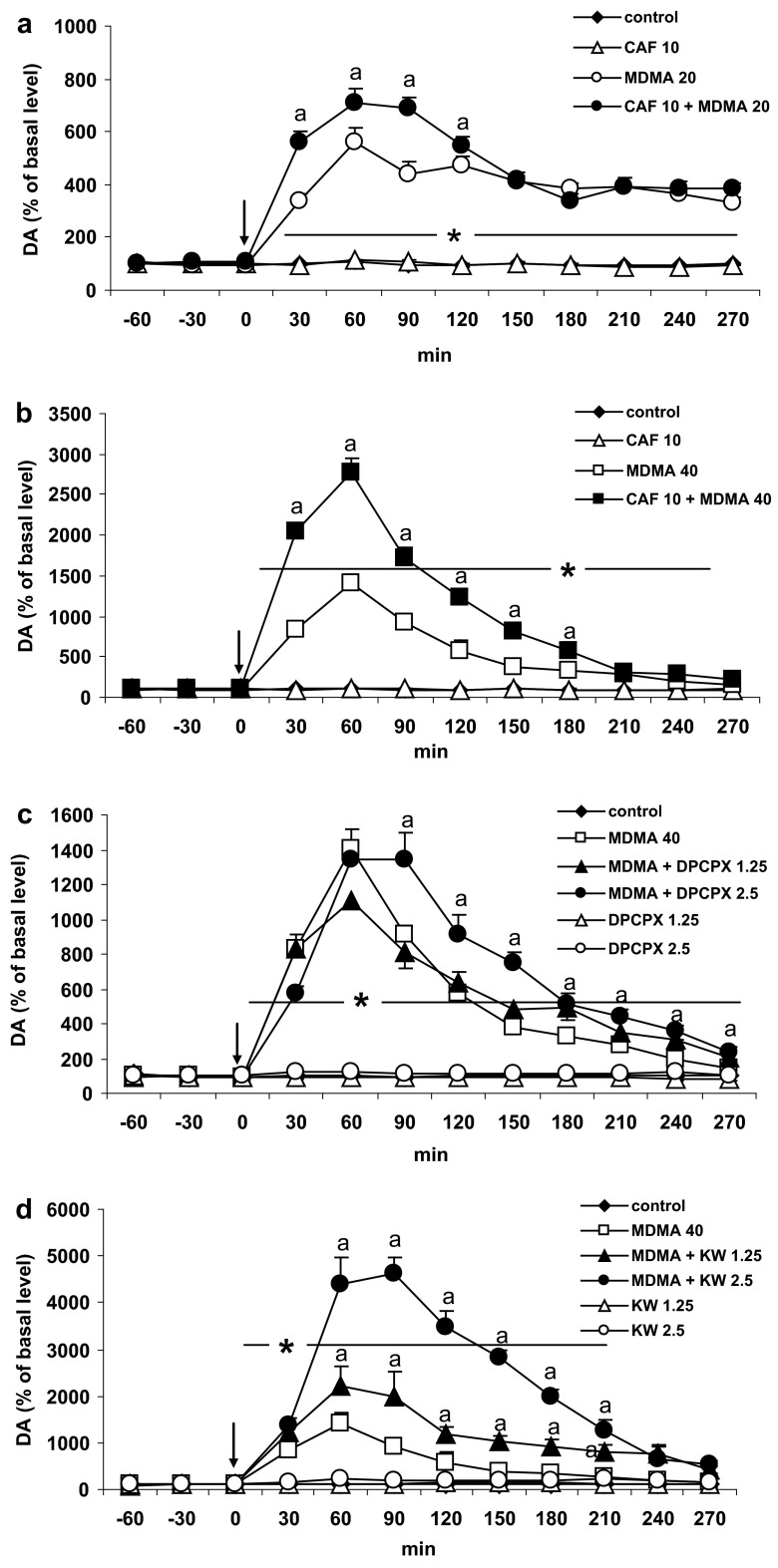
Fig. 1
Fig. 1
The effect of caffeine (CAF) and adenosine A1 and A2A receptor antagonists, DPCPX and KW 6002 (KW) on DA release induced by MDMA in the mouse striatum. CAF (10 mg/kg), DPCPX (1.25 and 2.5 mg/kg), and KW (1.25 and 2.5 mg/kg) were injected simultaneously with MDMA 20 or 40 mg/kg as indicated with an arrow. Values are the mean ± SEM (n = 6–8 animals). *P < 0.0001 represents a significant difference in comparison to control group; “aP < 0.0002 represents a significant difference in comparison to MDMA group (repeated measures ANOVA and Tukey’s post-hoc test)
Fig. 2
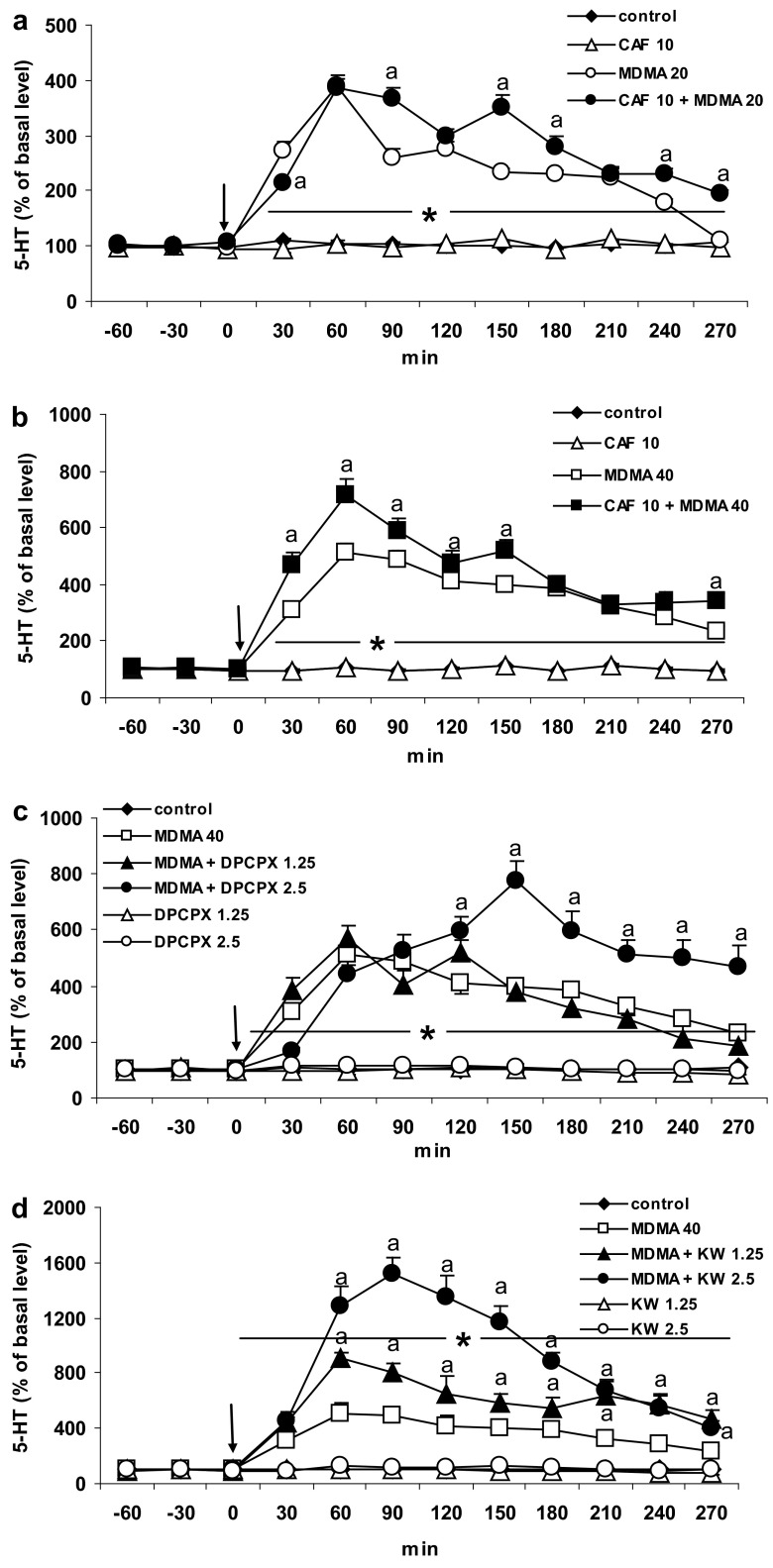
Fig. 2
The effect of caffeine (CAF) and adenosine A1 and A2A receptor antagonists, DPCPX and KW 6002 (KW) on 5-HT release induced by MDMA in the mouse striatum. CAF (10 mg/kg), DPCPX (1.25 and 2.5 mg/kg), and KW (1.25 and 2.5 mg/kg) were injected simultaneously with MDMA 20 or 40 mg/kg as indicated with an arrow. Values are the mean ± SEM (n = 6–8 animals). *P < 0.0001 represents a significant difference in comparison to control group; “aP < 0.0002–0.01 represents a significant difference in comparison to MDMA group (repeated measures ANOVA and Tukey’s post-hoc test)
Fig. 3
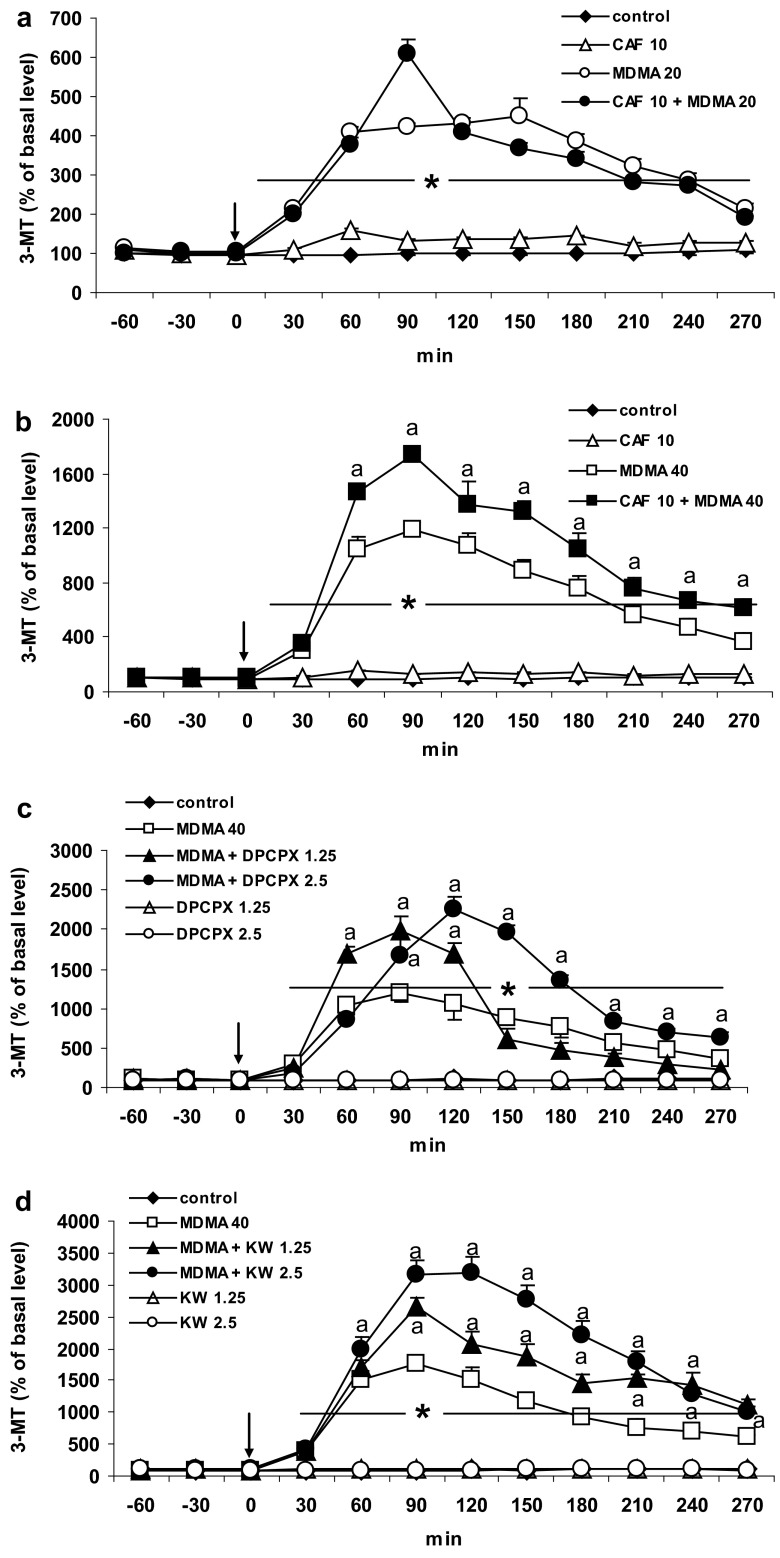
Fig. 3
The effect of caffeine (CAF) and adenosine A1 and A2A receptor antagonists, DPCPX and KW 6002 (KW) on extracellular level of 3-MT increased by MDMA in the mouse striatum. CAF (10 mg/kg), DPCPX (1.25 and 2.5 mg/kg), and KW (1.25 and 2.5 mg/kg) were injected simultaneously with MDMA 20 or 40 mg/kg as indicated with an arrow. Values are the mean ± SEM (n = 6–8 animals). *P < 0.0001 represents a significant difference in comparison to control group; “aP < 0.0002 represents a significant difference in comparison to MDMA group (repeated measures ANOVA and Tukey’s post-hoc test)
Fig. 4
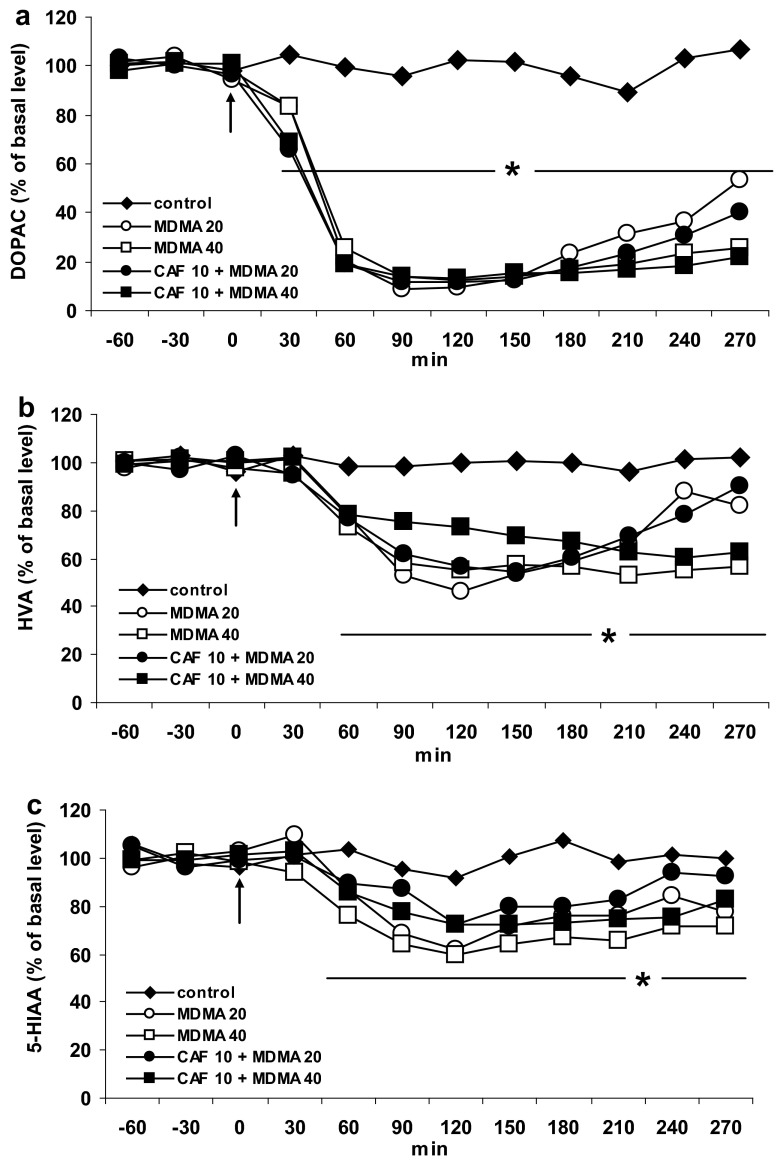
Fig. 4
The effect of caffeine (CAF) on changes in extracellular level of DOPAC, HVA, and 5-HIAA induced by MDMA in the mouse striatum. CAF (10 mg/kg) was injected simultaneously with MDMA 20 or 40 mg/kg as indicated with an arrow. Values are the mean ± SEM (n = 6–8 animals). *P < 0.0001 represents a significant difference in comparison to control group (repeated measures ANOVA and Tukey’s post-hoc test)
Fig. 5
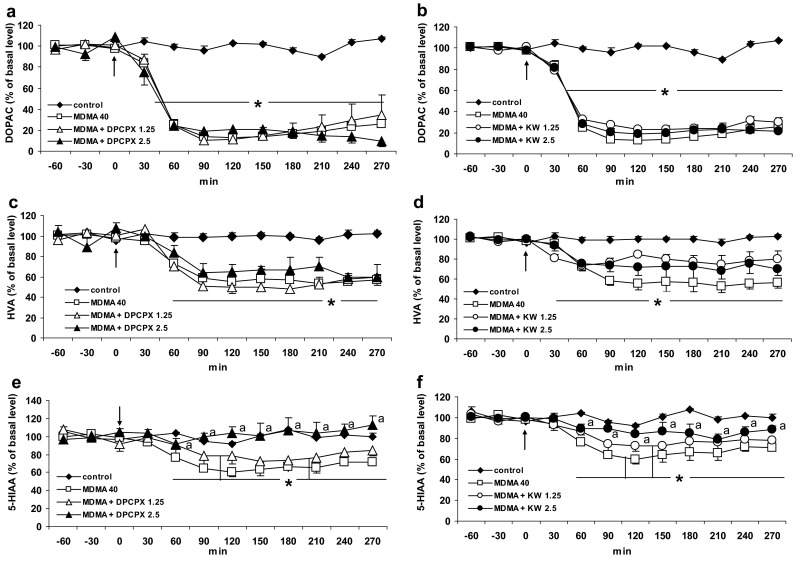
Fig. 5
The effect of adenosine A1 and A2A receptor antagonists, DPCPX and KW 6002 (KW) on the changes in extracellular level of DOPAC, HVA, and 5-HIAA induced by MDMA in the mouse striatum. DPCPX (1.25 and 2.5 mg/kg) and KW (1.25 and 2.5 mg/kg) were injected simultaneously with MDMA 40 mg/kg as indicated with an arrow. Values are the mean ± SEM (n = 6–8 animals). *P < 0.01–0.0002 represents a significant difference in comparison to control group; “aP < 0.03–0.0003 represents a significant difference in comparison to MDMA group (repeated measures ANOVA and Tukey’s post-hoc test)
Fig. 6
Fig. 6
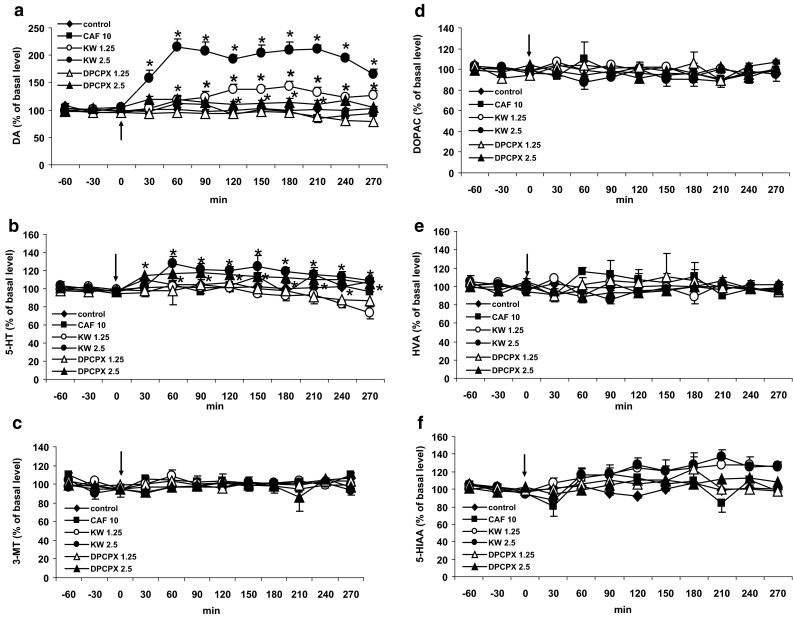
The effect of caffeine (CAF) and adenosine A1 and A2A receptor antagonists, DPCPX and KW 6002 (KW) on extracellular level of DA, 5-HT, 3-MT, DOPAC, HVA, and 5-HIAA in the mouse striatum. CAF (10 mg/kg), DPCPX (1.25 and 2.5 mg/kg), and KW (1.25 and 2.5 mg/kg) were injected as indicated with an arrow. Values are the mean ± SEM (n = 6–8 animals). *P < 0.05–0.0002 represents a significant difference in comparison to control group (repeated measures ANOVA and Tukey’s post-hoc test)
Fig. 7
Fig. 7
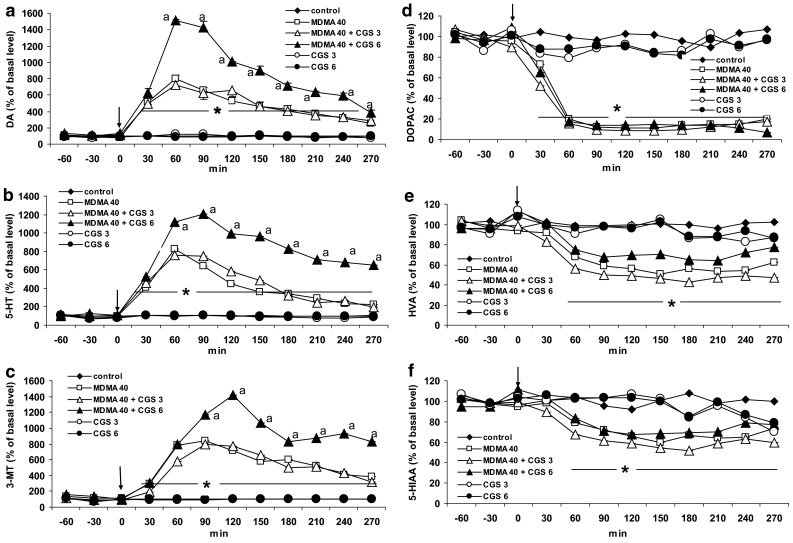
The effect of the adenosine A1/A2A receptor antagonist CGS 15943A (CGS) on MDMA-induced changes in extracellular level of DA, 5-HT, 3-MT, DOPAC, HVA, and 5-HIAA in the mouse striatum. CGS 15943A (3 and 6 mg/kg) was injected simultaneously with MDMA 40 mg/kg as indicated with an arrow. Values are the mean ± SEM (n = 4 animals). *P < 0.01–0.0002 represents significant difference in comparison to control group; “aP < 0.02–0.0002 represents a significant difference in comparison to MDMA group (repeated measures ANOVA and Tukey’s post-hoc test)
Fig. 8
Fig. 8
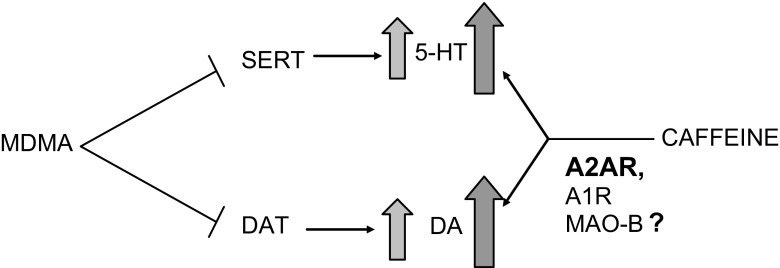
Diagram showing a summary and conclusion of the presented findings. MDMA by blocking 5-HT transporter (SERT) and DA transporter (DAT) produces an increase in extracellular level of 5-HT and DA. Caffeine enhances the effect of MDMA on 5-HT and DA by blocking mainly adenosine A2A receptors and to a smaller extent adenosine A1 receptors. There is no evidence for the role of MAO-B inhibition by caffeine in its effect on monoamine release

References

    1. Abreu RV, Silva-Oliveira EM, Moraes MFD, Pereira GS, Moraes-Santos T. Chronic coffee and caffeine ingestion effects on the cognitive function and antioxidant system of rat brains. Pharmacol Biochem Behav. 2011;99:659–664. doi: 10.1016/j.pbb.2011.06.010. - DOI - PubMed
    1. Alex KD, Pehek EA. Pharmacologic mechanisms of serotonergic regulation of dopamine neurotransmission. Pharmacol Ther. 2007;113:296–320. doi: 10.1016/j.pharmthera.2006.08.004. - DOI - PMC - PubMed
    1. Aoyama S, Kase H, Borrelli E. Rescue of locomotor impairment in dopamine D2 receptor-deficient mice by an adenosine A2A receptor antagonist. J Neurosci. 2000;20:5848–5852. - PMC - PubMed
    1. Baumann MH, Clark RD, Budzynski AG, Partilla JS, Blough BE, Rothman RB. N-substituted piperazines abused by humans mimic the molecular mechanism of 3,4-methylenedioxymethamphetamine (MDMA, or “ecstasy”) Neuropsychopharmacology. 2005;30:550–560. doi: 10.1038/sj.npp.1300585. - DOI - PubMed
    1. Baumann MH, Wang X, Rothman RB. 3,4-Methylenedioxymethamphetamine (MDMA) neurotoxicity in rats: a reappraisal of past and present findings. Psychopharmacology. 2007;189:407–424. doi: 10.1007/s00213-006-0322-6. - DOI - PMC - PubMed

Publication types

LinkOut - more resources