


Baths salts, spice, and related designer drugs: the science behind the headlines
- PMID: 25392483
- PMCID: PMC4228124
- DOI: 10.1523/JNEUROSCI.3223-14.2014
Baths salts, spice, and related designer drugs: the science behind the headlines
Abstract
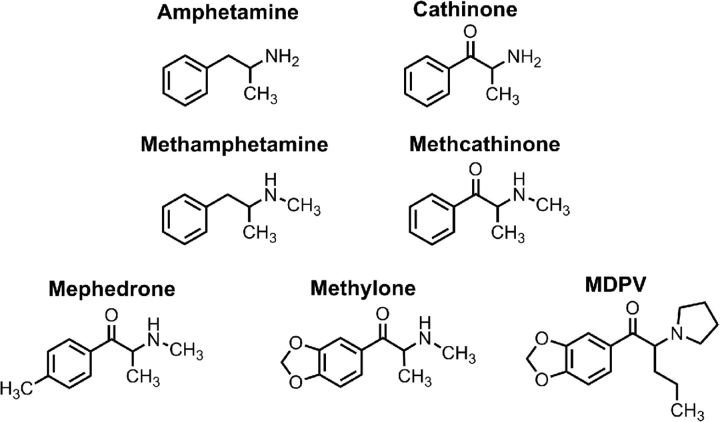
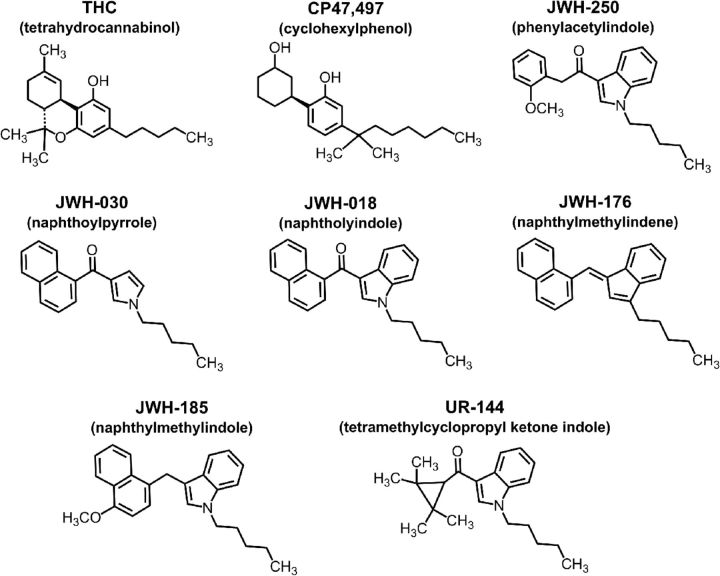
The abuse of synthetic psychoactive substances known as "designer drugs," or "new psychoactive substances" (NPS), is increasing at an alarming rate. NPS are purchased as alternatives to traditional illicit drugs of abuse and are manufactured to circumvent laws regulating the sale and use of controlled substances. Synthetic cathinones (i.e., "bath salts") and synthetic cannabinoids (i.e., "spice") are two types of NPS that have received substantial media attention. Although low recreational doses of bath salts or spice compounds can produce desirable effects, high doses or chronic exposure often leads to dangerous medical consequences, including psychosis, violent behaviors, tachycardia, hyperthermia, and even death. Despite the popularity of NPS, there is a paucity of scientific data about these drugs. Here we provide a brief up-to-date review describing the mechanisms of action and neurobiological effects of synthetic cathinones and cannabinoids.
Copyright © 2014 the authors 0270-6474/14/3415150-09$15.00/0.
Figures
References
-
- Aarde SM, Huang PK, Creehan KM, Dickerson TJ, Taffe MA. The novel recreational drug 3,4-methylenedioxypyrovalerone (MDPV) is a potent psychomotor stimulant: self-administration and locomotor activity in rats. Neuropharmacology. 2013a;71:130–140. doi: 10.1016/j.neuropharm.2013.04.003. - DOI - PMC - PubMed
-
- Aarde SM, Angrish D, Barlow DJ, Wright MJ, Jr, Vandewater SA, Creehan KM, Houseknecht KL, Dickerson TJ, Taffe MA. Mephedrone (4-methylmethcathinone) supports intravenous self-administration in Sprague-Dawley and Wistar rats. Addict Biol. 2013b;18:786–799. doi: 10.1111/adb.12038. - DOI - PMC - PubMed
-
- Anizan S, Ellefsen K, Concheiro M, Suzuki M, Rice KC, Baumann MH, Huestis MA. 3,4-Methylenedioxypyrovalerone (MDPV) and metabolites quantification in human and rat plasma by liquid chromatography-high resolution mass spectrometry. Anal Chim Acta. 2014;827:54–63. doi: 10.1016/j.aca.2014.04.015. - DOI - PMC - PubMed
Publication types
MeSH terms
Substances
Grants and funding
LinkOut - more resources
Full Text Sources
Other Literature Sources
Medical
