Review
. 2014 Dec;4(12):1377-86.
doi: 10.1158/2159-8290.CD-14-0477. Epub 2014 Nov 13.

Universes collide: combining immunotherapy with targeted therapy for cancer

Affiliations
Review

Universes collide: combining immunotherapy with targeted therapy for cancer

Jennifer A Wargo et al. Cancer Discov. 2014 Dec.

Abstract

There have been significant advances in the past several years with regard to targeted therapy and immunotherapy for cancer. This is highlighted in melanoma, where treatment with targeted therapy (against the BRAF oncoprotein) results in responses in the majority of patients, although the duration of response is limited. In contrast, treatment with immunotherapy results in a lower response rate, but one that tends to be more durable. Insights about mechanisms of response and potential synergy between these treatment strategies for melanoma are a focus of this review, with opportunities to extend these insights to the treatment of other cancers.

Significance: Two major advances in melanoma have occurred concurrently and involve treatment with targeted therapy and immune checkpoint blockade. However, each of these approaches has limitations with regard to overall response rates or duration of response. To address this, investigators have proposed combining these strategies, and this concept is being tested empirically in clinical trials. There is a scientific rationale supporting the combination of targeted therapy and immunotherapy, and these concepts are discussed herein.


Conflict of interest statement

Disclosure of Potential Conflicts of Interest: K.T. Flaherty has served as a consultant to GlaxoSmithKline and Roche/Genentech. J.A. Wargo has honoraria from speakers' bureau of Dava Oncology and is an advisory board member for GlaxoSmithKline, Roche/Genentech, and Amgen. No potential conflicts of interest were disclosed by the other author.

Figures

Figure 1
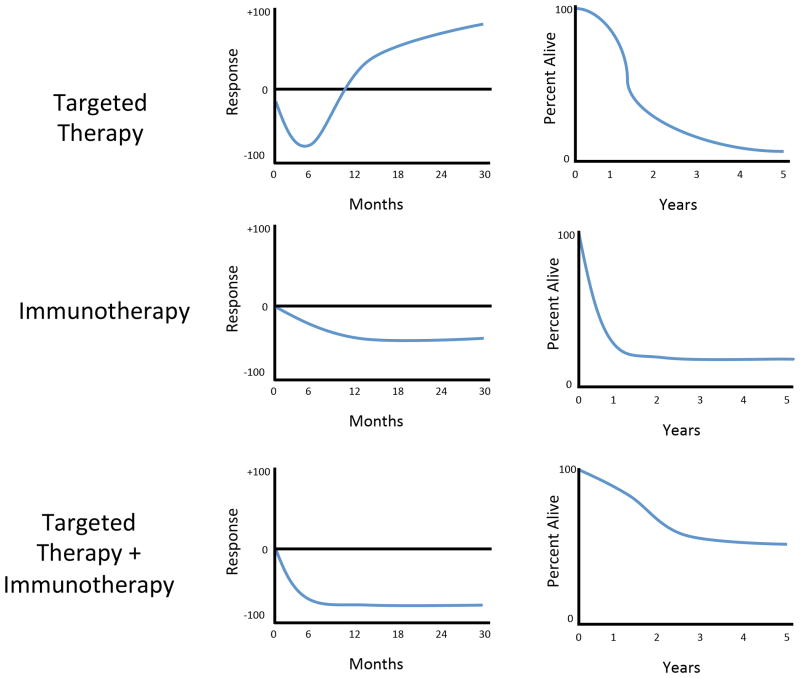
Figure 1. Representative response rates of targeted therapy, immunotherapy and combined targeted therapy and immunotherapy
Plots representing the rate of response (left) and survival (right) after either targeted therapy (top), immunotherapy (middle) or the combination of the two (bottom). The response and survival plots on the top show typical responses to targeted therapy, with a deep but transient response rate and improved survival (compared to chemotherapy), but a “tail of the curve” approaching zero. This is in contrast to the response and survival plots in the middle for immunotherapy, with a more shallow but more durable response curve and improved survival (compared to chemotherapy) and a plateau in the “tail of the curve,” suggesting the potential for long-term disease control. The bottom plots show proposed response and survival curves for combined targeted therapy and immunotherapy, with a deep and prolonged response rate, resulting in higher survival than either therapy alone and a higher “tail of the curve” with disease control in a much greater proportion of patients.
Figure 2
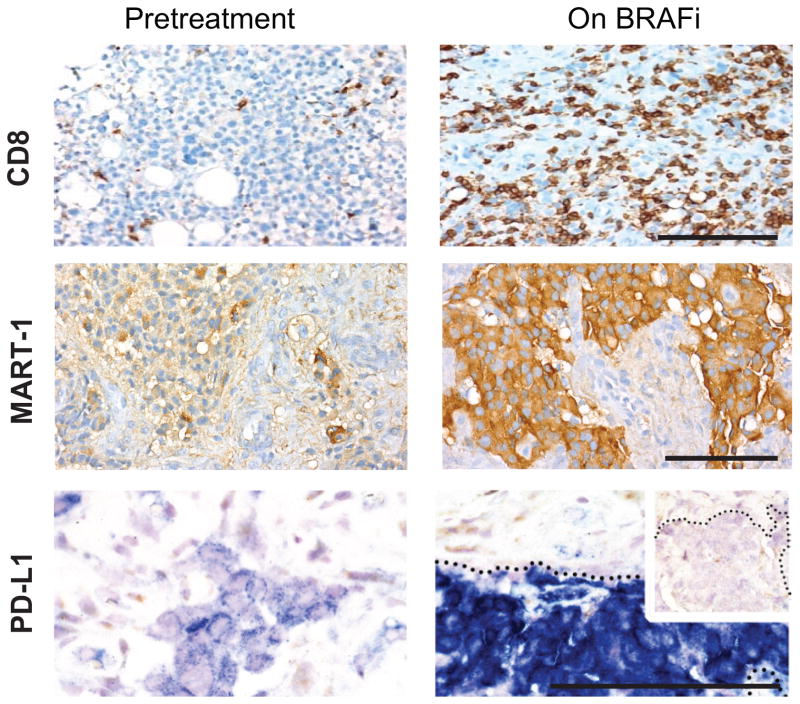
Figure 2. Changes in the tumor microenvironment with BRAF inhibition
Patients with metastatic melanoma treated with BRAF inhibitors were biopsied pre-treatment and 10-14 days after treatment initiation. BRAF inhibition is associated with an increase in CD8+ T cells, melanoma differentiation antigen expression, and the immunomodulatory molecule PD-L1. Adapted from Frederick et al., 2013 (12).
Figure 3
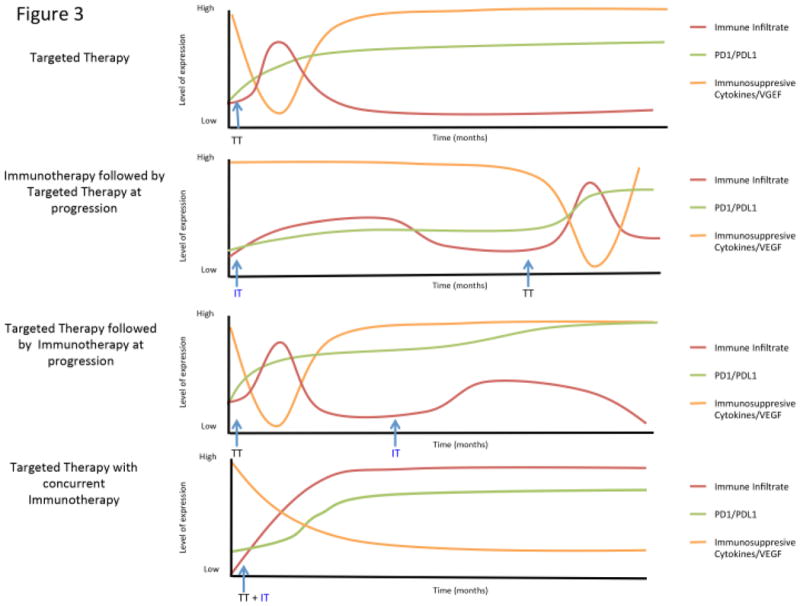
Figure 3. Sequence and timing considerations for combining targeted therapy and immunotherapy
The proposed plots show changes in immune infiltrate and expression of immunomodulatory molecules / cytokines / VEGF depending on the sequence of treatment with targeted therapy and immunotherapy. With targeted therapy, there is an early but transient increase in immune infiltrate that is associated with a transient decrease in immunosuppressive cytokines, but an increase in PD-1 and PD-L1. Treatment with immunotherapy results in a more gradual and prolonged increase in immune infiltrate, and is also associated with an increase in PD-1 and PD-L1. The addition of targeted therapy at time of progression on immunotherapy may not lead to synergy given the kinetics of these changes in the tumor microenvironment. Likewise, the addition of immunotherapy at time of progression to targeted therapy may not lead to synergy for similar reasons. However, the concurrent use of targeted therapy and immunotherapy simultaneously promotes a favorable microenvironment along with T cell activation, with the potential for synergy and prolonged responses.

References

    1. Davies H, Bignell GR, Cox C, Stephens P, Edkins S, Clegg S, et al. Mutations of the BRAF gene in human cancer. Nature. 2002;417:949–54. - PubMed
    1. Chapman PB, Hauschild A, Robert C, Haanen JB, Ascierto P, Larkin J, et al. Improved survival with vemurafenib in melanoma with BRAF V600E mutation. The New England journal of medicine. 2011;364:2507–16. - PMC - PubMed
    1. Hauschild A, Grob JJ, Demidov LV, Jouary T, Gutzmer R, Millward M, et al. Dabrafenib in BRAF-mutated metastatic melanoma: a multicentre, open-label, phase 3 randomised controlled trial. Lancet. 2012;380:358–65. - PubMed
    1. Sosman JA, Kim KB, Schuchter L, Gonzalez R, Pavlick AC, Weber JS, et al. Survival in BRAF V600-mutant advanced melanoma treated with vemurafenib. The New England journal of medicine. 2012;366:707–14. - PMC - PubMed
    1. Flaherty KT, Infante JR, Daud A, Gonzalez R, Kefford RF, Sosman J, et al. Combined BRAF and MEK Inhibition in Melanoma with BRAF V600 Mutations. The New England journal of medicine. 2012;367:1694–703. - PMC - PubMed

Publication types

Substances