


Inhibition effects of scorpion venom extracts (Buthus matensii Karsch) on the growth of human breast cancer MCF-7 cells
- PMID: 25395713
- PMCID: PMC4202526
- DOI: 10.4314/ajtcam.v11i5.17
Inhibition effects of scorpion venom extracts (Buthus matensii Karsch) on the growth of human breast cancer MCF-7 cells
Abstract
Background: To observe the inhibition effects of the Buthus matensii Karsch (BmK) scorpion venom extracts on the growth of human breast cancer MCF-7 cells, and to explore its mechanisms.
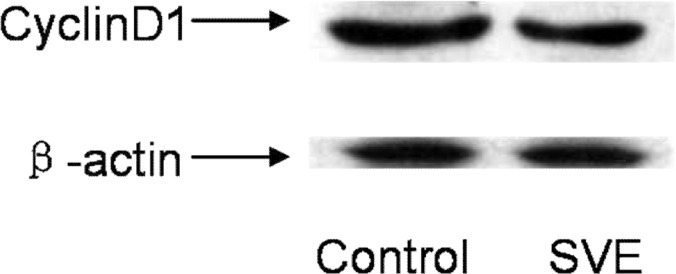
Methods: Two common tumor cells (SMMC7721, MCF-7) were examined for the one which wasmore sensitivity to scorpion venom by MTT method. Cell cycle was determined by flow cytometry. Immunocytochemistry was applied to detect apoptosis-related protein Caspase-3 and Bcl-2 levels, while the expression of cell cycle-related protein Cyclin D1 was shown by Western blotting.
Results: Our data indicated that MCF-7 was the more sensitive cell line to scorpion venom. The extracts of scorpion venom could inhibit the growth and proliferation of MCF-7 cells. Furthermore, the extract of scorpion venom induced apoptosis through Caspase-3 up-regulation while Bcl-2 down-regulation in MCF-7 cells. In addition, the extracts of scorpion venom blocked the cells from G0/G1 phase to S phase and decreased cell cycle-related protein Cyclin D1 level after drug intervention compared with the negative control group.
Conclusions: These results showed that the BmK scorpion venom extracts could inhibit the growth of MCF-7 cells by inducing apoptosis and blocking cell cycle in G0/G1 phase. The BmK scorpion venom extracts will be very valuable for the treatment of breast cancer.
Keywords: Apoptosis; Buthus matensii Karsch; MCF-7; cell cycle; scorpion venom.
Figures


References
-
- Zhou X. Progress in Biochemistry and Biophysics. 1984;1:20–25.
-
- Wang Y, Lv X. Advances in Purification of Scorpion Venom from Buthus Martensii and Pharmacological Effects. Chinese herbal medicine. 2000;31:59–61.
-
- Wu B, Gao C, Zhang Y, Zhou D. In vitro inhibition and killing effects of scorpion venom biological extracts from Buthus Martensii on colorectal carcinoma. Journal of Chinese Anorectal. 1993;4:3–6.
-
- Fracchiolla NS, Pruneri G, Pignataro L, et al. Molecular and immunohistochemical analysis of the bcl-1/ cyclin D1 gene in laryngeal squamous cell carcinomas: correlation of protein expression with lymph node metastasis and advanced clinical stage. Cancer. 1997;79:1114–1121. - PubMed
-
- Btieler H. Mitochondrial dynamics, cell death and the pat hogene-sis of Parkinson's disease. Apeptosis. 2010;15(11):1336–1353. - PubMed
Publication types
MeSH terms
Substances
LinkOut - more resources
Full Text Sources
Medical
Research Materials