


Lumbosacral transitional vertebrae and its prevalence in the Australian population
- PMID: 25396103
- PMCID: PMC4229381
- DOI: 10.1055/s-0034-1387808
Lumbosacral transitional vertebrae and its prevalence in the Australian population
Abstract
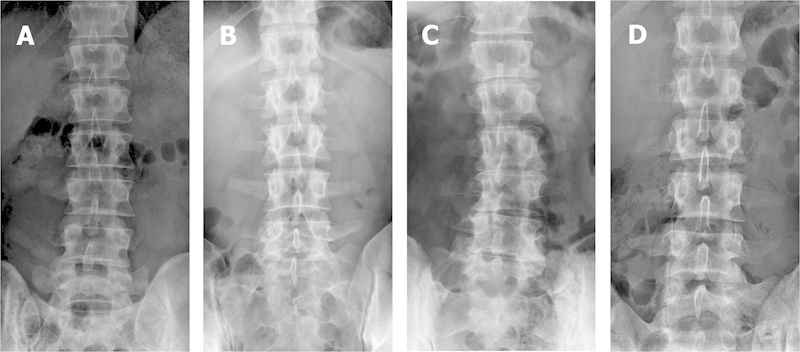
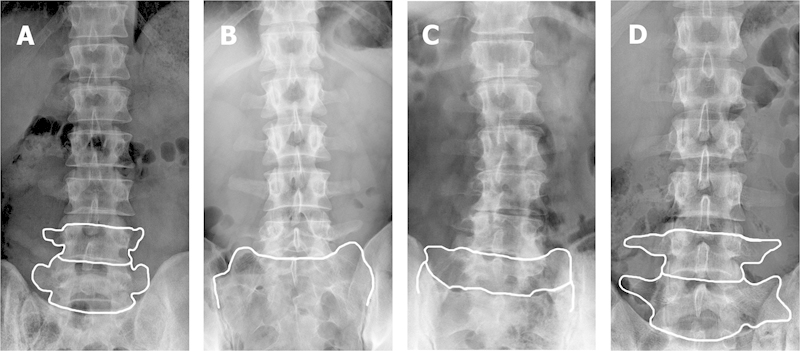
Study Design Retrospective cohort study. Objective Lumbosacral transitional vertebrae (LSTV) are a common congenital anomaly, and they can be accurately identified on anteroposterior (AP) radiographs of the lumbosacral spine. This study attempts to determine the prevalence of this congenital anomaly and to increase awareness among all clinicians to reduce the risk of surgical and procedural errors in patients with LSTV. Methods A retrospective review of 5,941 AP and lateral lumbar radiographs was performed. Transitional vertebrae were identified and categorized under the Castellvi classification. Results The prevalence of LSTV in the study population was 9.9%. Lumbarized S1 and sacralized L5 were seen in 5.8 and 4.1% of patients, respectively. Conclusion LSTV are a common normal variant and can be a factor in spinal surgery at incorrect levels. It is essential that all clinicians are aware of this common congenital anomaly.
Keywords: lumbarization; lumbosacral; sacralization; spinal surgery; transitional vertebrae.
Conflict of interest statement
Figures
References
-
- Wigh R E. The thoracolumbar and lumbosacral transitional junctions. Spine (Phila Pa 1976) 1980;5(3):215–222. - PubMed
-
- Lee C H, Park C M, Kim K A. et al. Identification and prediction of transitional vertebrae on imaging studies: anatomical significance of paraspinal structures. Clin Anat. 2007;20(8):905–914. - PubMed
-
- Apazidis A, Ricart P A, Diefenbach C M, Spivak J M. The prevalence of transitional vertebrae in the lumbar spine. Spine J. 2011;11(9):858–862. - PubMed
-
- Castellvi A E, Goldstein L A, Chan D P. Lumbosacral transitional vertebrae and their relationship with lumbar extradural defects. Spine (Phila Pa 1976) 1984;9(5):493–495. - PubMed
LinkOut - more resources
Full Text Sources
Other Literature Sources
