


Marijuana motivations across adolescence: impacts on use and consequences
- PMID: 25396758
- PMCID: PMC4586128
- DOI: 10.3109/10826084.2014.977396
Marijuana motivations across adolescence: impacts on use and consequences
Abstract
Background. Motivational models for marijuana use have focused on reasons to use marijuana, but rarely consider motives to abstain.
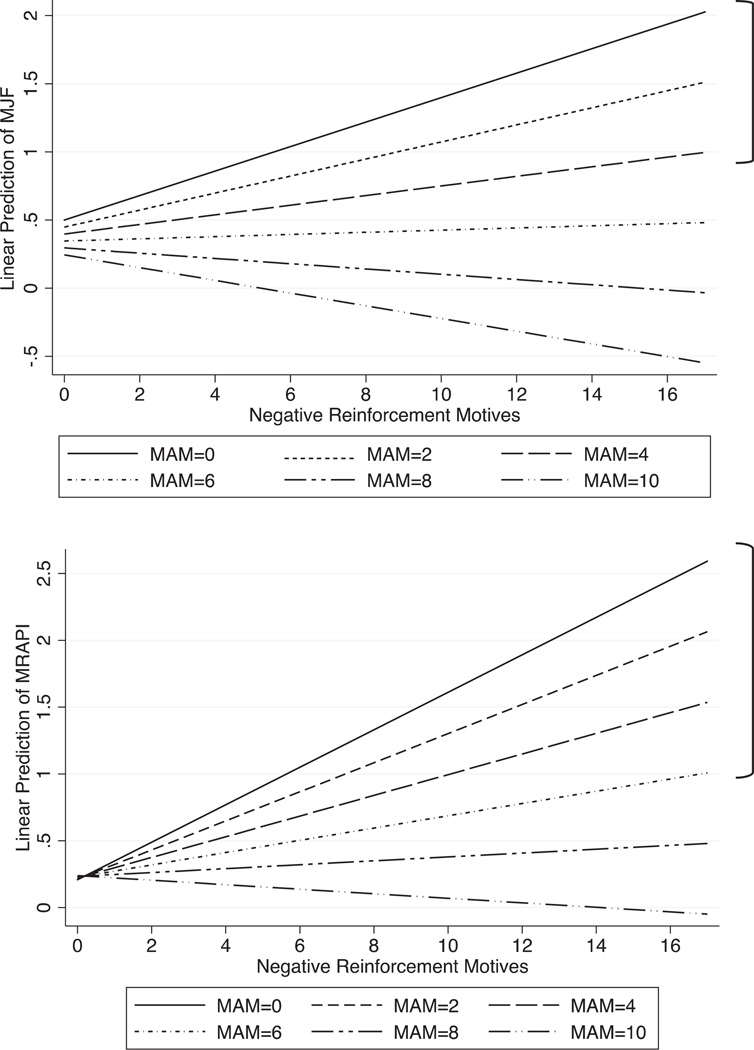
Objectives: We examined how both adolescent marijuana abstinence motives and use motives contribute to marijuana use and problems at the end of emerging adulthood. Methods. 434 community recruited youth who had not initiated marijuana use at baseline were followed from adolescence (at ages 12, 15, and 18 years) into emerging adulthood (age 25 years). Motives to abstain and to use marijuana, marijuana consumption, and marijuana-related problems were assessed across time. Results. Endorsing more motives to abstain from marijuana across adolescence predicted less marijuana use in emerging adulthood and fewer marijuana-related problems when controlling for past motives to abstain and marijuana-related behavior. Positive reinforcement use motives related to increased marijuana consumption and problems, and negative reinforcement motives predicted problems when controlling for past marijuana use motives and behaviors. Expansion motives during adolescence related to lower marijuana use in emerging adulthood. When considered together, motives to abstain buffered the effect of negative reinforcement motives on outcomes at age 25 for youth endorsing a greater number of abstinence motives. Conclusions/ Implications. Given these findings, inclusion of both motives to use and abstain is warranted within comprehensive models of marijuana use decision making and may provide important markers for prevention and intervention specialists.
Keywords: abstinence motives; adolescence; marijuana; marijuana motives.
Conflict of interest statement
The authors report no conflicts of interest. The authors alone are responsible for the content and writing of the article.
Figures
References
-
- Ajzen I. From intentions to actions: A theory of planned behavior. In: Kuhl J, Beckmann J, editors. Action control: From cognition to behavior. New York: Springer-Verlag; 1985. pp. 11–39.
-
- Allison PD. Longitudinal data analysis using Stata. Haverford, PA: Statistical Horizons; 2012.
MeSH terms
Grants and funding
LinkOut - more resources
Full Text Sources
Other Literature Sources
Medical
Miscellaneous
