


A novel simple assay system to quantify the percent HCV-RNA levels of NS5A Y93H mutant strains and Y93 wild-type strains relative to the total HCV-RNA levels to determine the indication for antiviral therapy with NS5A inhibitors
- PMID: 25397971
- PMCID: PMC4232421
- DOI: 10.1371/journal.pone.0112647
A novel simple assay system to quantify the percent HCV-RNA levels of NS5A Y93H mutant strains and Y93 wild-type strains relative to the total HCV-RNA levels to determine the indication for antiviral therapy with NS5A inhibitors
Abstract
Aim: Oral treatment with asunaprevir and daclatasvir has been reported to yield a SVR ratio of 80% in patients with genotype 1b HCV infection, however, treatment failure has been reported, especially in patients with HCV strains showing the NS5A-Y93H mutation at baseline. An assay system to detect such strains was established to facilitate selection of appropriate candidates for this antiviral therapy.
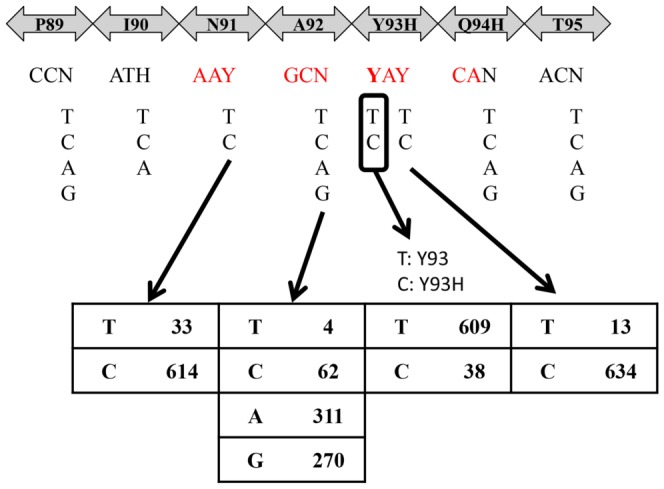
Methods: Primer sets and 2 types of cycling probe mixtures were designed, and real-time PCR was performed with HCV-RNA purified from 332 patients with genotype 1b HCV infection, and the results were compared with those obtained by direct sequencing.
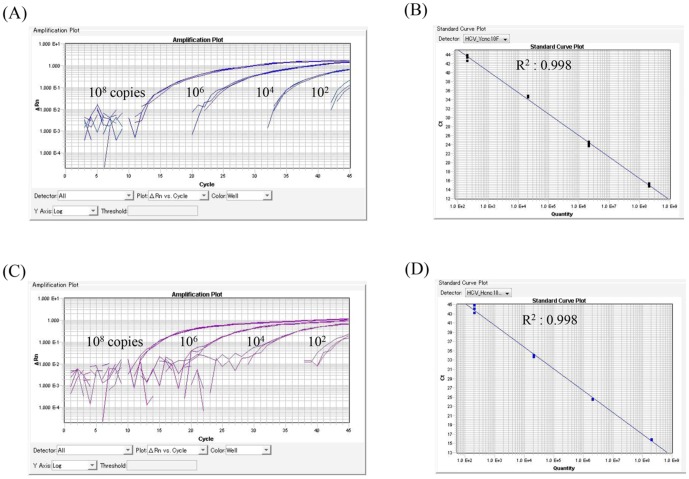
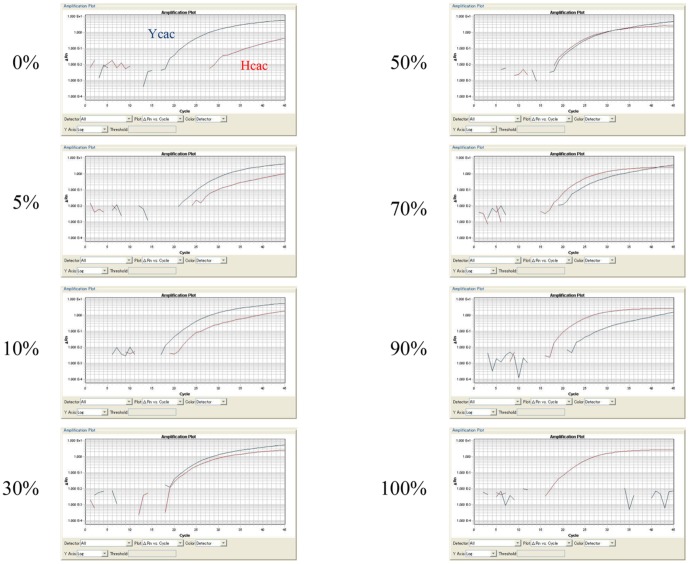
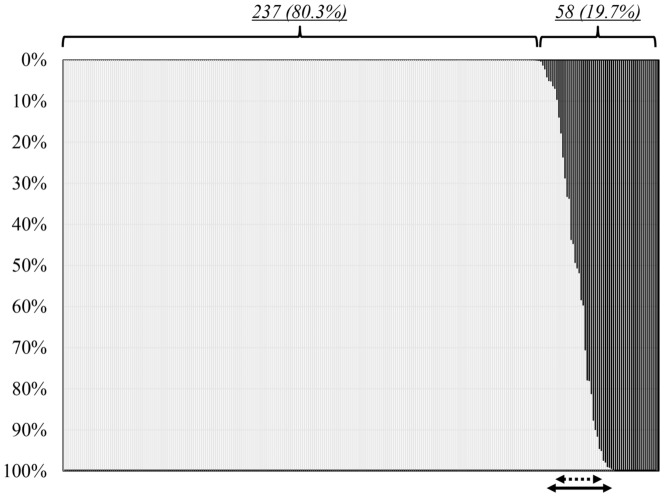
Results: Both the wild-type and mutant strains were quantified, with a threshold of 4.0 Log copies/mL, in 295 of the 332 patients (88.9%), and the percentage of the mutant strains relative to the total HCV-RNA level in the serum was calculated. The percentage was 0% in 237 patients (80.3%) and 100% in 23 patients (7.8%), identical to the results of direct sequencing. Both wild-type and mutant strains were detected in the remaining 35 patients (11.9%), at levels between 1% and 99%, despite the mutant strains having been undetectable by direct sequencing in 11 patients with percentages of these strains of less than 25%.
Conclusion: A novel assay system to quantify the percent RNA of Y93H mutant strains relative to the total HCV-RNA level was established. This system may be useful to determine the indication for treatment with NA5A inhibitors in patients with HCV.
Conflict of interest statement
Figures
References
-
- Mohd Hanafiah K, Groeger J, Flaxman AD, Wiersma ST (2013) Global epidemiology of hepatitis C virus infection: New estimate of age-specific antibody to HCV seroprevalence. Hepatology 57: 1333–1342. - PubMed
-
- World Health Organization Hepatitis C, Fact sheet N164, Updated June 2013. Available: http://www.who.int/mediacentre/factsheets/fs164/en/index.html. Accessed 2014 Oct 25.
-
- Ikai I, Arii S, Okazaki M, Okita K, Omata M, et al. (2007) Report of the 17th Nationwide Follow-up Survey of Primary Liver Cancer in Japan. Hepatol Res 37: 676–691. - PubMed
-
- Umemura T, Ichijo T, Yoshizawa K, Tanaka E, Kiyosawa K (2009) Epidemiology of hepatocellular carcinoma in Japan. J Gastroenterol 44 Suppl 19: 102–107. - PubMed
Publication types
MeSH terms
Substances
LinkOut - more resources
Full Text Sources
Other Literature Sources
Medical
