


Neuronal correlates of a virtual-reality-based passive sensory P300 network
- PMID: 25401520
- PMCID: PMC4234463
- DOI: 10.1371/journal.pone.0112228
Neuronal correlates of a virtual-reality-based passive sensory P300 network
Abstract
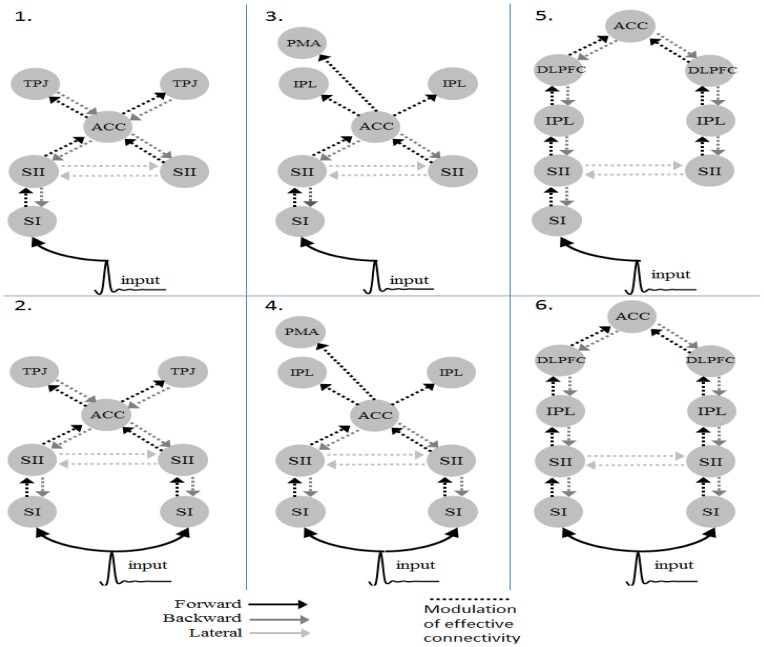
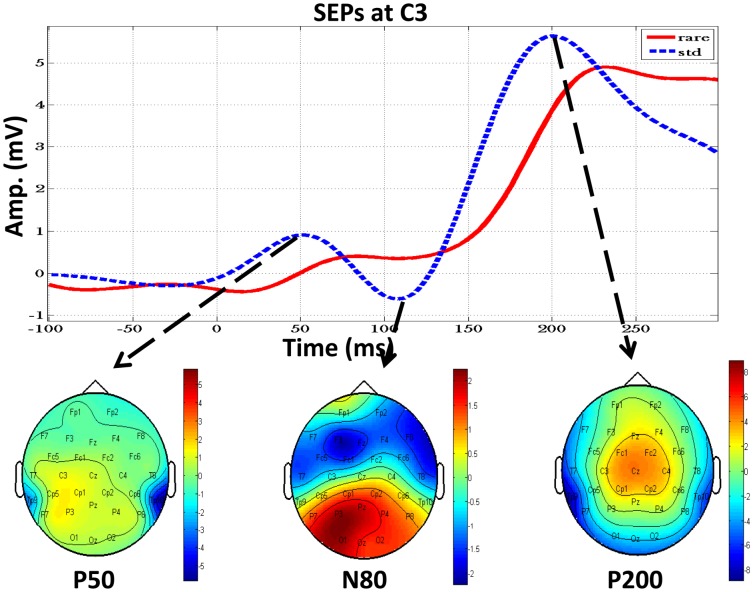
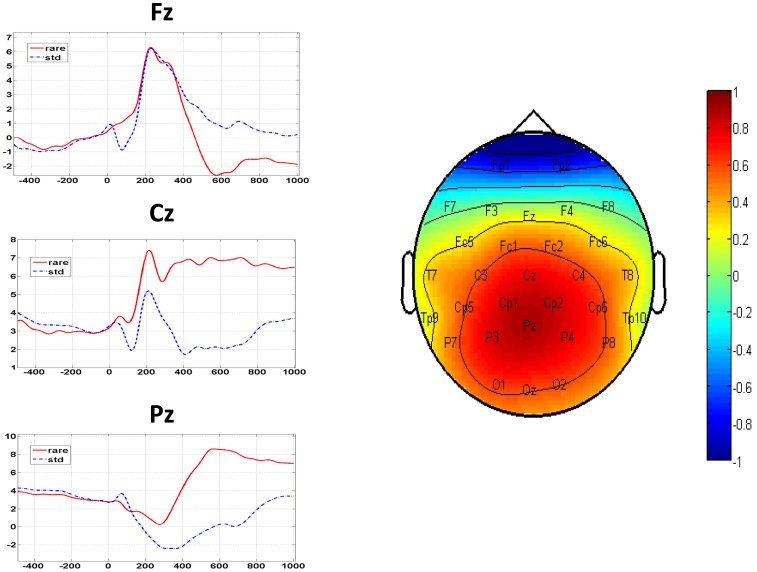
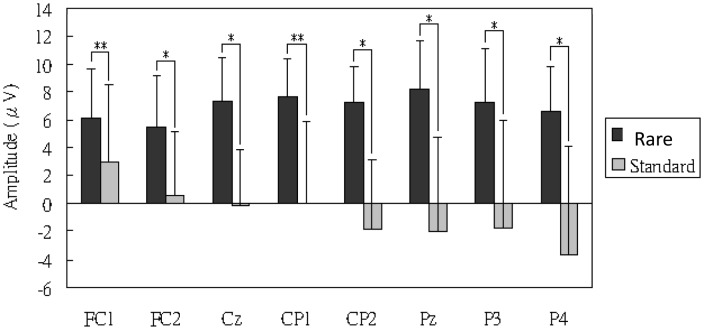
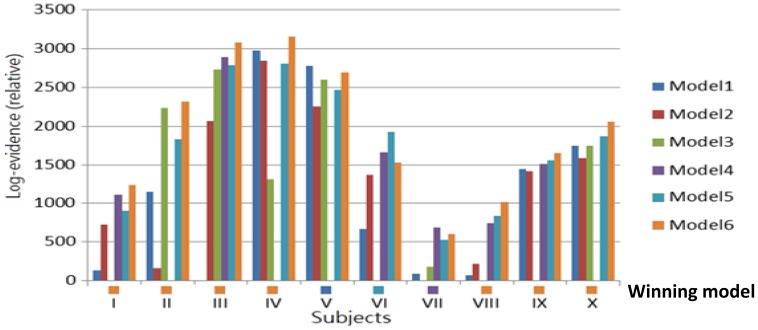
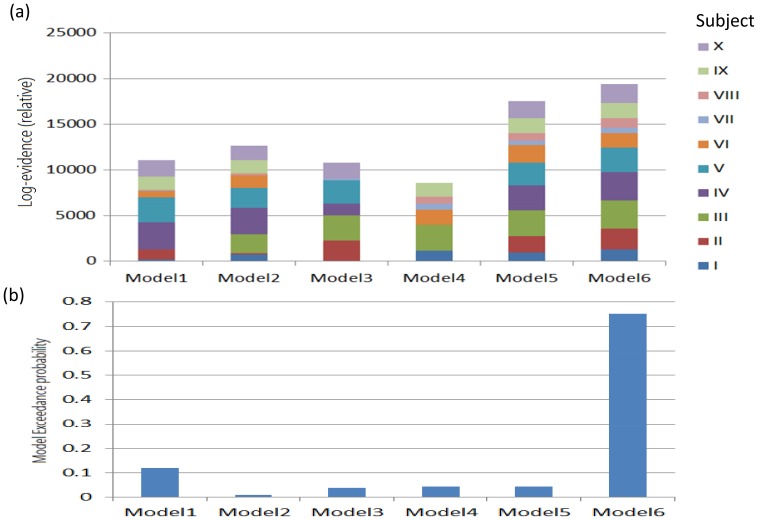
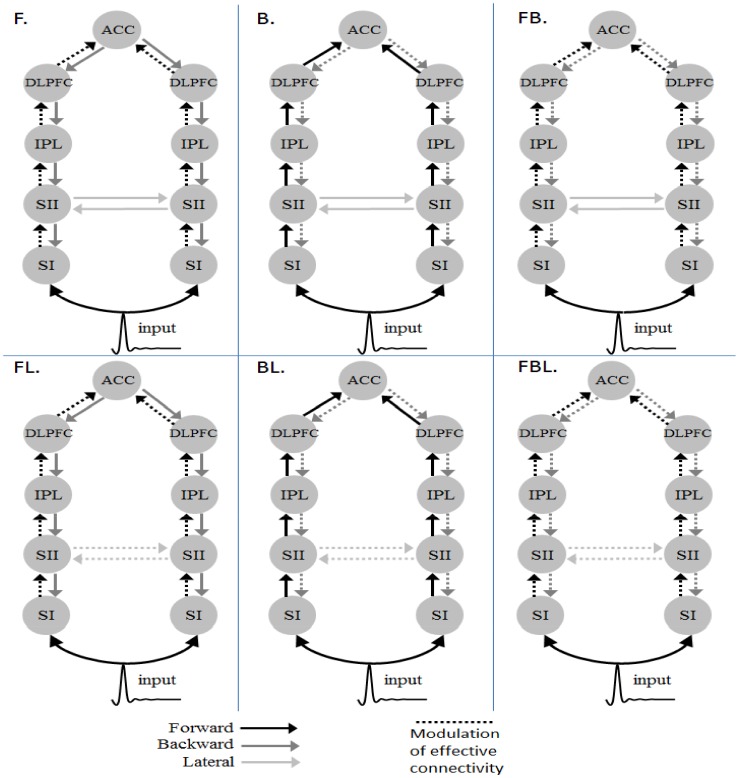
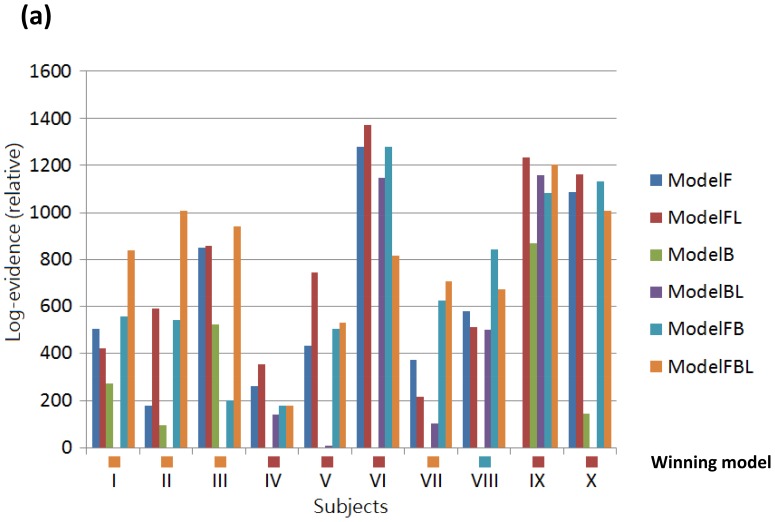
P300, a positive event-related potential (ERP) evoked at around 300 ms after stimulus, can be elicited using an active or passive oddball paradigm. Active P300 requires a person's intentional response, whereas passive P300 does not require an intentional response. Passive P300 has been used in incommunicative patients for consciousness detection and brain computer interface. Active and passive P300 differ in amplitude, but not in latency or scalp distribution. However, no study has addressed the mechanism underlying the production of passive P300. In particular, it remains unclear whether the passive P300 shares an identical active P300 generating network architecture when no response is required. This study aims to explore the hierarchical network of passive sensory P300 production using dynamic causal modelling (DCM) for ERP and a novel virtual reality (VR)-based passive oddball paradigm. Moreover, we investigated the causal relationship of this passive P300 network and the changes in connection strength to address the possible functional roles. A classical ERP analysis was performed to verify that the proposed VR-based game can reliably elicit passive P300. The DCM results suggested that the passive and active P300 share the same parietal-frontal neural network for attentional control and, underlying the passive network, the feed-forward modulation is stronger than the feed-back one. The functional role of this forward modulation may indicate the delivery of sensory information, automatic detection of differences, and stimulus-driven attentional processes involved in performing this passive task. To our best knowledge, this is the first study to address the passive P300 network. The results of this study may provide a reference for future clinical studies on addressing the network alternations under pathological states of incommunicative patients. However, caution is required when comparing patients' analytic results with this study. For example, the task presented here is not applicable to incommunicative patients.
Conflict of interest statement
Figures
References
-
- Sutton S, Braren M, Zubin J, John ER (1965) Evoked-potential correlates of stimulus uncertainty. Science 150: 1187–1188. - PubMed
-
- Duncan CC, Barry RJ, Connolly JF, Fischer C, Michie PT, et al. (2009) Event-related potentials in clinical research: guidelines for eliciting, recording, and quantifying mismatch negativity, P300, and N400. Clin Neurophysiol 120: 1883–1908. - PubMed
-
- Linden DE (2005) The p300: where in the brain is it produced and what does it tell us? Neuroscientist 11: 563–576. - PubMed
-
- Polich J, Corey-Bloom J (2005) Alzheimer’s disease and P300: review and evaluation of task and modality. Curr Alzheimer Res 2: 515–525. - PubMed
-
- Yeung N (2010) Bottom-up influences on voluntary task switching: the elusive homunculus escapes. J Exp Psychol Learn Mem Cogn 36: 348–362. - PubMed
Publication types
MeSH terms
Associated data
LinkOut - more resources
Full Text Sources
Other Literature Sources
Miscellaneous
