Comparative Study
. 2014 Nov 17;9(11):e113406.
doi: 10.1371/journal.pone.0113406. eCollection 2014.

Composition of intestinal microbiota in immune-deficient mice kept in three different housing conditions

Affiliations
Comparative Study

Composition of intestinal microbiota in immune-deficient mice kept in three different housing conditions

Christa Thoene-Reineke et al. PLoS One. .

Abstract

Background: Abundance of commensals constituting the intestinal microbiota (IM) affects the immune system and predisposes to a variety of diseases, including intestinal infections, cancer, inflammatory and metabolic disorders. Housing conditions determine the IM and can hence influence the immune system. We analyzed how both variables affect the IM of four immune-compromized mouse lines kept under different housing conditions.

Methodology/principal findings: We investigated the IM composition in mice by quantitative 16S rRNA RT-PCR analysis of the main fecal bacterial groups (Enterobacteriaceae, enterococci, lactobacilli, bifidobacteria, Bacteroides/Prevotella (BP) spp., Clostridium leptum and coccoides groups). Mice were homozygous (HO) or heterozygous (HE) for a targeted inactivating mutation of either the IFN-γ Receptor (R), IFN-γ, Rag1 or IL-4 genes. Overall, differences in IM composition were subtle. However, in the SPF-barrier, total eubacterial loads were higher in Rag1 HE versus Rag1 HO mice as well as in IFN-γR HE versus IFN-γR HO and WT animals. Although absent in WT mice, bifidobacterial loads were higher in HO and HE IFN-γ and Rag1 as well as IL-4 HO mice. Furthermore, BP was slightly lower in HO and HE IFN-γR and IFN-γ mice as well as in IL-4 HO mice as compared to WT controls. Interestingly, IM compositions were comparable in WT mice when kept in individual ventilated cages (IVC) or open cages (OC). IFN-γ HO and HE mice, however, had higher enterobacteria and BP loads, but lacked bifidobacteria when kept in OC versus IVC, as was the case in HO and HE Rag1 mice. In addition, Rag1 HO mice harbored higher clostridial loads when housed in OC as compared to IVC. Unexpectedly, lactobacilli levels were higher in IFN-γR mice when kept in OC versus IVC.

Conclusion/significance: Housing-dependent and immune-deficiency mediated changes in intestinal microbiota composition were rather subtle but may nevertheless impact immunopathology in experimental models.


Conflict of interest statement

Competing Interests: Stefan Bereswill and Markus M. Heimesaat currently serve as academic editors for this journal. This does not alter the authors’ adherence to all the PLOS ONE policies on sharing data and materials.

Figures

Figure 1
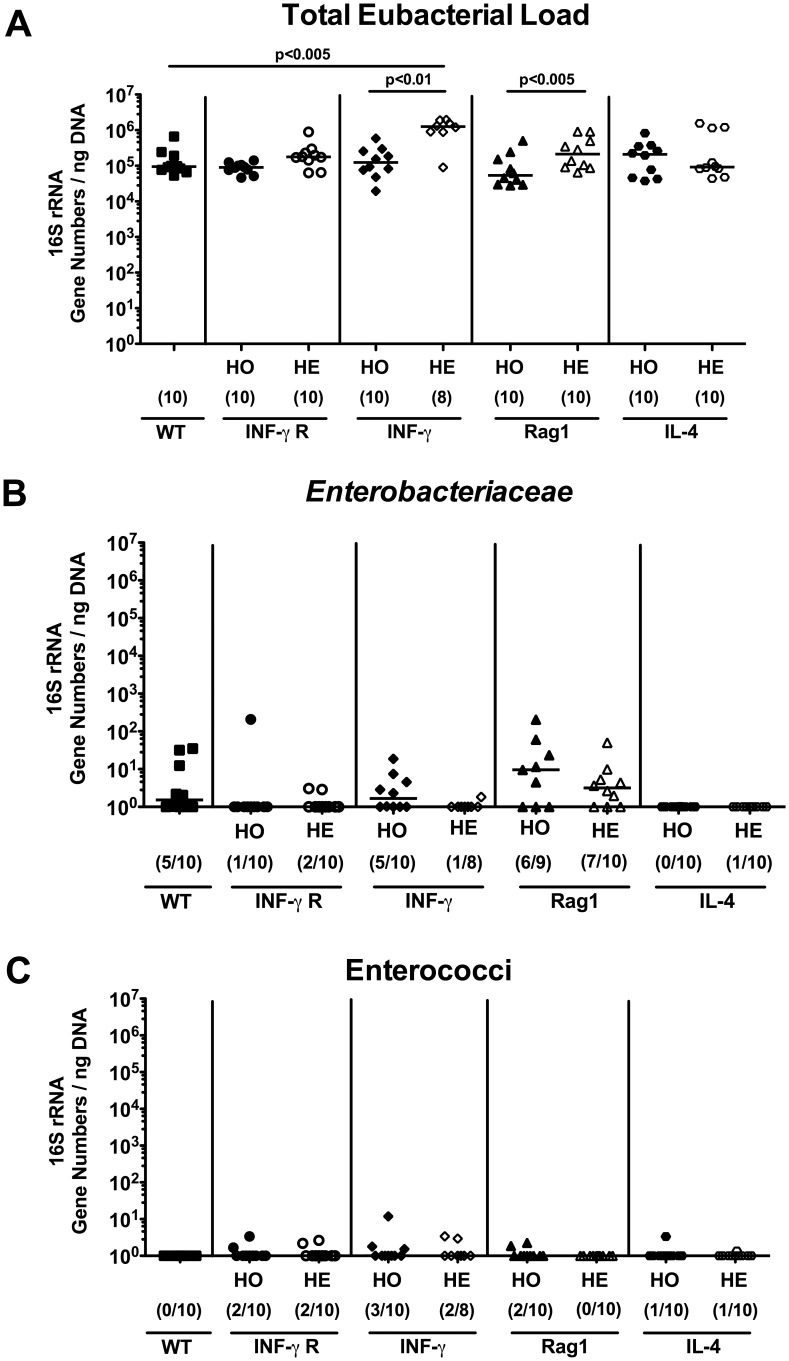
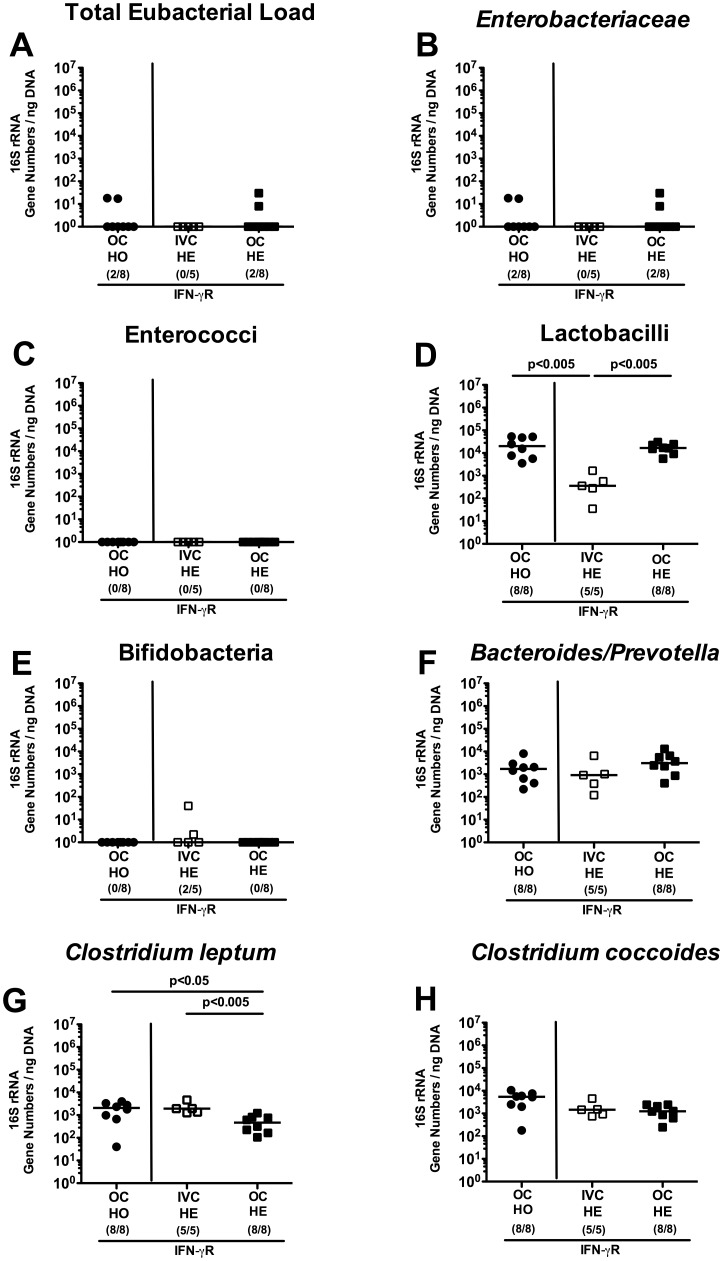
Figure 1. Commensal intestinal microbiota composition (total eubacterial load, Enterobacteriaceae and enterococci) of mice kept under SPF conditions.
After twelve weeks of housing under SPF conditions, 16S rRNA of main intestinal bacterial groups was quantified by qRT-PCR in fecal samples derived from homozygous (HO; filled symbols) and heterozygous (HE; open symbols) mice deficient for IFN-γ Receptor (IFN-γ R; circles), IFN-γ (diamonds), Rag1 (triangle), or IL-4 (hexagons). Wildtype C57BL/6 (WT, black squares) served as controls. (A) Individual total eubacterial loads, and quantitative abundance of (B) Enterobacteriaceae and (C) enterococci are expressed in gene numbers per ng DNA. Medians (black bars), levels of significance (P-values) determined by the Mann-Whitney-U test and numbers of analyzed animals (in parentheses) are indicated.
Figure 2
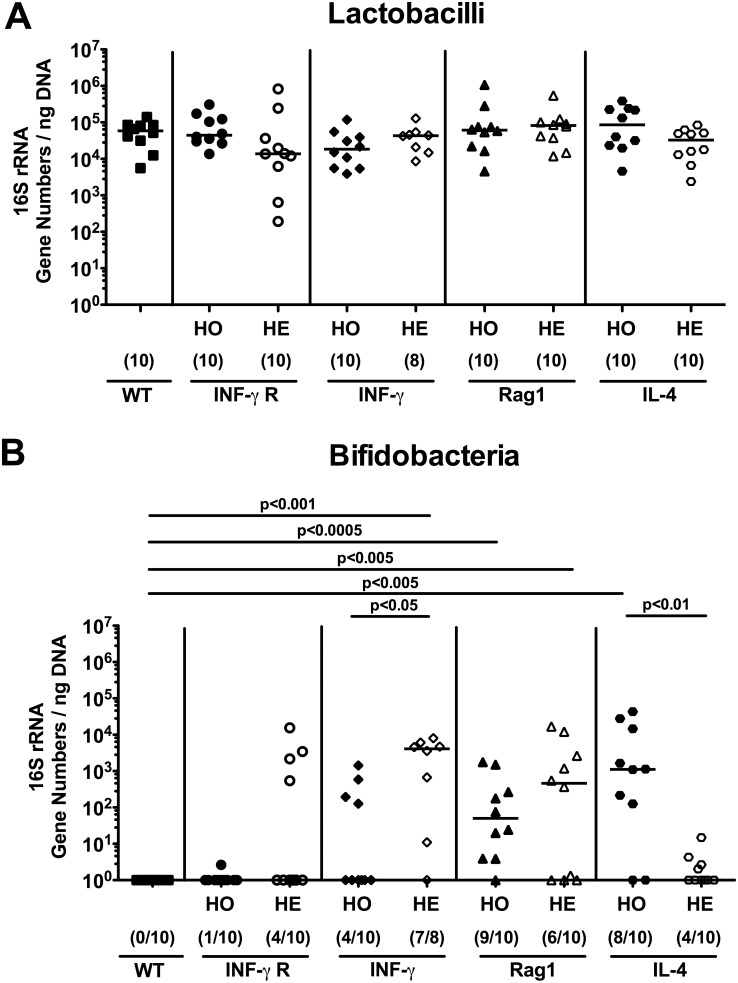
Figure 2. Commensal intestinal microbiota composition (lactobacilli and bifidobacteria) of mice kept under SPF conditions.
After twelve weeks of housing under SPF conditions, 16S rRNA of main intestinal bacterial groups was quantified by qRT-PCR in fecal samples derived from homozygous (HO; filled symbols) and heterozygous (HE; open symbols) mice deficient for IFN-γ Receptor (IFN-γ R; circles), IFN-γ (diamonds), Rag1 (triangle), or IL-4 (hexagons). Wildtype C57BL/6 (WT, black squares) served as controls. Quantitative abundance of (A) lactobacilli and (B) bifidobacteria are expressed in gene numbers per ng DNA. Medians (black bars), levels of significance (P-values) determined by the Mann-Whitney-U test and numbers of analyzed animals (in parentheses) are indicated.
Figure 3
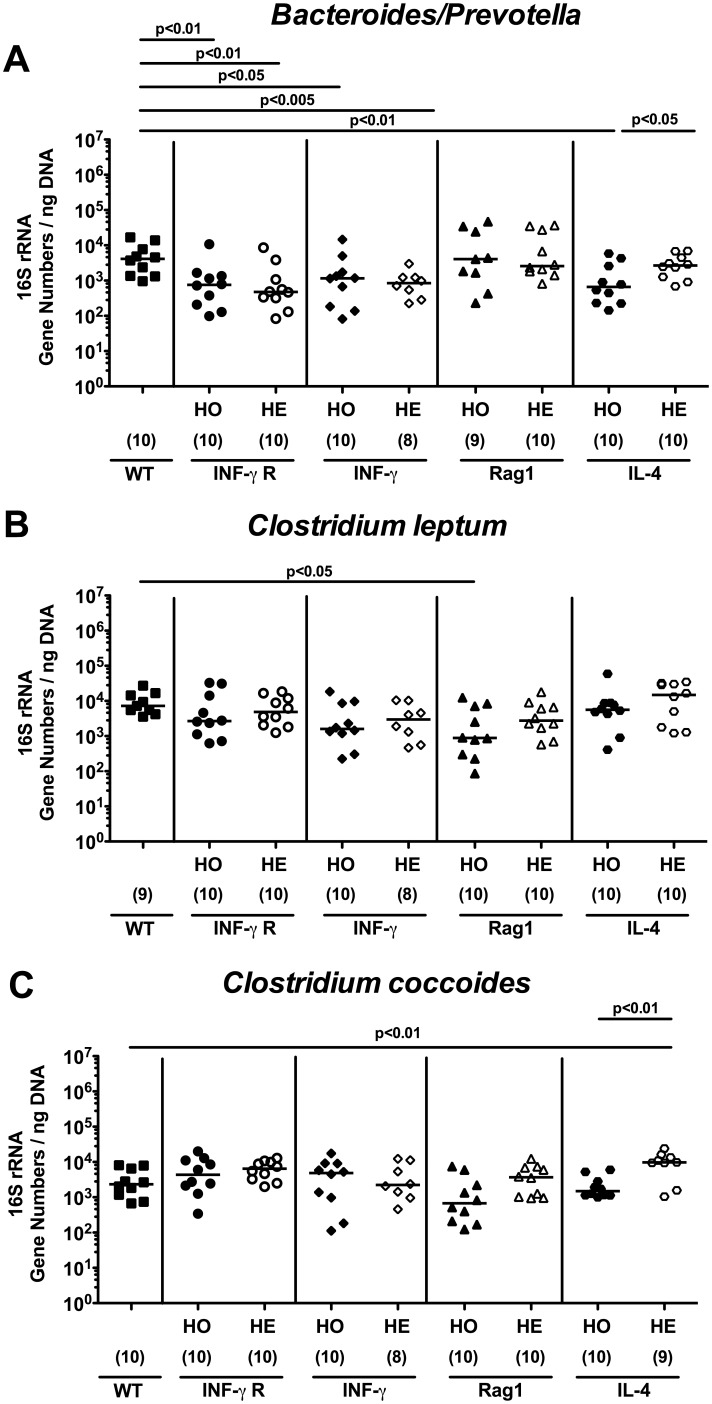
Figure 3. Commensal intestinal microbiota composition (Bacteroides/Prevotella spp., Clostridium leptum and coccoides groups) of mice kept under SPF conditions.
After twelve weeks of housing under SPF conditions, 16S rRNA of main intestinal bacterial groups was quantified by qRT-PCR in fecal samples derived from homozygous (HO; filled symbols) and heterozygous (HE; open symbols) mice deficient for IFN-γ Receptor (IFN-γ R; circles), IFN-γ (diamonds), Rag1 (triangle), or IL-4 (hexagons). Wildtype C57BL/6 (WT, black squares) served as controls. Quantitative abundance of (A) Bacteroides/Prevotella spp., (B) Clostridium leptum group and (C) Clostridium coccoides group are expressed in gene numbers per ng DNA. Medians (black bars), levels of significance (P-values) determined by the Mann-Whitney-U test and numbers of analyzed animals (in parentheses) are indicated.
Figure 4
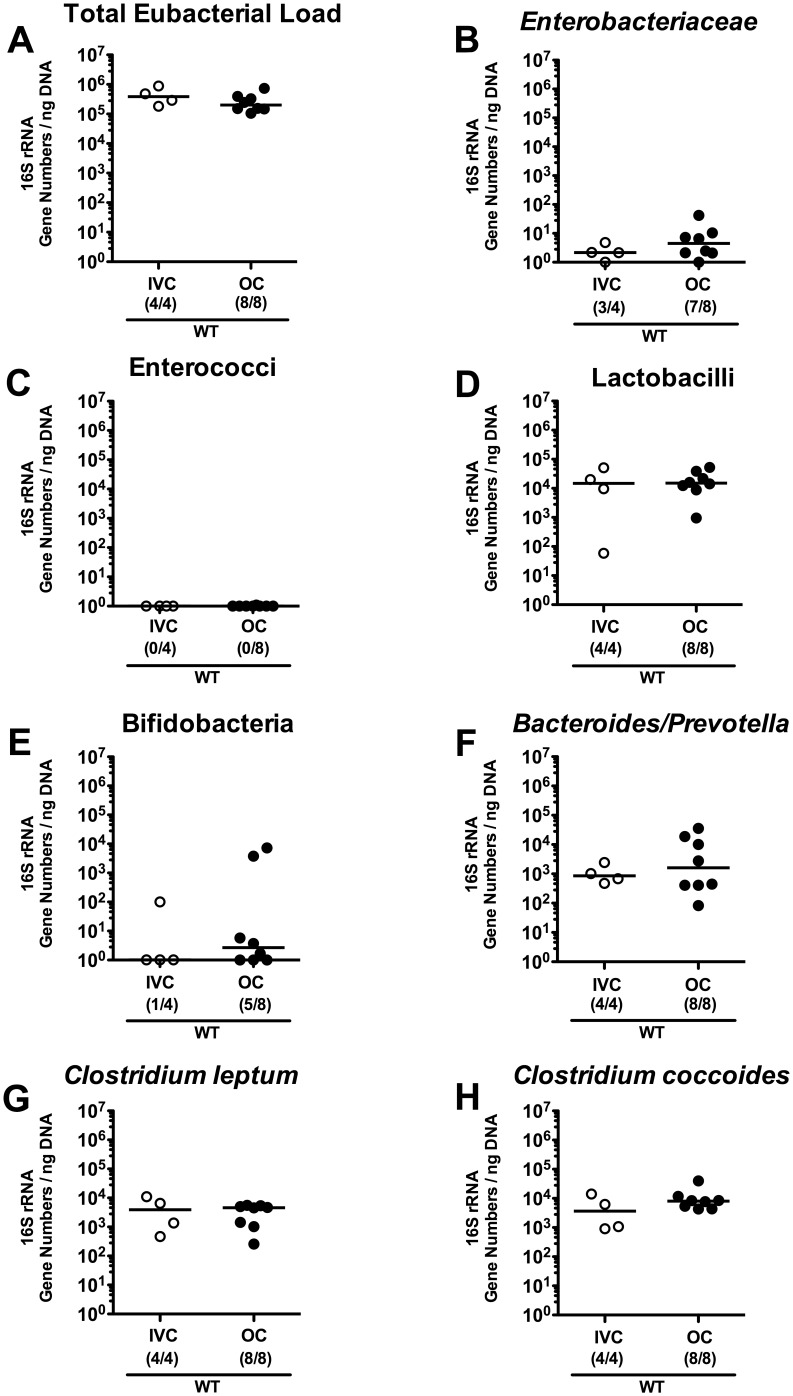
Figure 4. Commensal intestinal microbiota composition of wildtype mice kept in IVC or open cages.
After eight weeks of housing in IVC (white circles) or open cages (OC; black circles), 16S rRNA of main intestinal bacterial groups was quantified in fecal samples derived from conventional wildtype (WT) mice. (A) Individual total eubacterial loads and quantitative abundance of (B) Enterobacteriaceae, (C) enterococci, (D) lactobacilli, (E) bifidobacteria, (F) Bacteroides/Prevotella spp., (G) Clostridium leptum group, and (H) Clostridium coccoides group are expressed in gene copy-numbers per ng DNA. Medians (black bars) and numbers of mice harboring the respective bacteria out of the total number of analyzed animals (in parentheses) are indicated.
Figure 5
Figure 5. Commensal intestinal microbiota composition of IFN-γ Receptor deficient mice kept in IVC or open cages.
After eight weeks housing of gene-deficient mice heterozygous (HE) or homozygous (HO) for the IFN-γ Receptor (IFN-γR) in IVC (white symbols) or open cages (OC; black symbols), 16S rRNA of main intestinal bacterial groups was quantified in individual fecal samples. (A) Total eubacterial loads and quantitative abundance of (B) Enterobacteriaceae, (C) enterococci, (D) lactobacilli, (E) bifidobacteria, (F) Bacteroides/Prevotella spp., (G) Clostridium leptum group, and (H) Clostridium coccoides group are expressed in gene numbers per ng DNA. Medians (black bars), levels of significance (P-values) determined by the Mann-Whitney-U test and numbers of analyzed animals (in parentheses) are indicated.
Figure 6
Figure 6. Commensal intestinal microbiota composition of IFN-γ deficient mice kept in IVC or open cages.
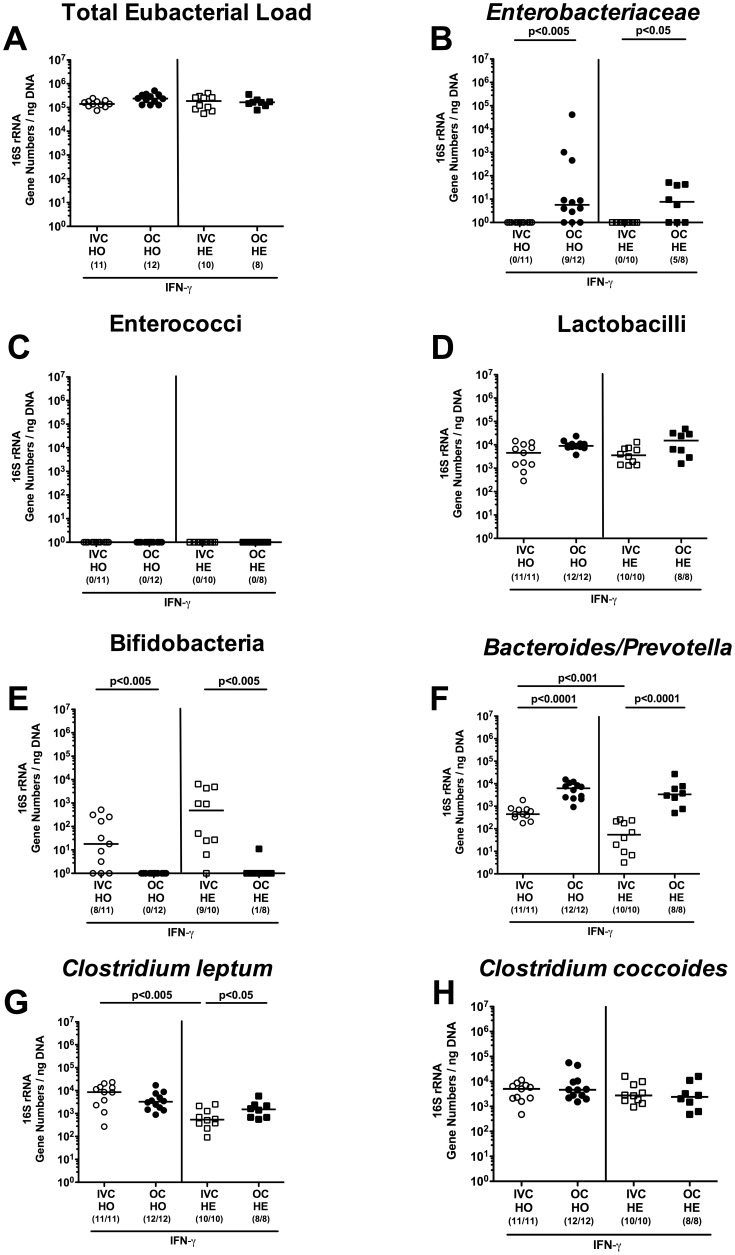
After eight weeks housing of homozygous (HO; circles) or heterozygous (HE; squares) IFN-γ gene-deficient mice in IVC (white symbols) or open cages (OC; black symbols), 16S rRNA of main intestinal bacterial groups was quantified in individual fecal samples. (A) Total eubacterial loads and quantitative abundance of (B) Enterobacteriaceae, (C) enterococci, (D) lactobacilli, (E) bifidobacteria, (F) Bacteroides/Prevotella spp., (G) Clostridium leptum group, and (H) Clostridium coccoides group are expressed in gene numbers per ng DNA. Medians (black bars), levels of significance (P-values) determined by the Mann-Whitney-U test and numbers of analyzed animals (in parentheses) are indicated.
Figure 7
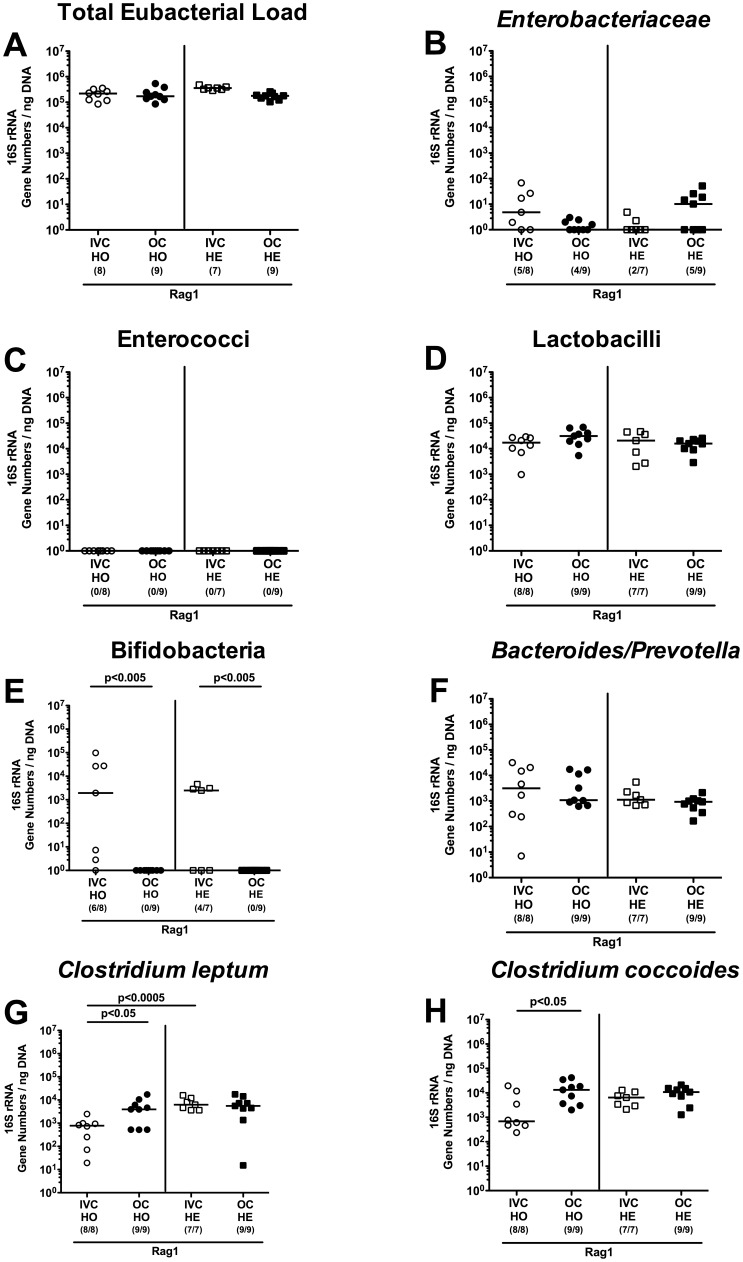
Figure 7. Commensal intestinal microbiota composition of Rag1 deficient mice kept in IVC or open cages.
After eight weeks of housing of homozygous (HO; circles) or heterozygous (HE; squares) Rag1 gene-deficient mice in IVC (white symbols) or open cages (OC; black symbols), 16S rRNA of main intestinal bacterial groups was quantified in individual fecal samples. (A) Total eubacterial loads and quantitative abundance of (B) Enterobacteriaceae, (C) enterococci, (D) lactobacilli, (E) bifidobacteria, (F) Bacteroides/Prevotella spp., (G) Clostridium leptum group, and (H) Clostridium coccoides group are expressed in gene numbers per ng DNA. Medians (black bars), levels of significance (P-values) determined by the Mann-Whitney-U test and numbers of analyzed animals (in parentheses) are indicated.

References

    1. Jarchum I, Pamer EG (2011) Regulation of innate and adaptive immunity by the commensal microbiota. Curr Opin Immunol 23: 353–360. - PMC - PubMed
    1. Chen VL, Kasper DL (2014) Interactions between the intestinal microbiota and innate lymphoid cells. Gut Microbes 5: 129–140. - PMC - PubMed
    1. Sydora BC, Macfarlane SM, Walker JW, Dmytrash AL, Churchill TA, et al. (2007) Epithelial barrier disruption allows nondisease-causing bacteria to initiate and sustain IBD in the IL-10 gene-deficient mouse. Inflamm Bowel Dis 13: 947–954. - PubMed
    1. Bloom SM, Bijanki VN, Nava GM, Sun L, Malvin NL, et al. (2011) Commensal Bacteroides species induce colitis in host-genotype-specific fashion in a mouse model of inflammatory bowel disease. Cell Host Microbe 9: 390–403. - PMC - PubMed
    1. Sartor RB (2008) Microbial influences in inflammatory bowel diseases. Microbial influences in inflammatory bowel diseases. Gastroenterol 134: 577–594. - PubMed

Publication types

LinkOut - more resources