A systematic review of selected musculoskeletal late effects in survivors of childhood cancer
- PMID: 25403639
- PMCID: PMC4336580
- DOI: 10.2174/1573400510666141114223827
A systematic review of selected musculoskeletal late effects in survivors of childhood cancer
Abstract
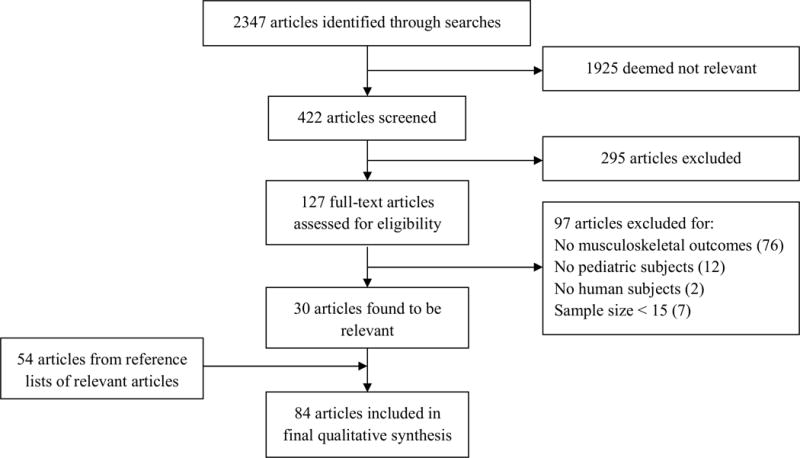
Survivors of childhood cancer are at risk for treatment-related musculoskeletal late effects. Early detection and orthopedic intervention can help ameliorate musculoskeletal late effects and prevent subsequent complications. This systematic review summarizes the literature describing associations between cancer, its treatment, and musculoskeletal late effects. We searched PubMed and Web of Science for English language articles published between January 1970 and December 2012. The search was limited to investigations with at least 15 participants and conducted at least 2 years after completion of therapy for childhood, adolescent, or young adult cancer. Some late skeletal effects, including low bone mineral density, osteonecrosis, slipped capital femoral epiphyses, oncogenic rickets, and hormonerelated growth disturbances have been previously reviewed and were excluded, as were outcomes following amputation and limb-salvage procedures. Of 2347 references identified, 30 met inclusion criteria and were retained. An additional 54 studies that met inclusion criteria were found in reference lists of retained studies. Of 84 studies, 60 focused on associations between radiotherapy, six between chemotherapy, and 18 between surgery and musculoskeletal late effects. We found that younger age, higher radiation dosage, and asymmetric or partial bone radiation volume influences the effects of radiation on the musculoskeletal system. Methotrexate and vincristine are associated with long-term muscular strength and flexibility deficits. Laminectomy and chest wall resection are associated with spinal malalignment, and enucleation is associated with orbital deformities among survivors. Radiotherapy, chemotherapy, and surgery are associated with musculoskeletal late effects independently and additively. Associations are additionally influenced by host and treatment characteristics.
Conflict of interest statement
Figures
References
-
- Howlader N, Noone AM, Krapcho M, et al. SEER Cancer Statistics Review, 1975–2010. Bethesda, MD: National Cancer Institute; 2013. [May 15, 2013]; based on November 2012 SEER data submission posted to the SEER web site April 3]. Available from: http://seer.cancer.gov/csr/1975_2010/
-
- Oeffinger KC, Mertens AC, Sklar CA, et al. Chronic Health Conditions in Adult Survivors of Childhood Cancer. New Engl J Med. 2006;355(15):1572–82. - PubMed
-
- Hudson MM, Mertens AC, Yasui Y, et al. Health Status of Adult Long-term Survivors of Childhood Cancer. JAMA. 2003;290(12):1583–92. - PubMed
-
- Ness KK, Mertens AC, Hudson MM, et al. Limitations on Physical Performance and Daily Activities among Long-Term Survivors of Childhood Cancer. Ann Intern Med. 2005;143(9):639–47. - PubMed
-
- Wasilewski-Masker K, Kaste SC, Hudson MM, et al. Bone mineral density deficits in survivors of childhood cancer: long-term follow-up guidelines and review of the literature. Pediatrics. 2008;121(3):e705–13. Epub 2008/03/04. - PubMed
Publication types
MeSH terms
Grants and funding
LinkOut - more resources
Full Text Sources
Miscellaneous