


Identifying novel targets of oncogenic EGF receptor signaling in lung cancer through global phosphoproteomics
- PMID: 25404012
- PMCID: PMC6461560
- DOI: 10.1002/pmic.201400315
Identifying novel targets of oncogenic EGF receptor signaling in lung cancer through global phosphoproteomics
Abstract
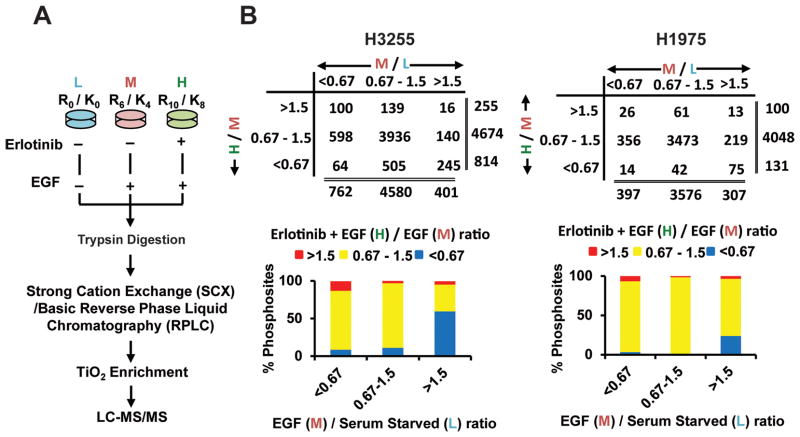
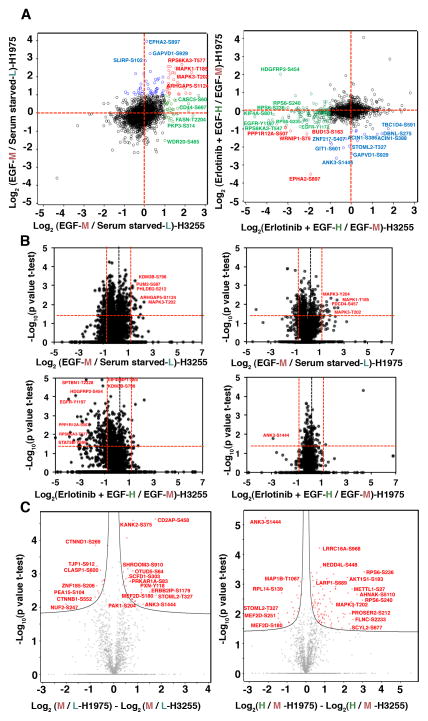
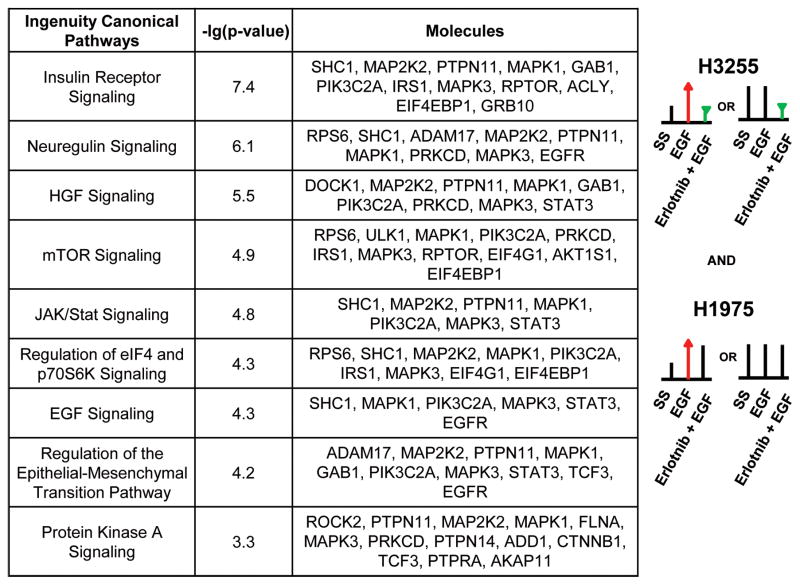
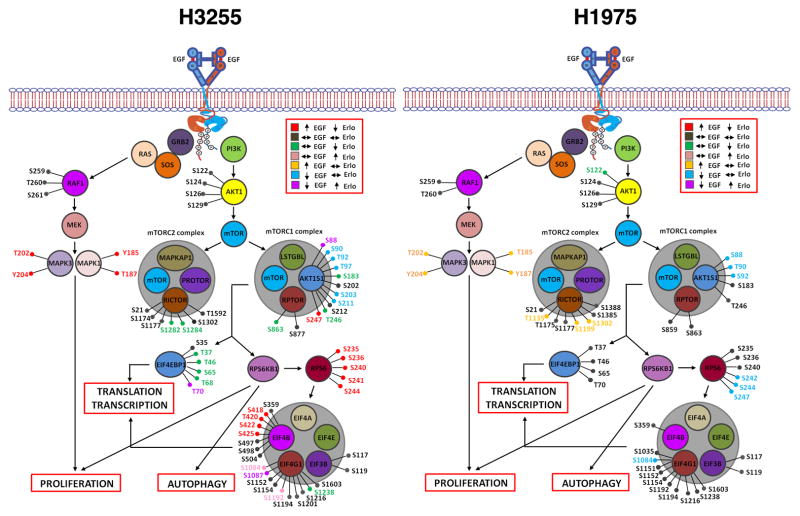
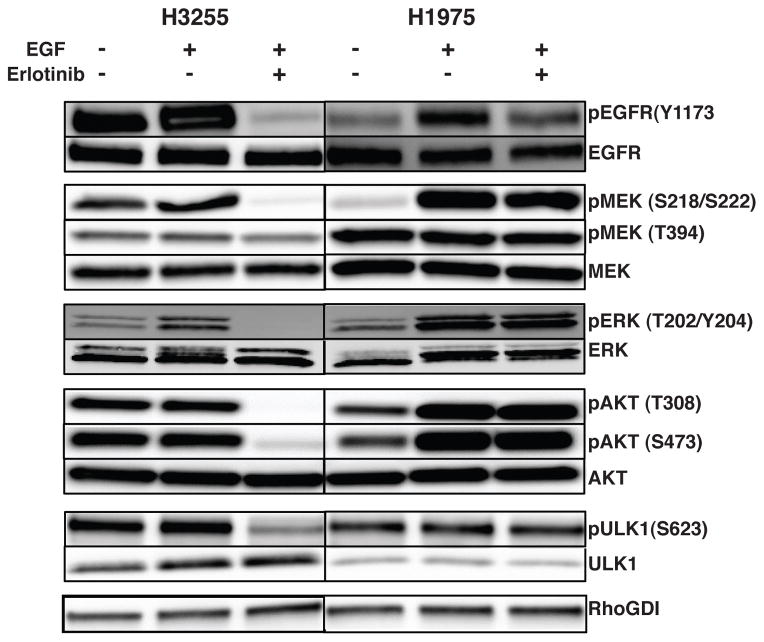
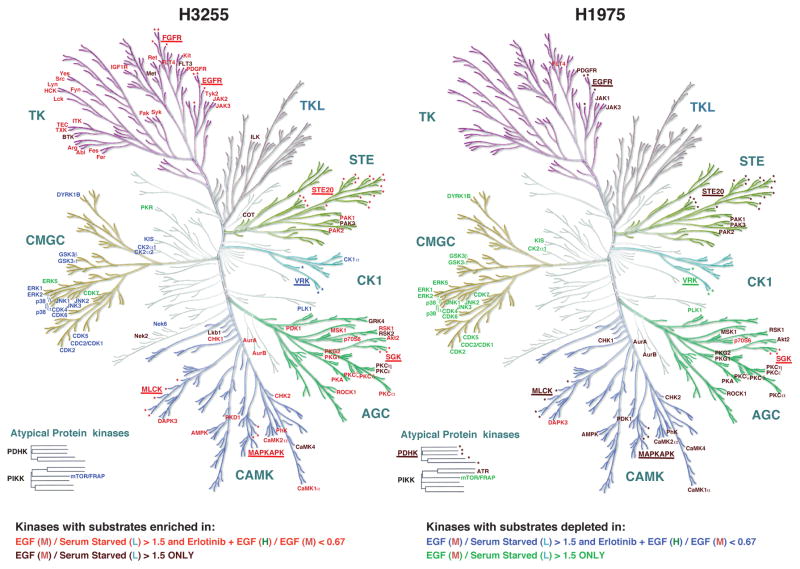
Mutations in the epidermal growth factor receptor (EGFR) kinase domain occur in 10-30% of lung adenocarcinoma and are associated with tyrosine kinase inhibitor (TKI) sensitivity. We sought to identify the immediate direct and indirect phosphorylation targets of mutant EGFRs in lung adenocarcinoma. We undertook SILAC strategy, phosphopeptide enrichment, and quantitative MS to identify dynamic changes of phosphorylation downstream of mutant EGFRs in lung adenocarcinoma cells harboring EGFR(L858R) and EGFR(L858R/T790M) , the TKI-sensitive, and TKI-resistant mutations, respectively. Top canonical pathways that were inhibited upon erlotinib treatment in sensitive cells, but not in the resistant cells include EGFR, insulin receptor, hepatocyte growth factor, mitogen-activated protein kinase, mechanistic target of rapamycin, ribosomal protein S6 kinase beta 1, and Janus kinase/signal transducer and activator of transcription signaling. We identified phosphosites in proteins of the autophagy network, such as ULK1 (S623) that is constitutively phosphorylated in these lung adenocarcinoma cells; phosphorylation is inhibited upon erlotinib treatment in sensitive cells, but not in resistant cells. Finally, kinase-substrate prediction analysis from our data indicated that substrates of basophilic kinases from, AGC and Calcium and calmodulin-dependent kinase groups, as well as STE group kinases were significantly enriched and those of proline-directed kinases from, CMGC and Casein kinase groups were significantly depleted among substrates that exhibited increased phosphorylation upon EGF stimulation and reduced phosphorylation upon TKI inhibition. This is the first study to date to examine global phosphorylation changes upon erlotinib treatment of lung adenocarcinoma cells and results from this study provide new insights into signaling downstream of mutant EGFRs in lung adenocarcinoma. All MS data have been deposited in the ProteomeXchange with identifier PXD001101 (http://proteomecentral.proteomexchange.org/dataset/PXD001101).
Keywords: Autophagy; EGFR; Erlotinib; Mass spectrometry; NSCLC; Phosphoproteomics; SILAC.
© 2014 WILEY-VCH Verlag GmbH & Co. KGaA, Weinheim.
Conflict of interest statement
Conflict of interest: The authors declare no financial or commercial conflict of interest.
Figures
References
-
- Siegel R, Naishadham D, Jemal A. Cancer statistics, 2013. CA Cancer J Clin. 2013;63:11–30. - PubMed
-
- Lynch TJ, Bell DW, Sordella R, Gurubhagavatula S, et al. Activating mutations in the epidermal growth factor receptor underlying responsiveness of non-small-cell lung cancer to gefitinib. N Engl J Med. 2004;350:2129–2139. - PubMed
-
- Paez JG, Janne PA, Lee JC, Tracy S, et al. EGFR mutations in lung cancer: correlation with clinical response to gefitinib therapy. Science. 2004;304:1497–1500. - PubMed
Publication types
MeSH terms
Substances
Grants and funding
LinkOut - more resources
Full Text Sources
Other Literature Sources
Medical
Molecular Biology Databases
Research Materials
Miscellaneous
