


Static network structure can stabilize human cooperation
- PMID: 25404308
- PMCID: PMC4260616
- DOI: 10.1073/pnas.1400406111
Static network structure can stabilize human cooperation
Abstract
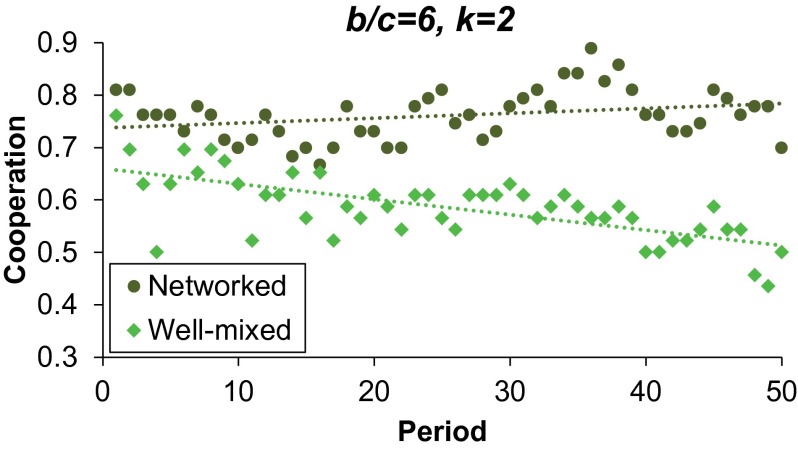
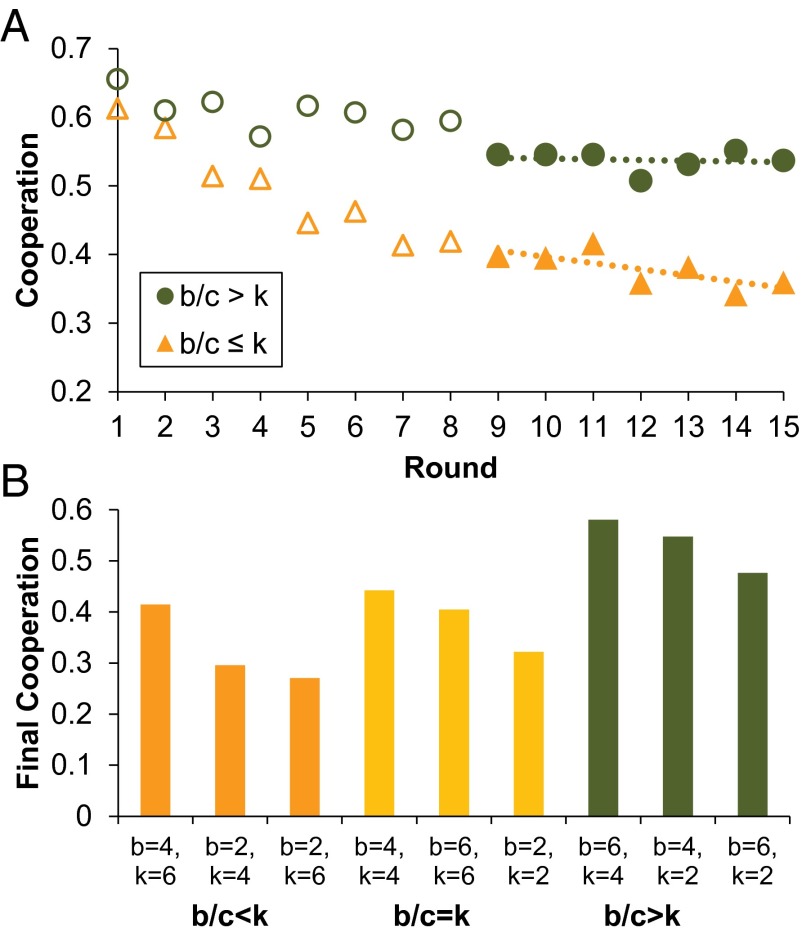
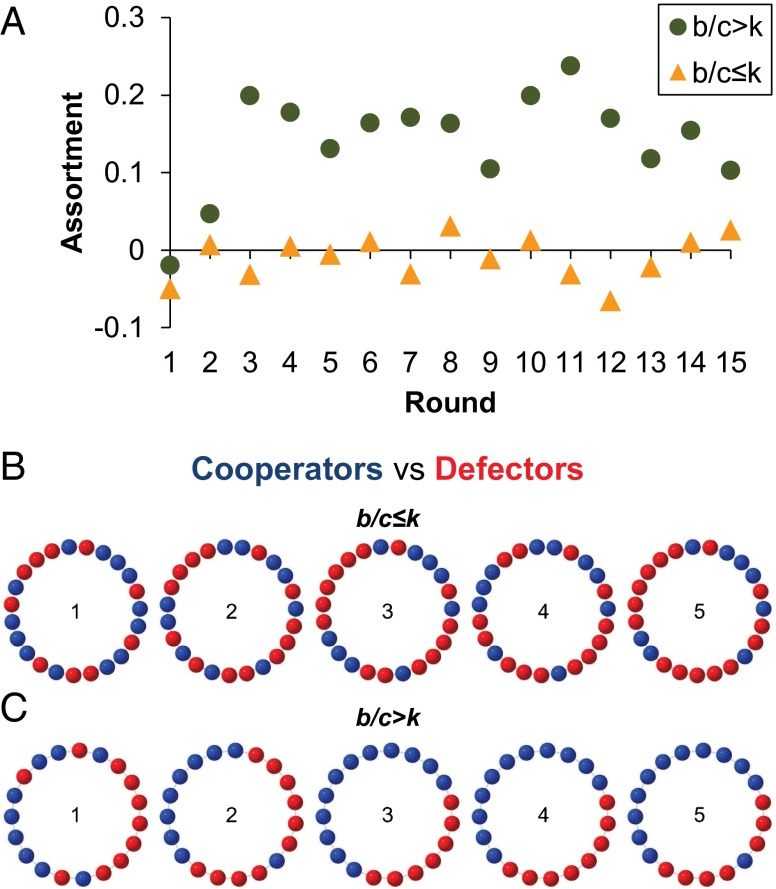
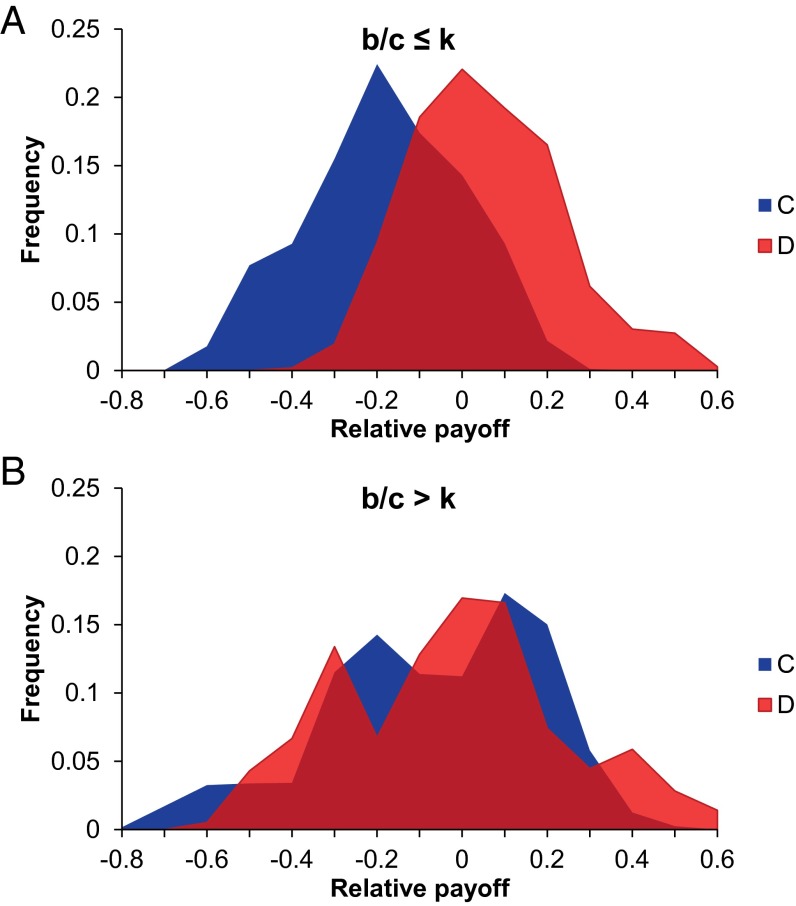
The evolution of cooperation in network-structured populations has been a major focus of theoretical work in recent years. When players are embedded in fixed networks, cooperators are more likely to interact with, and benefit from, other cooperators. In theory, this clustering can foster cooperation on fixed networks under certain circumstances. Laboratory experiments with humans, however, have thus far found no evidence that fixed network structure actually promotes cooperation. Here, we provide such evidence and help to explain why others failed to find it. First, we show that static networks can lead to a stable high level of cooperation, outperforming well-mixed populations. We then systematically vary the benefit that cooperating provides to one's neighbors relative to the cost required to cooperate (b/c), as well as the average number of neighbors in the network (k). When b/c > k, we observe high and stable levels of cooperation. Conversely, when b/c ≤ k or players are randomly shuffled, cooperation decays. Our results are consistent with a quantitative evolutionary game theoretic prediction for when cooperation should succeed on networks and, for the first time to our knowledge, provide an experimental demonstration of the power of static network structure for stabilizing human cooperation.
Keywords: Prisoner’s Dilemma; assortment; economic games; evolutionary game theory; structured populations.
Conflict of interest statement
The authors declare no conflict of interest.
Figures
References
-
- Strogatz SH. Exploring complex networks. Nature. 2001;410(6825):268–276. - PubMed
-
- Palla G, Barabási A-L, Vicsek T. Quantifying social group evolution. Nature. 2007;446(7136):664–667. - PubMed
-
- Henrich J, et al. Markets, religion, community size, and the evolution of fairness and punishment. Science. 2010;327(5972):1480–1484. - PubMed
Publication types
MeSH terms
LinkOut - more resources
Full Text Sources
Other Literature Sources
Medical
