


Impact of circadian misalignment on energy metabolism during simulated nightshift work
- PMID: 25404342
- PMCID: PMC4260578
- DOI: 10.1073/pnas.1412021111
Impact of circadian misalignment on energy metabolism during simulated nightshift work
Abstract
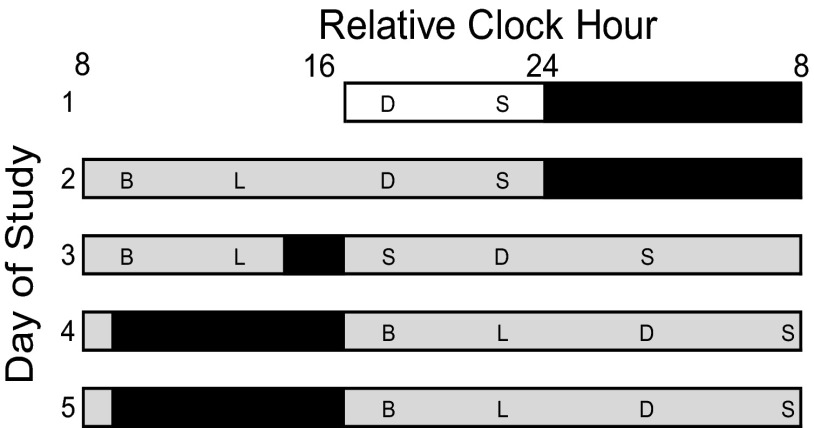
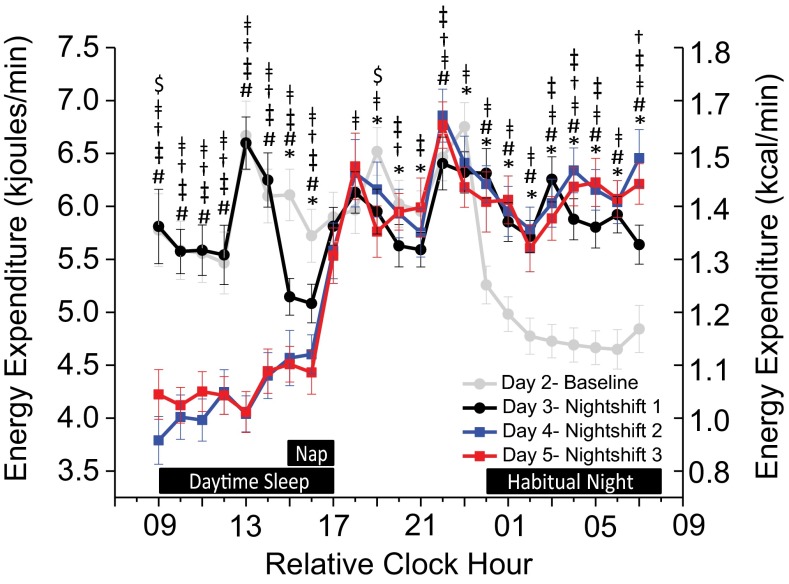
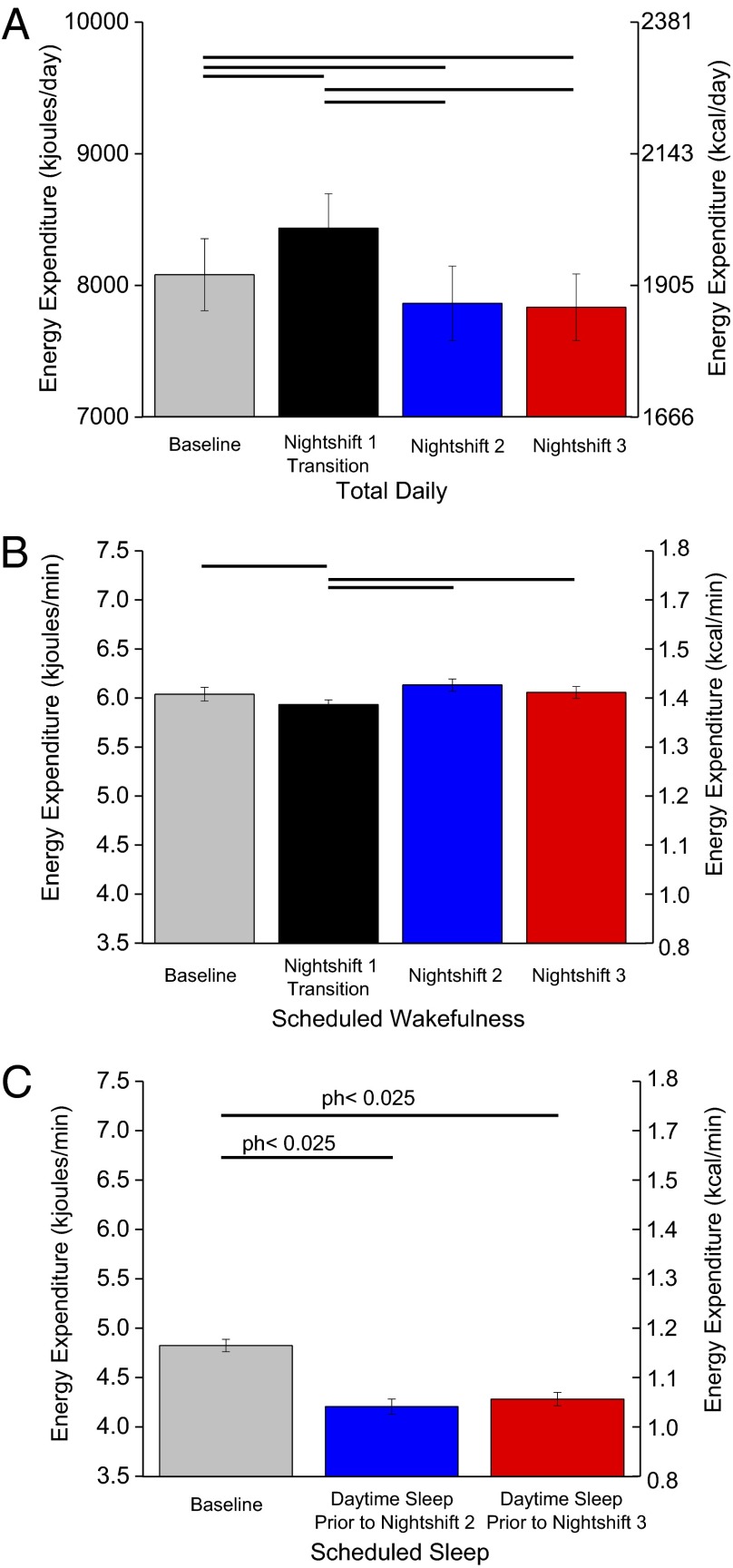
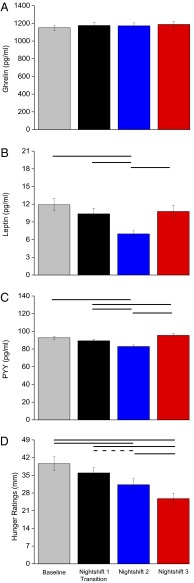
Eating at a time when the internal circadian clock promotes sleep is a novel risk factor for weight gain and obesity, yet little is known about mechanisms by which circadian misalignment leads to metabolic dysregulation in humans. We studied 14 adults in a 6-d inpatient simulated shiftwork protocol and quantified changes in energy expenditure, macronutrient utilization, appetitive hormones, sleep, and circadian phase during day versus nightshift work. We found that total daily energy expenditure increased by ∼4% on the transition day to the first nightshift, which consisted of an afternoon nap and extended wakefulness, whereas total daily energy expenditure decreased by ∼3% on each of the second and third nightshift days, which consisted of daytime sleep followed by afternoon and nighttime wakefulness. Contrary to expectations, energy expenditure decreased by ∼12-16% during scheduled daytime sleep opportunities despite disturbed sleep. The thermic effect of feeding also decreased in response to a late dinner on the first nightshift. Total daily fat utilization increased on the first and second nightshift days, contrary to expectations, and carbohydrate and protein utilization were reduced on the second nightshift day. Ratings of hunger were decreased during nightshift days despite decreases in 24-h levels of the satiety hormones leptin and peptide-YY. Findings suggest that reduced total daily energy expenditure during nightshift schedules and reduced energy expenditure in response to dinner represent contributing mechanisms by which humans working and eating during the biological night, when the circadian clock is promoting sleep, may increase the risk of weight gain and obesity.
Keywords: appetite; diet-induced thermogenesis; eating at night; insufficient sleep; melatonin.
Conflict of interest statement
Conflict of interest statement: There are no conflicts of interest directly related to this project. E.L.M. and K.P.W. have current funding through a Philips research grant.
Figures
References
-
- Laposky AD, Bass J, Kohsaka A, Turek FW. Sleep and circadian rhythms: Key components in the regulation of energy metabolism. FEBS Lett. 2008;582(1):142–151. - PubMed
Publication types
MeSH terms
Substances
Grants and funding
LinkOut - more resources
Full Text Sources
Other Literature Sources
Medical
Research Materials
