


Non-albicans Candida Infection: An Emerging Threat
- PMID: 25404942
- PMCID: PMC4227454
- DOI: 10.1155/2014/615958
Non-albicans Candida Infection: An Emerging Threat
Abstract
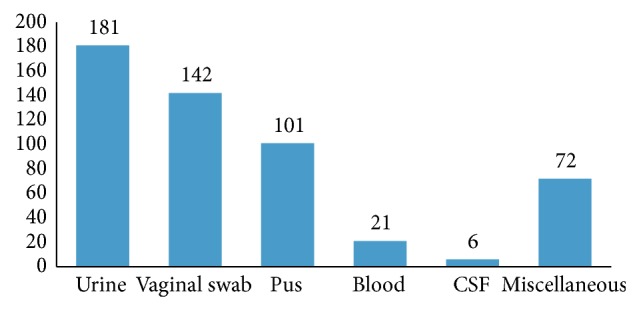
The very nature of infectious diseases has undergone profound changes in the past few decades. Fungi once considered as nonpathogenic or less virulent are now recognized as a primary cause of morbidity and mortality in immunocompromised and severely ill patients. Candida spp. are among the most common fungal pathogens. Candida albicans was the predominant cause of candidiasis. However, a shift toward non-albicans Candida species has been recently observed. These non-albicans Candida species demonstrate reduced susceptibility to commonly used antifungal drugs. In the present study, we investigated the prevalence of non-albicans Candida spp. among Candida isolates from various clinical specimens and analysed their virulence factors and antifungal susceptibility profile. A total of 523 Candida spp. were isolated from various clinical specimens. Non-albicans Candida species were the predominant pathogens isolated. Non-albicans Candida species also demonstrated the production of virulence factors once attributed to Candida albicans. Non-albicans Candida demonstrated high resistance to azole group of antifungal agents. Therefore, it can be concluded that non-albicans Candida species have emerged as an important cause of infections. Their isolation from clinical specimen can no longer be ignored as a nonpathogenic isolate nor can it be dismissed as a contaminant.
Figures
References
-
- Deorukhkar S., Saini S. Virulence markers and antifungal susceptibility profile of Candida glabrata: an Emerging pathogen. British Microbiology Research Journal. 2014;4(1):35–45.
-
- Snydman D. R. Shifting patterns in the epidemiology of nosocomial Candida infections. Chest. 2003;123(5):500S–503S. - PubMed
-
- Sardi J. C. O., Scorzoni L., Bernardi T., Fusco-Almeida A. M., Mendes Giannini M. J. S. Candida species: current epidemiology, pathogenicity, biofilm formation, natural antifungal products and new therapeutic options. Journal of Medical Microbiology. 2013;62(1):10–24. doi: 10.1099/jmm.0.045054-0. - DOI - PubMed
-
- Sullivan D. J., Henman M. C., Moran G. P., O'Neill L. C., Bennett D. E., Shanley D. B., Coleman D. C. Molecular genetic approaches to identification, epidemiology and taxonomy of non-albicans Candida species. Journal of Medical Microbiology. 1996;44(6):399–408. doi: 10.1099/00222615-44-6-399. - DOI - PubMed
LinkOut - more resources
Full Text Sources
Other Literature Sources
Miscellaneous
