Review
. 2014;9(10):1151-63.
doi: 10.2217/fmb.14.65.

Regulation of the trafficking and antiviral activity of IFITM3 by post-translational modifications

Affiliations
Review

Regulation of the trafficking and antiviral activity of IFITM3 by post-translational modifications

Nicholas M Chesarino et al. Future Microbiol. 2014.

Abstract

IFITM3 restricts cellular infection by multiple important viral pathogens, and is particularly critical for the innate immune response against influenza virus. Expression of IFITM3 expands acidic endolysosomal compartments and prevents fusion of endocytosed viruses, leading to their degradation. This small, 133 amino acid, antiviral protein is controlled by at least four distinct post-translational modifications. Positive regulation of IFITM3 antiviral activity is provided by S-palmitoylation, while negative regulatory mechanisms include lysine ubiquitination, lysine methylation and tyrosine phosphorylation. Herein, we describe specific insights into IFITM3 trafficking and activity that were provided by studies of IFITM3 post-translational modifications, and discuss evidence suggesting that IFITM3 adopts multiple membrane topologies involving at least one intramembrane domain in its antivirally active conformation.

Keywords: IFITM3; antiviral; intramembrane domain; methylation; palmitoylation; phosphorylation; post-translational modification; ubiquitination.


Conflict of interest statement

Financial & competing interests disclosure

The authors have no other relevant affiliations or financial involvement with any organization or entity with a financial interest in or financial conflict with the subject matter or materials discussed in the manuscript apart from those disclosed.

No writing assistance was utilized in the production of this manuscript.

Figures
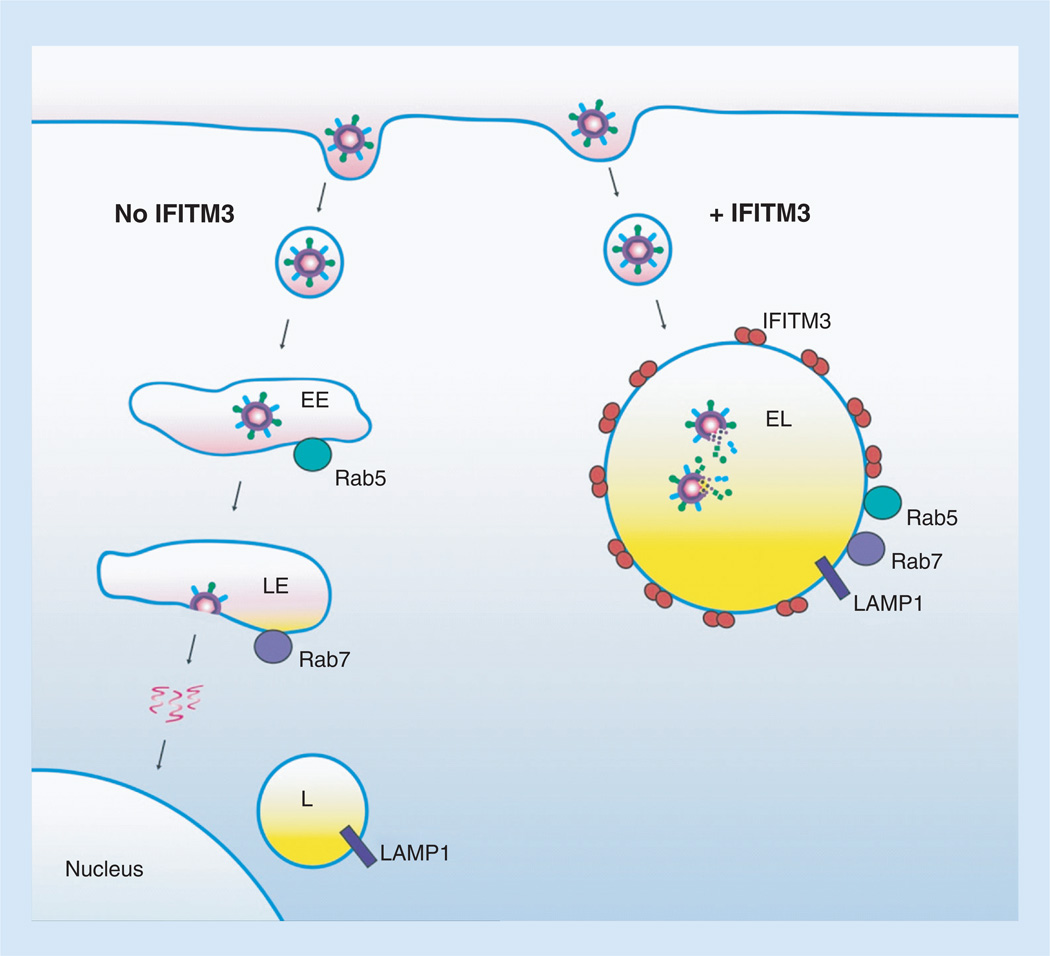
Figure 1
Figure 1. Model of influenza virus entry and IFITM antiviral activity
Influenza virus enters cells via receptor-mediated endocytosis and fuses in the acidic late endosomal compartment, depositing its genomic contents into the cytosol, thereby avoiding lysosomal hydrolases. In cells expressing IFITM3, viruses are localized in an enlarged acidic and degradative compartment staining positive for endosomal and lysosomal markers. Virus fusion is inhibited by alterations to the endolysosomal membrane imposed by IFITM3, and virions are subsequently degraded. IFITM3 is depicted as a dimer. EE: Early endosome; EL: Endolysosome; L: Lysosome; LE: Late endosome.
Figure 2
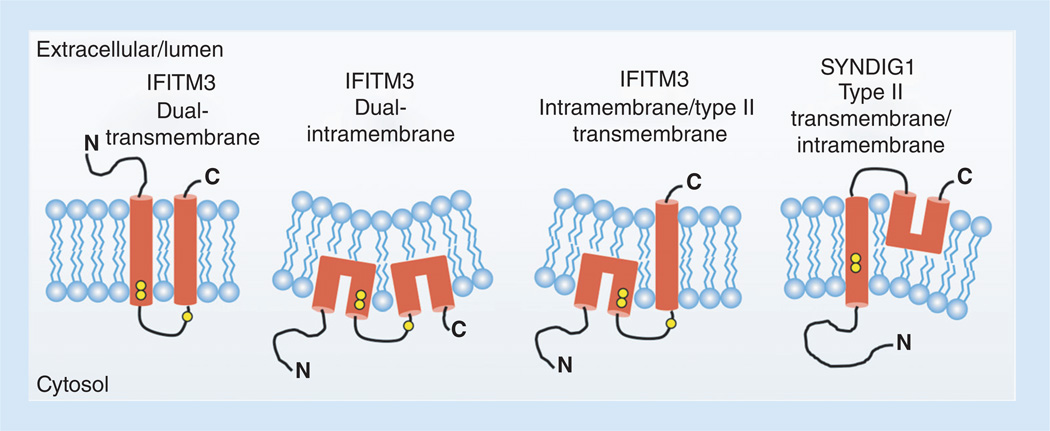
Figure 2. Membrane topologies for IFITM3 and SYNDIG1 that are supported by experimental evidence
Data have been described supporting each of the shown topology models. Hydrophobic segments are shown in red. The IFITM3 dual transmembrane topology is predicted based on hydropathy plotting. However, IFITM3 in which its first hydrophobic segment adopts an intramembrane conformation is required for N-terminal access to cytoplasmic components necessary for its proper localization and activity. Whether the second hydrophobic segment in active IFITM3 traverses both membrane leaflets remains unclear. Yellow circles represent conserved cysteines that are known to be palmitoylated on IFITM3. Note that the cysteines in the first hydrophobic segment of SYNDIG1 appear earlier within the segment than IFITM3 cysteines making them more deeply embedded in the membrane and less likely to be palmitoylated. The third cysteine in SYNDIG1 is absent, agreeing with its experimentally determined topology. Potential changes in membrane properties induced by intramembrane domains are graphically depicted by altered membrane curvature.
Figure 3
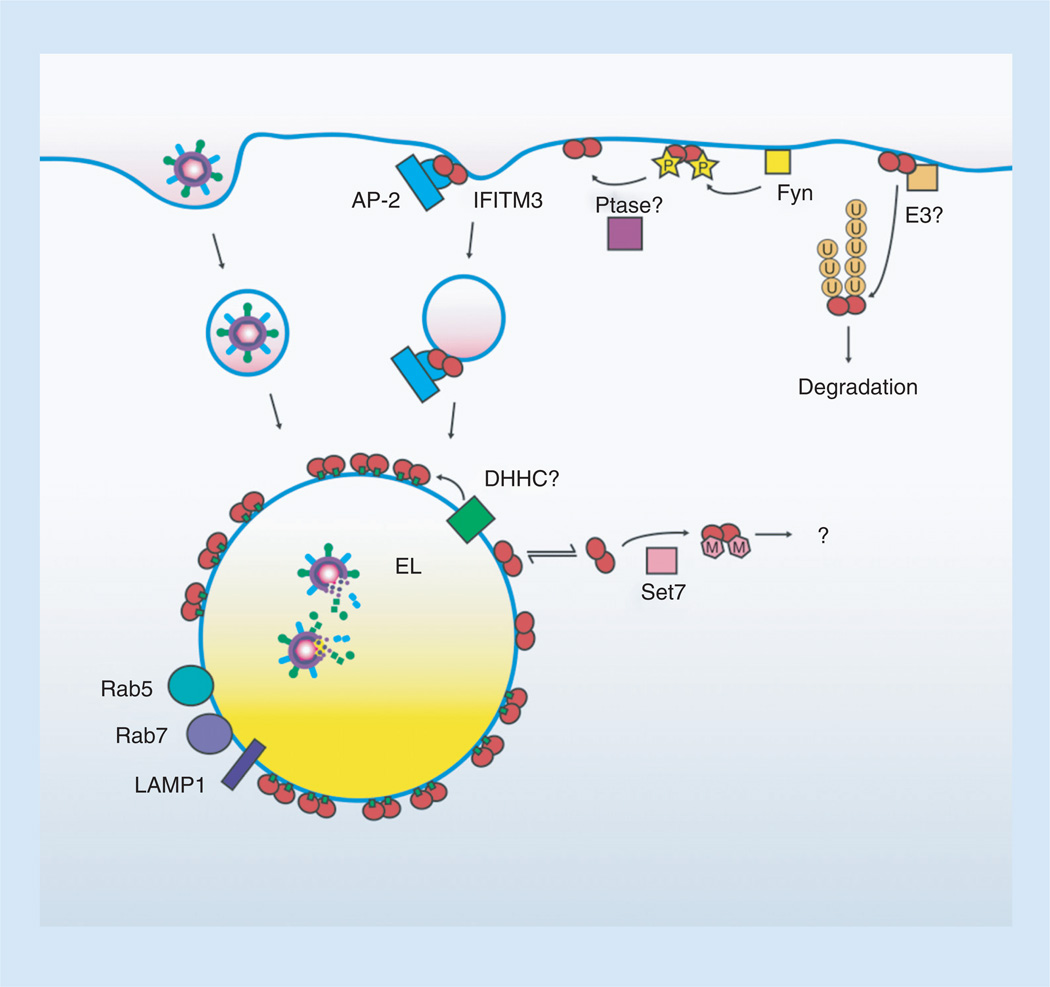
Figure 3. IFITM3 is controlled by multiple post-translational modifications
IFITM3, depicted as a dimer, is initially localized to the plasma membrane. Tyrosine P (yellow stars) by Fyn retains IFITM3 at the plasma membrane by preventing its interaction with the AP-2 endocytic adaptor complex. Unknown Ptase dynamically remove phosphorylation allowing its endocytosis and targeting to endolysosomes where virus is degraded. Alternatively, unphosphorylated IFITM3 can be targeted for ubiquitination (U, orange circles) by an as yet unidentified E3 ubiquitin ligase resulting in its mislocalization and degradation. Palmitoylation (small green boxes) of IFITM3 by a currently unidentified DHHCanchors IFITM3 to membranes, promotes its clustering, and is necessary for IFITM3 antiviral activity. The location of this palmitoyltransferase activity is currently unknown but is depicted at the endolysosomes. A portion of nonpalmitoylated IFITM3 is cytoplasmic and may be the fraction of IFITM3 that encounters cytoplasmic Set7. IFITM3 methylation (M, pink polygons) by Set7 decreases antiviral activity through an unknown mechanism. EL: Endolysosome; P: Phosphorylation; Ptase: Phosphatase.

References

    1. Siegrist F, Ebeling M, Certa U. The small interferon-induced transmembrane genes and proteins. J. Interferon Cytokine Res. 2011;31(1):183–197. - PubMed
    1. Sallman Almen M, Bringeland N, Fredriksson R, Schioth HB. The dispanins: a novel gene family of ancient origin that contains 14 human members. PLoS ONE. 2012;7(2):e31961. - PMC - PubMed
    1. Brass AL, Huang IC, Benita Y, et al. The IFITM proteins mediate cellular resistance to influenza A H1N1 virus, West Nile virus, and dengue virus. Cell. 2009;139(7):1243–1254. - PMC - PubMed
    1. Yount JS, Moltedo B, Yang YY, et al. Palmitoylome profiling reveals S -palmitoylation-dependent antiviral activity of IFITM3. Nat. Chem. Biol. 2010;6(8):610–614. • Initial description of IFITM3 palmitoylation and palmitoylation-dependent antiviral activity.

    1. Weidner JM, Jiang D, Pan XB, Chang J, Block TM, Guo JT. Interferon-induced cell membrane proteins, IFITM3 and tetherin, inhibit vesicular stomatitis virus infection via distinct mechanisms. J. Virol. 2010;84(24):12646–12657. - PMC - PubMed

Publication types

LinkOut - more resources