. 2014 Nov 18;9(11):e112357.
doi: 10.1371/journal.pone.0112357. eCollection 2014.

Dietary glutamate supplementation ameliorates mycotoxin-induced abnormalities in the intestinal structure and expression of amino acid transporters in young pigs

Affiliations

Dietary glutamate supplementation ameliorates mycotoxin-induced abnormalities in the intestinal structure and expression of amino acid transporters in young pigs

Jielin Duan et al. PLoS One. .

Abstract

The purpose of this study was to investigate the hypothesis that dietary supplementation with glutamic acid has beneficial effects on growth performance, antioxidant system, intestinal morphology, serum amino acid profile and the gene expression of intestinal amino acid transporters in growing swine fed mold-contaminated feed. Fifteen pigs (Landrace×Large White) with a mean body weight (BW) of 55 kg were randomly divided into control group (basal feed), mycotoxin group (contaminated feed) and glutamate group (2% glutamate+contaminated feed). Compared with control group, mold-contaminated feed decreased average daily gain (ADG) and increased feed conversion rate (FCR). Meanwhile, fed mold-contaminated feed impaired anti-oxidative system and intestinal morphology, as well as modified the serum amino acid profile in growing pigs. However, supplementation with glutamate exhibited potential positive effects on growth performance of pigs fed mold-contaminated feed, ameliorated the imbalance antioxidant system and abnormalities of intestinal structure caused by mycotoxins. In addition, dietary glutamate supplementation to some extent restored changed serum amino acid profile caused by mold-contaminated feed. In conclusion, glutamic acid may be act as a nutritional regulating factor to ameliorate the adverse effects induced by mycotoxins.


Conflict of interest statement

Competing Interests: The authors have declared that no competing interests exist.

Figures

Figure 1
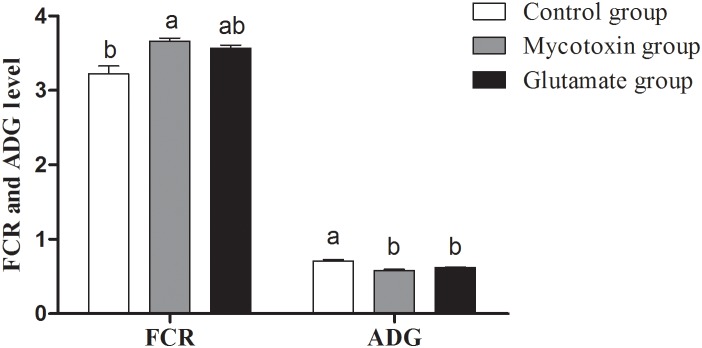
Figure 1. ADG and FCR in growing pigs fed mycotoxin-contaminated diets.
The treatments consisted of a control group (n = 5) receiving uncontaminated feed, a mycotoxin group (n = 5) receiving mould-contaminated diet, and the glutamate group (n = 5) receiving mould-contaminated diet and 2% glutamate. The data with different letters in the same factor differ significantly (P<0.05), and same letters means no significant difference (p>0.05).
Figure 2
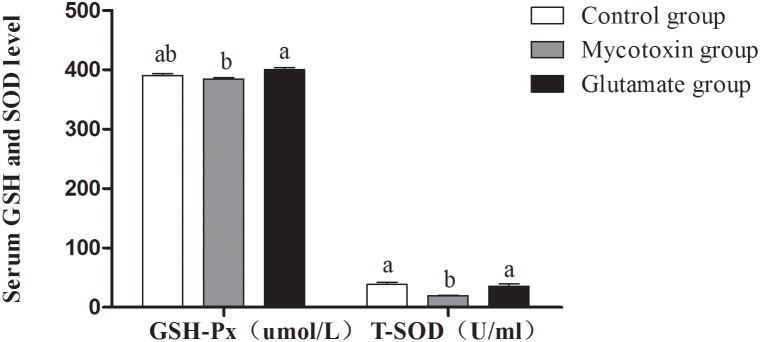
Figure 2. Serum GSH-Px and T-SOD activities in growing pigs fed mycotoxin-contaminated feed.
The treatments consisted of a control group (n = 5) receiving uncontaminated feed, a mycotoxin group (n = 5) receiving mould-contaminated diet, and the glutamate group (n = 5) receiving mould-contaminated diet and 2% glutamate. The data with different letters in the same factor differ significantly (P<0.05), and same letters means no significant difference (p>0.05).
Figure 3
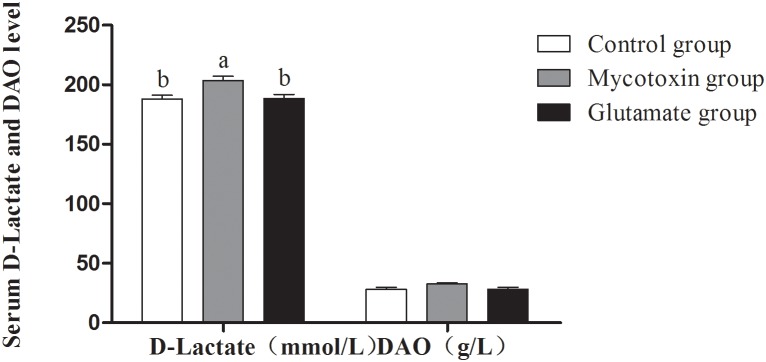
Figure 3. Serum D-Lactate and DAO activities of growing pigs fed mycotoxin-contaminated feed.
The treatments consisted of a control group (n = 5) receiving uncontaminated feed, a mycotoxin group (n = 5) receiving mould-contaminated diet, and the glutamate group (n = 5) receiving mould-contaminated diet and 2% glutamate. The data with different letters in the same factor differ significantly (P<0.05), and same letters means no significant difference (p>0.05).
Figure 4
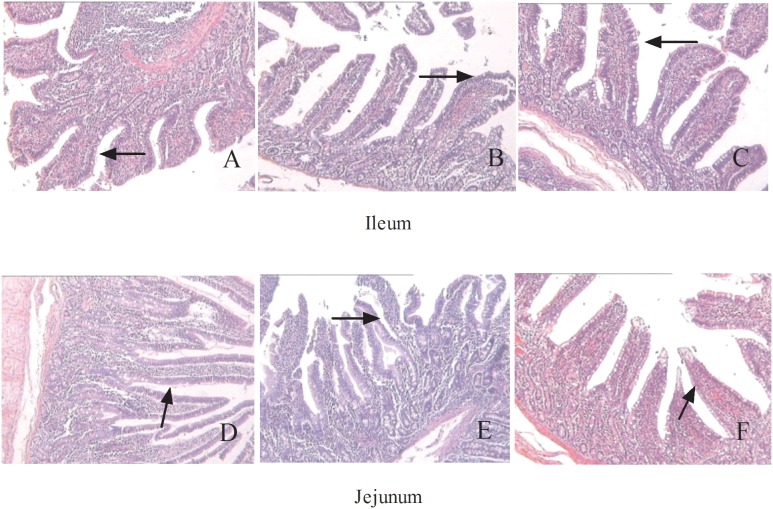
Figure 4. Histological evaluation of intestinal tissues (HE×100) in growing pigs fed mould-contaminated feed.
The treatments consisted of a control group (n = 5) receiving uncontaminated feed, a mycotoxin group (n = 5) receiving mould-contaminated diet, and the glutamate group (n = 5) receiving mould-contaminated diet and 2% glutamate. Fig. 4A and D represented control group and Fig. 4B and D represented contaminated group and Fig. 4C and F represented glutamate group. There is no histological damage observed in the control group (Fig. 4A and D). In mycotoxin group, the villus was scattered and desquamated seriously in jejunum and ileum (Fig. 4B and D). A greater villus in jejunum and ileum was observed in glutamate group (Fig. 4C and F).
Figure 5
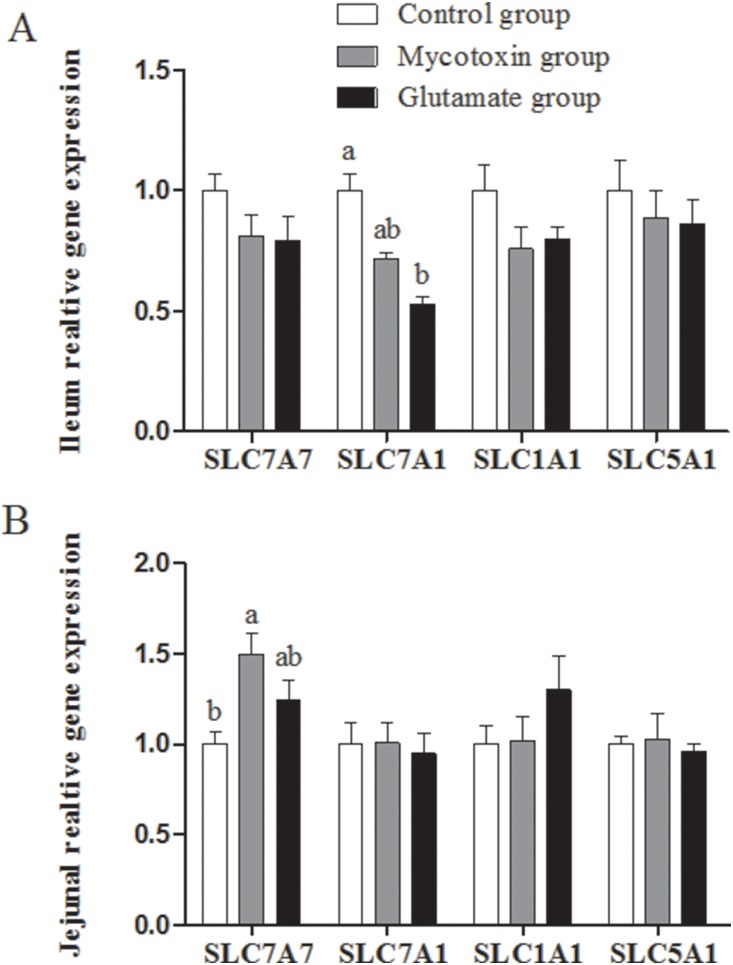
Figure 5. Effect of dietary supplementation with glutamate on elative mRNA abudances in ileum (A) and jejunum (A) of growing pigs fed mould-contaminated feed.
The treatments consisted of a control group (n = 5) receiving uncontaminated feed, a mycotoxin group (n = 5) receiving mould-contaminated diet, and the glutamate group (n = 5) receiving mould-contaminated diet and 2% glutamate. SLC7A1: solute carrier family 7 (cationic amino acid transporter, y+system), member 1; SLC7A7: solute carrier family 7 (amino acid transporter light chain, y+L system), member 7; SLC1A1: solute carrier family 1 (neuronal/epithelial high affinity glutamate transporter, system Xag), member 1; SLC5A1: solute carrier family 5 (sodium/glucose cotransporter), member 1. The data with different letters in the same row differ significantly (P<0.05), and same letters means no significant difference (p>0.05).

References

    1. Beardall J, Miller JD (1994) Natural occurrence of mycotoxins other than aflatoxin in Africa, Asia and South America. Mycotoxin Res 10: 21–40. - PubMed
    1. Xiao H, Wu MM, Tan BE, Yin YL, Li TJ, et al. (2013a) Effects of composite antimicrobial peptides in weanling piglets challenged with deoxynivalenol: I. Growth performance, immune function, and antioxidation capacity. Journal of Animal Science 91: 4772–4780. - PubMed
    1. Mankeviciene A, Jablonskyte-Rasce D, Maiksteniene S (2014) Occurrence of mycotoxins in spelt and common wheat grain and their products. Food Addit Contam Part A Chem Anal Control Expo Risk Assess 31: 132–138. - PubMed
    1. Burkhardt B, Pfeiffer E, Metzler M (2009) Absorption and metabolism of the mycotoxins alternariol and alternariol-9-methyl ether in Caco-2 cells in vitro. Mycotoxin Res 25: 149–157. - PubMed
    1. Coppock RW, Jacobsen BJ (2009) Mycotoxins in animal and human patients. Toxicol Ind Health 25: 637–655. - PubMed

Publication types

LinkOut - more resources