


Distinct aetiopathogenesis in subgroups of functional dyspepsia according to the Rome III criteria
- PMID: 25406127
- PMCID: PMC4602241
- DOI: 10.1136/gutjnl-2014-308114
Distinct aetiopathogenesis in subgroups of functional dyspepsia according to the Rome III criteria
Abstract
Background and objective: Whether there is distinct pathogenesis in subgroups of functional dyspepsia (FD), the postprandial distress syndrome (PDS) and epigastric pain syndrome (EPS) remains controversial. We aimed to identify the risk factors of FD and its subgroups in the Chinese population.
Methods: Patients with dyspepsia and healthy subjects who underwent gastric cancer screening were enrolled in this multicentre study from 2010 to 2012. All patients were evaluated by questionnaire, oesophagoduodenoscopy, histological examination and Helicobacter pylori tests. Subgroups of FD were classified according to the Rome III criteria. Psychiatric stress was assessed by the short form Brief Symptom Rating Scale. CagA and VacA genotypes were determined by PCR.
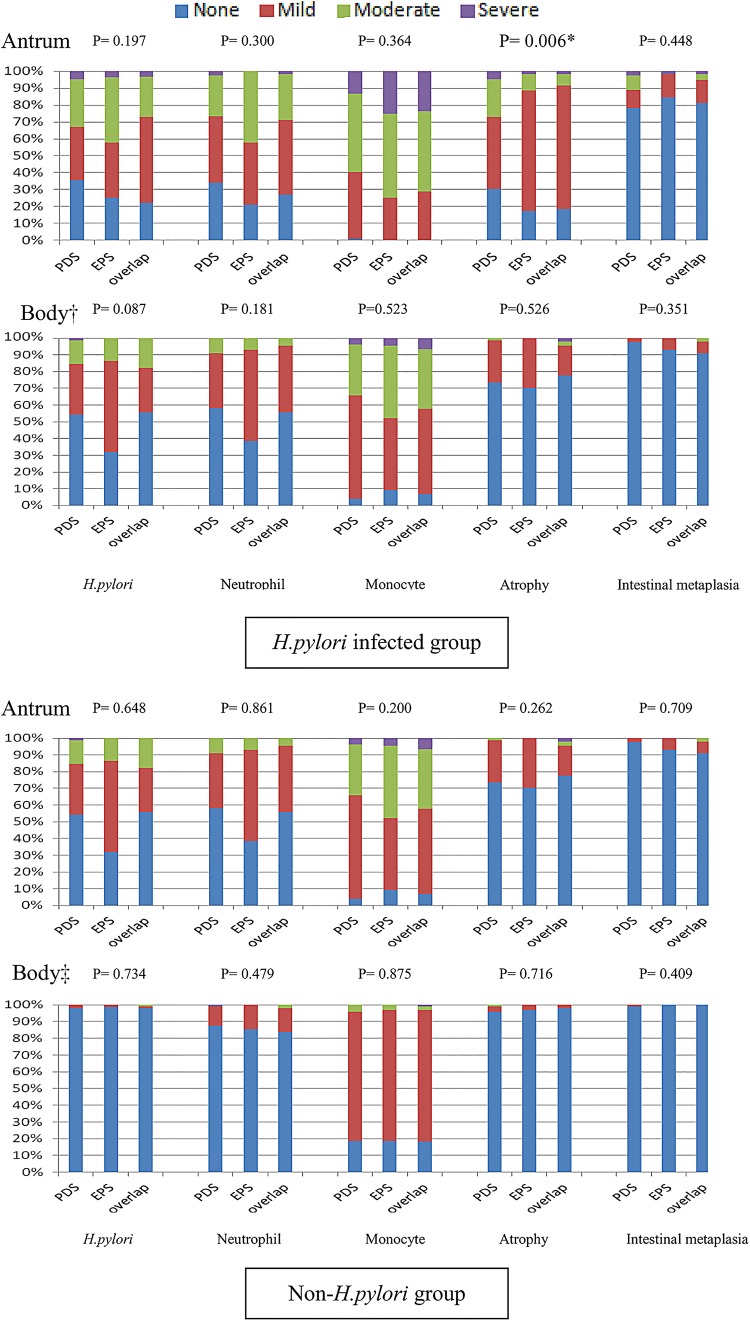
Results: Of 2378 patients screened for eligibility, 771 and 491 fulfilled the diagnostic criteria of uninvestigated dyspepsia and FD, respectively. 298 (60.7%) and 353 (71.9%) individuals were diagnosed with EPS and PDS, respectively, whereas 169 (34.4%) had the overlap syndrome. As compared with 1031 healthy controls, PDS and EPS shared some common risk factors, including younger age (OR 0.95; 99.5% CI 0.93 to 0.98), non-steroidal anti-inflammatory drugs (OR 6.60; 99.5% CI 3.13 to 13.90), anxiety (OR 3.41; 99.5% CI 2.01 to 5.77) and concomitant IBS (OR 6.89; 99.5% CI 3.41 to 13.94). By contrast, H. pylori (OR 1.86; 99.5% CI 1.01 to 3.45), unmarried status (OR 4.22; 99.5% CI 2.02 to 8.81), sleep disturbance (OR 2.56; 99.5% CI 1.29 to 5.07) and depression (OR 2.34; 99.5% CI 1.04 to 5.36) were associated with PDS. Moderate to severe antral atrophy and CagA positive strains were also more prevalent in PDS.
Conclusions: Different risk factors exist among FD subgroups based on the Rome III criteria, indicating distinct aetiopathogenesis of the subdivisions that may necessitate different therapeutic strategies.
Published by the BMJ Publishing Group Limited. For permission to use (where not already granted under a licence) please go to http://group.bmj.com/group/rights-licensing/permissions.
Figures

Comment in
-
Aetiopathogenesis of functional dyspepsia.Gut. 2015 Jul;64(7):1182-3. doi: 10.1136/gutjnl-2014-308959. Epub 2015 Jan 8. Gut. 2015. PMID: 25573418 No abstract available.
References
-
- Tack J, Talley NJ, Camilleri M, et al. . Functional gastroduodenal disorders. Gastroenterology 2006;130:1466–79. - PubMed
-
- Ford AC, Moayyedi P. Dyspepsia. BMJ 2013;347:f5059. - PubMed
-
- Ghoshal UC, Singh R, Chang FY, et al. . Functional Dyspepsia Consensus Team of the Asian Neurogastroenterology and Motility Association and the Asian Pacific Association of Gastroenterology. Epidemiology of uninvestigated and functional dyspepsia in Asia: facts and fiction. J Neurogastroenterol Motil 2011;17:235–44. - PMC - PubMed
-
- Tack J, Talley NJ. Functional dyspepsia—symptoms, definitions and validity of the Rome III criteria. Nat Rev Gastroenterol Hepatol 2013;10:134–41. - PubMed
-
- Agreus L, Borgquist L. The cost of gastro-oesophageal reflux disease, dyspepsia and peptic ulcer disease in Sweden. Pharmacoeconomics 2002;20:347–55. - PubMed
Publication types
MeSH terms
Substances
LinkOut - more resources
Full Text Sources
Other Literature Sources
Medical
Research Materials
Miscellaneous
