l-Arginine depletion blunts antitumor T-cell responses by inducing myeloid-derived suppressor cells
- PMID: 25406192
- PMCID: PMC4297565
- DOI: 10.1158/0008-5472.CAN-14-1491
l-Arginine depletion blunts antitumor T-cell responses by inducing myeloid-derived suppressor cells
Abstract
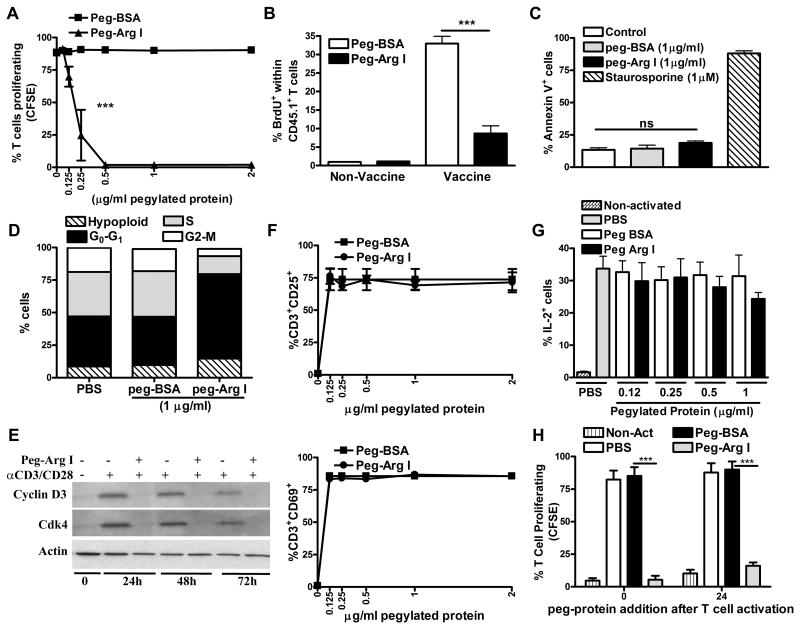
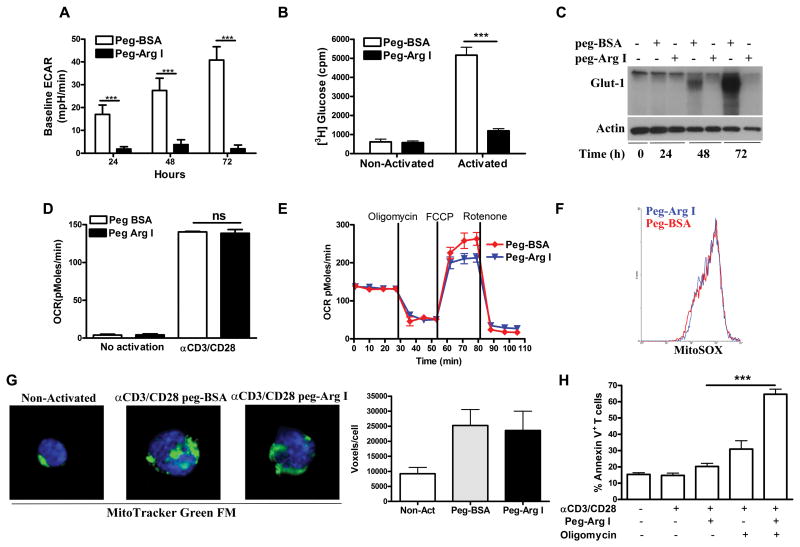
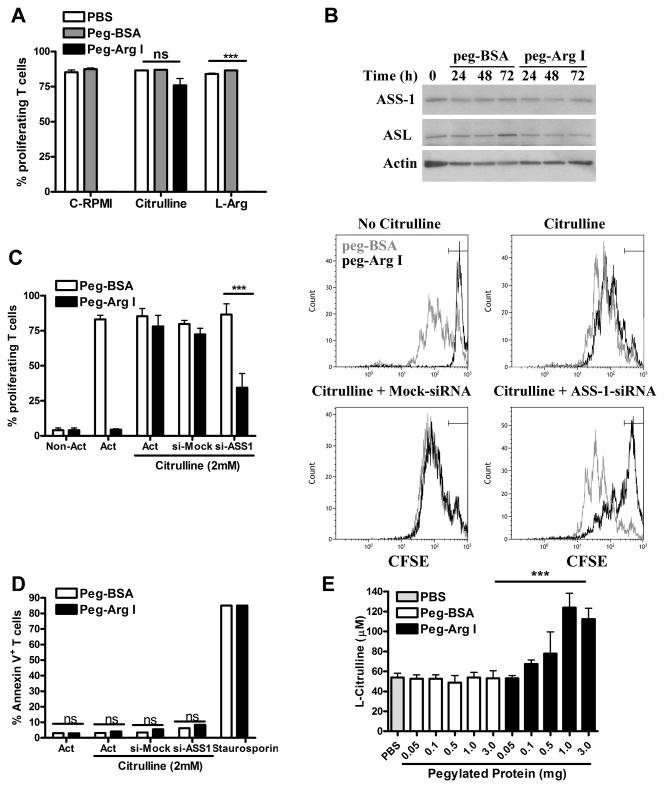
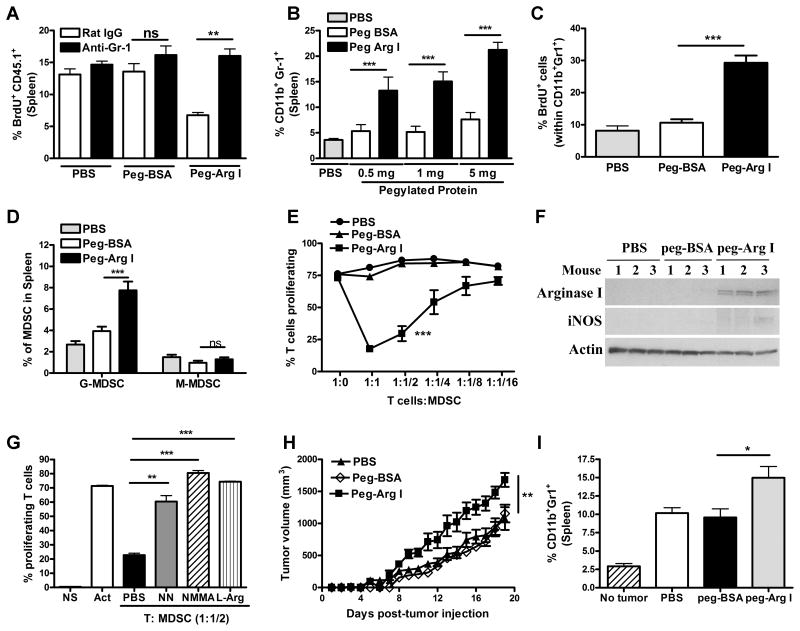
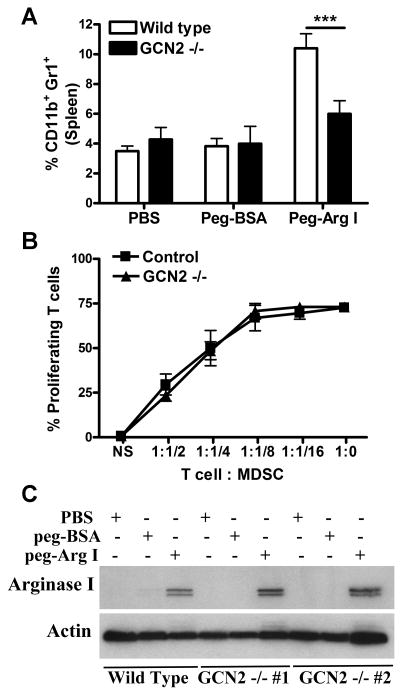
Enzymatic depletion of the nonessential amino acid l-Arginine (l-Arg) in patients with cancer by the administration of a pegylated form of the catabolic enzyme arginase I (peg-Arg I) has shown some promise as a therapeutic approach. However, l-Arg deprivation also suppresses T-cell responses in tumors. In this study, we sought to reconcile these observations by conducting a detailed analysis of the effects of peg-Arg I on normal T cells. Strikingly, we found that peg-Arg I blocked proliferation and cell-cycle progression in normal activated T cells without triggering apoptosis or blunting T-cell activation. These effects were associated with an inhibition of aerobic glycolysis in activated T cells, but not with significant alterations in mitochondrial oxidative respiration, which thereby regulated survival of T cells exposed to peg-Arg I. Further mechanistic investigations showed that the addition of citrulline, a metabolic precursor for l-Arg, rescued the antiproliferative effects of peg-Arg I on T cells in vitro. Moreover, serum levels of citrulline increased after in vivo administration of peg-Arg I. In support of the hypothesis that peg-Arg I acted indirectly to block T-cell responses in vivo, peg-Arg I inhibited T-cell proliferation in mice by inducing accumulation of myeloid-derived suppressor cells (MDSC). MDSC induction by peg-Arg I occurred through the general control nonrepressed-2 eIF2α kinase. Moreover, we found that peg-Arg I enhanced the growth of tumors in mice in a manner that correlated with higher MDSC numbers. Taken together, our results highlight the risks of the l-Arg-depleting therapy for cancer treatment and suggest a need for cotargeting MDSC in such therapeutic settings.
©2014 American Association for Cancer Research.
Conflict of interest statement
Figures
References
-
- Andersen MH. The targeting of immunosuppressive mechanisms in hematological malignancies. Leukemia. 2014;28:1784–1792. - PubMed
-
- Szlosarek PW, Luong P, Phillips MM, Baccarini M, Stephen E, Szyszko T, et al. Metabolic response to pegylated arginine deiminase in mesothelioma with promoter methylation of argininosuccinate synthetase. J Clin Oncol. 2013;31:e111–e113. - PubMed
-
- Bronte V, Serafini P, Mazzoni A, Segal DM, Zanovello P. L-arginine metabolism in myeloid cells controls T-lymphocyte functions. Trends Immunol. 2003;24:302–306. - PubMed
Publication types
MeSH terms
Substances
Grants and funding
LinkOut - more resources
Full Text Sources
Other Literature Sources
Molecular Biology Databases