A rare case of acquired aortopulmonary fistula with bicuspid aortic valve: report of successful surgical repair
- PMID: 25406218
- PMCID: PMC4244370
- DOI: 10.1136/bcr-2014-207374
A rare case of acquired aortopulmonary fistula with bicuspid aortic valve: report of successful surgical repair
Abstract
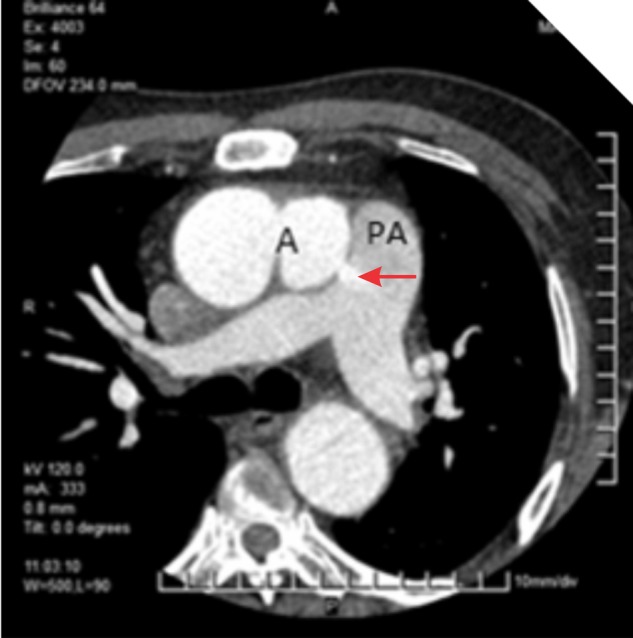
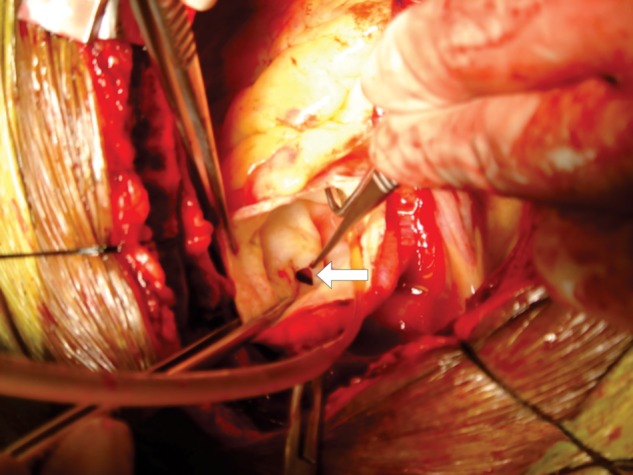
An acquired aortopulmonary fistula is a rare and usually fatal phenomenon. Rarer still are reports of successful surgical repair of aortopulmonary fistulae. We present the case of a 48-year-old hypertensive man who presented with congestive cardiac failure. Examination revealed a bicuspid aortic valve and a large aneurysm of the arch of the aorta, which was communicating with the main pulmonary artery. The diagnosis of acquired aortopulmonary fistula was made using transthoracic echocardiography findings and confirmed by CT. The patient was successfully managed by surgery, with an uneventful postoperative recovery, with control of congestive cardiac failure. At 1-year follow-up, the patient had Class I symptoms.
2014 BMJ Publishing Group Ltd.
Figures


References
-
- Sobral MLP, Santos LAS, Santos GGd et al. Aneurisma do arco aórtico com fístula aorto-pulmonar: tratamento cirúrgico com sucesso. Revista Brasileira de Cirurgia Cardiovascular 2004;19:409–12.
-
- Lahey SJ. Successful surgical management of an aortic arch aneurysm with acute aorto-pulmonary fistula. Ann Thorac Surg 1993;55:995–7. - PubMed
-
- Kakio T, Konishi T, Maruyama S et al. A case of successful repair of aorto-pulmonary artery fistula secondary to aortic arch aneurysm. Kokyu To Junkan 1992;40:603–7. - PubMed
-
- Fedak PW, Verma S, David TE et al. Clinical and pathophysiological implications of a bicuspid aortic valve. Circulation 2002;106:900–4. - PubMed
Publication types
MeSH terms
Supplementary concepts
LinkOut - more resources
Full Text Sources
Other Literature Sources
Medical