


A Poorly Differentiated Malignant Neoplasm Lacking Lung Markers Harbors an EML4-ALK Rearrangement and Responds to Crizotinib
- PMID: 25408655
- PMCID: PMC4209277
- DOI: 10.1159/000367780
A Poorly Differentiated Malignant Neoplasm Lacking Lung Markers Harbors an EML4-ALK Rearrangement and Responds to Crizotinib
Abstract
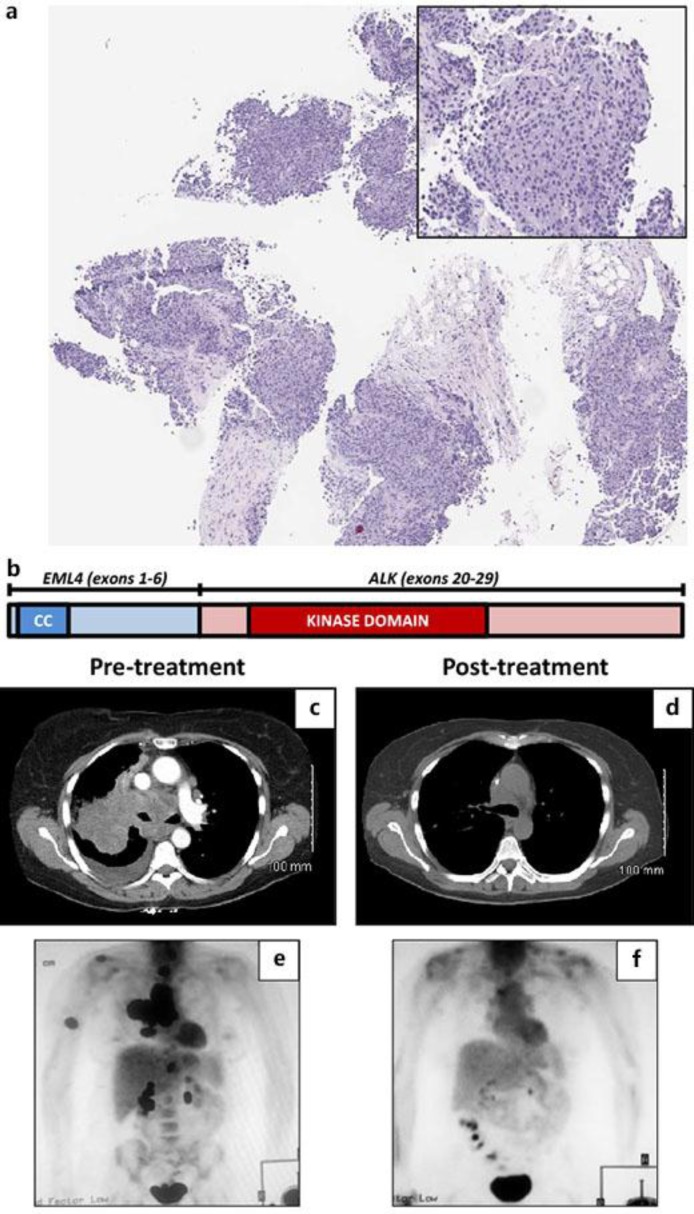
Suspected metastatic site lesions that are poorly differentiated present a diagnostic challenge when morphologic and immunohistochemical profiling cannot establish the primary tumor site. Here we present a patient diagnosed with both a malignant neoplasm in the lung and a right upper extremity (RUE) neoplasm of unclear histogenetic origin. Immunohistochemical staining performed on the latter specimen was inconclusive in determining the site of origin. Although the lung biopsy sample was insufficient for molecular testing, hybrid capture-based comprehensive genomic profiling (FoundationOne) identified an EML4-ALK rearrangement in the RUE lesion. Crizotinib treatment resulted in a major response in both the RUE and the lung lesions. This report illustrates the utility of comprehensive genomic profiling employed at the initial presentation of an unknown primary malignant neoplasm, which resulted in the front-line use of targeted therapy and a significant and sustained antitumor response.
Keywords: ALK; Crizotinib; Poorly differentiated lung neoplasm; Unknown primary tumor site.
Figures
References
-
- Thunnissen E, Kerr KM, Herth FJF, et al. The challenge of NSCLC diagnosis and predictive analysis on small samples. Practical approach of a working group. Lung Cancer. 2012;76:1–18. - PubMed
-
- Lin E, Li L, Guan Y, et al. Exon array profiling detects EML4-ALK fusion in breast, colorectal, and non-small cell lung cancers. Mol Cancer Res. 2009;7:1466–1476. - PubMed
Publication types
LinkOut - more resources
Full Text Sources
Other Literature Sources
