. 2014 Nov 19;9(11):e113294.
doi: 10.1371/journal.pone.0113294. eCollection 2014.

Design and development of a novel vaccine for protection against Lyme borreliosis

Affiliations

Design and development of a novel vaccine for protection against Lyme borreliosis

Pär Comstedt et al. PLoS One. .

Abstract

There is currently no Lyme borreliosis vaccine available for humans, although it has been shown that the disease can be prevented by immunization with an OspA-based vaccine (LYMErix). Outer surface protein A (OspA) is one of the dominant antigens expressed by the spirochetes when present in a tick. The Borrelia species causing Lyme borreliosis in Europe express different OspA serotypes on their surface, B. burgdorferi (serotype 1), B. afzelii (serotype 2), B. garinii (serotypes, 3, 5 and 6) and B. bavariensis (serotype 4), while only B. burgdorferi is present in the US. In order to target all these pathogenic Borrelia species, we have designed a multivalent OspA-based vaccine. The vaccine includes three proteins, each containing the C-terminal half of two OspA serotypes linked to form a heterodimer. In order to stabilize the C-terminal fragment and thus preserve important structural epitopes at physiological temperature, disulfide bonds were introduced. The immunogenicity was increased by introduction of a lipidation signal which ensures the addition of an N-terminal lipid moiety. Three immunizations with 3.0 µg adjuvanted vaccine protected mice from a challenge with spirochetes expressing either OspA serotype 1, 2 or 5. Mice were protected against both challenge with infected ticks and in vitro grown spirochetes. Immunological analyses (ELISA, surface binding and growth inhibition) indicated that the vaccine can provide protection against the majority of Borrelia species pathogenic for humans. This article presents the approach which allows for the generation of a hexavalent vaccine that can potentially protect against a broad range of globally distributed Borrelia species causing Lyme borreliosis.


Conflict of interest statement

Competing Interests: The authors of this manuscript have the following competing interests: All authors are employed at Valneva Austria GmbH and are authors of patents describing the invention. Two patents (having the same name but different numbers, one international and one for United States of America) are relevant for the publication: “Mutant Fragments of OspA and Methods and Uses Relating Thereto” (WO 2014/006226 A1) and “Mutant Fragments of OspA and Methods and Uses Relating Thereto” (US20140010835A1). There are no further patents, products in development or marketed products to declare. This does not alter the authors’ adherence to all the PLOS ONE policies on sharing data and materials, as detailed online in the guide for authors.

Figures

Figure 1
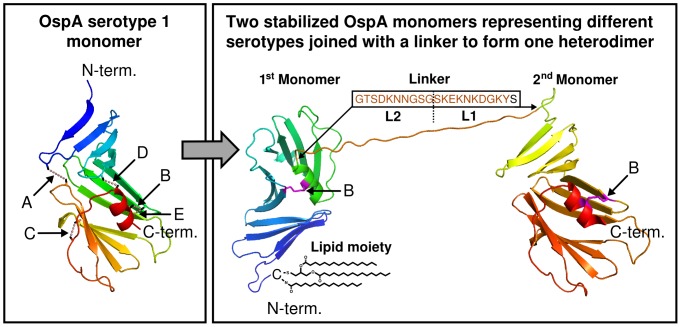
Figure 1. Localization of the stabilizing disulfide bonds and schematic representation of the heterodimers.
Left panel: Part of the OspA serotype 1 crystal structure showing the monomer protein (Protein Data Bank accession 1OSP [34]). Locations of the five modifications: “A” (aa 141∶ 241), “B” (aa 182∶ 269), “C” (aa 244∶ 259), “D” (aa 165∶ 265) and “E” (aa 182∶ 272) are indicated as dotted lines between the β-carbon atoms of the corresponding residues. Right panel: Schematic illustration of two stabilized monomers joined with a linker sequence to form one heterodimer. The α-helix at the C-terminal end of the first monomer is joined with the β-sheet at the N-terminal domain of the second monomer using a linker sequence derived from B. burgdorferi OspA serotype 1 (L1; aa 43–53 with modification [D53S] and L2; aa 65–74). The heterodimer is expressed with a posttranslationally attached N-terminal lipid moiety, indicated in line drawing. The positions of the disulfide bonds for stabilization “B” in both OspA monomer subunits are indicated in magenta. Abbreviations: N-terminal (N-term.), C-terminal (C-term.).
Figure 2
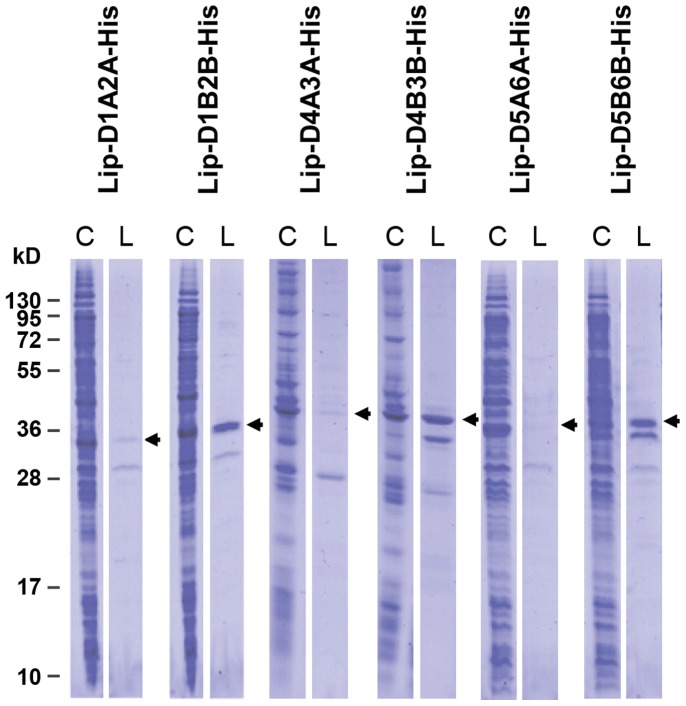
Figure 2. Protein expression and lipid-phase separation for OspA heterodimers.
Each heterodimer was expressed in two different versions having the respective monomers stabilized with the “A” or the “B” modifications; Lip-D1A2A-His, Lip-D1B2B-His, Lip-D4A3A-His, Lip-D4B3B-His, Lip-D5A6A-His and Lip-D5B6B-His. The expression levels of all six heterodimers were similar when the crude lysates were analyzed. However, heterodimers using stabilization “B” were recovered in higher amounts in the lipid-phase after phase separation, indicating more efficient lipidation and higher solubility. Protein bands representing the heterodimers are indicated with arrows. Abbreviations: Crude lysate (C), Lipid-phase (L).
Figure 3
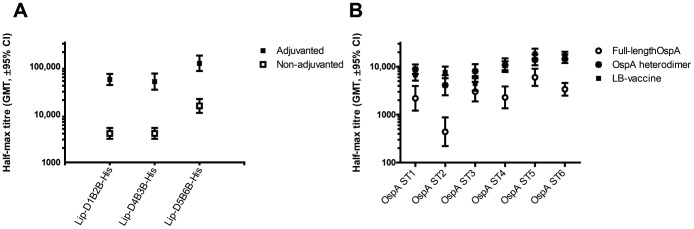
Figure 3. Immunogenicity of OspA heterodimers.
(A) The effect of adjuvant on the immune response was evaluated. The three heterodimers (Lip-D1B2B-His, Lip-D4B3B-His and Lip-D5B6B-His) were tested individually for immunogenicity (5.0 µg) when formulated with or without adjuvant (0.15% aluminum hydroxide). IgG titers were determined by ELISA using the respective heterodimer as coating antigen. The half-max geometric mean titers (GMT) with 95% confidence intervals (CI) are shown. (B) The serotype specific immune response of the LB-vaccine was studied by immunizing mice with 3.0 µg LB-vaccine (Lip-D1B2B, Lip-D4B3B and Lip-D5B6B in a 1∶1∶1 ratio), or 1.0 µg of the heterodimers or the homologous lipidated full-length OspA, with adjuvant. IgG titers were determined by ELISA using the monomer of the corresponding serotype (ST1–6) as coating antigen. The half-max geometric mean titers (GMT) with 95% CI are shown.

References

    1. Centers for Disease Control and Prevention (2013) How many people get Lyme disease? Available: http://www.cdc.gov/lyme/stats/humanCases.html Accessed 2014 May 27.
    1. Hubalek Z (2009) Epidemiology of lyme borreliosis. Curr Probl Dermatol 37: 31–50. - PubMed
    1. Lindgren E, Jaenson TG, Organization WH (2006) Lyme borreliosis in Europe: influences of climate and climate change, epidemiology, ecology and adaptation measures. Citeseer.
    1. Rizzoli A, Hauffe H, Carpi G, Vourc HG, Neteler M, et al.. (2011) Lyme borreliosis in Europe. Euro Surveill 16. - PubMed
    1. Barbour AG, Tessier SL, Todd WJ (1983) Lyme disease spirochetes and ixodid tick spirochetes share a common surface antigenic determinant defined by a monoclonal antibody. Infect Immun 41: 795–804. - PMC - PubMed

Publication types

MeSH terms