


Protease-activated receptor 2 activation inhibits N-type Ca2+ currents in rat peripheral sympathetic neurons
- PMID: 25410909
- PMCID: PMC4255100
- DOI: 10.14348/molcells.2014.0167
Protease-activated receptor 2 activation inhibits N-type Ca2+ currents in rat peripheral sympathetic neurons
Abstract
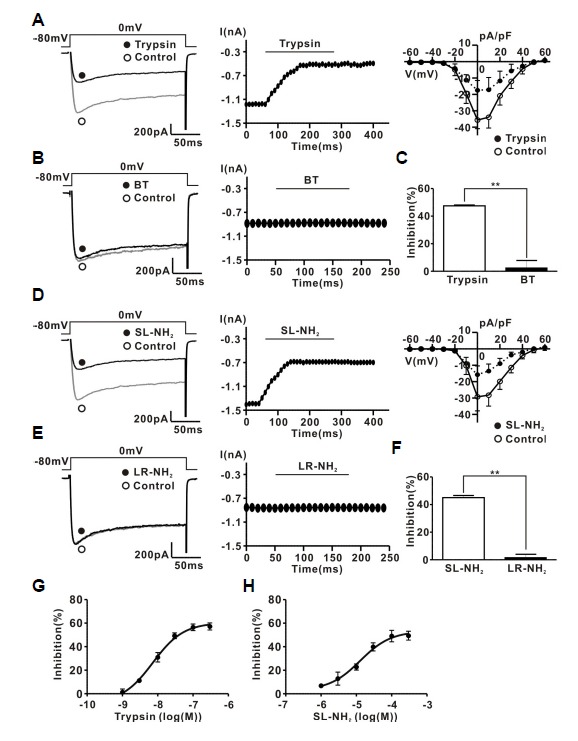
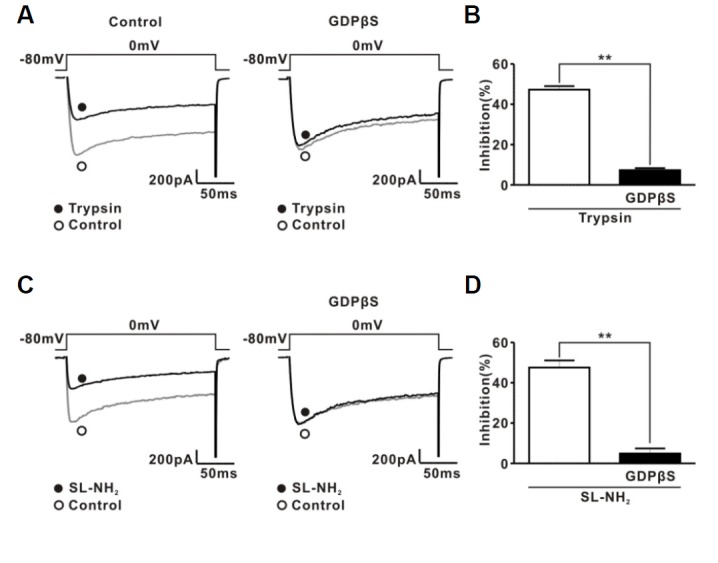
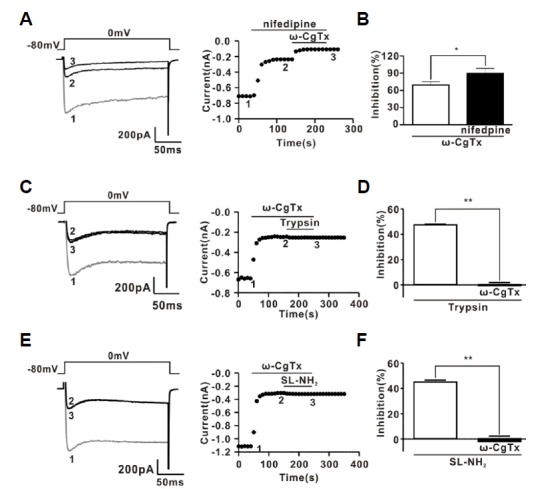
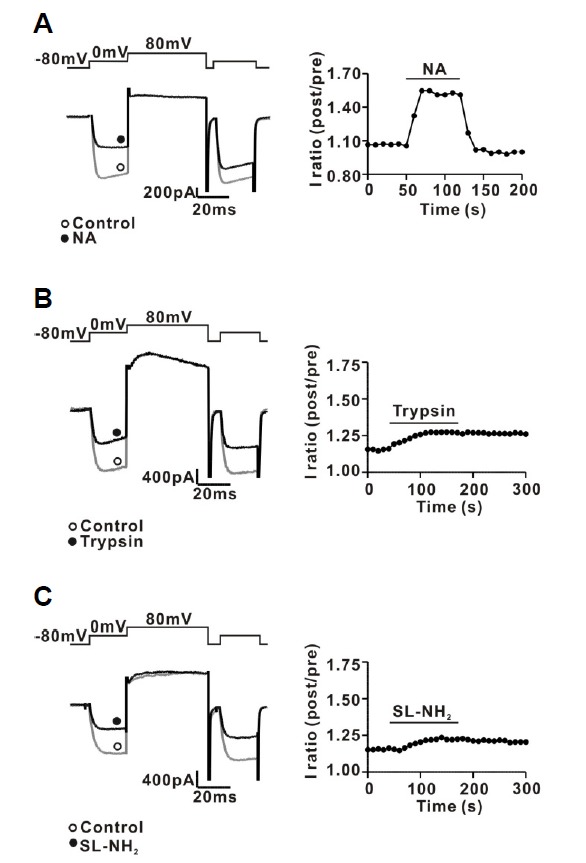
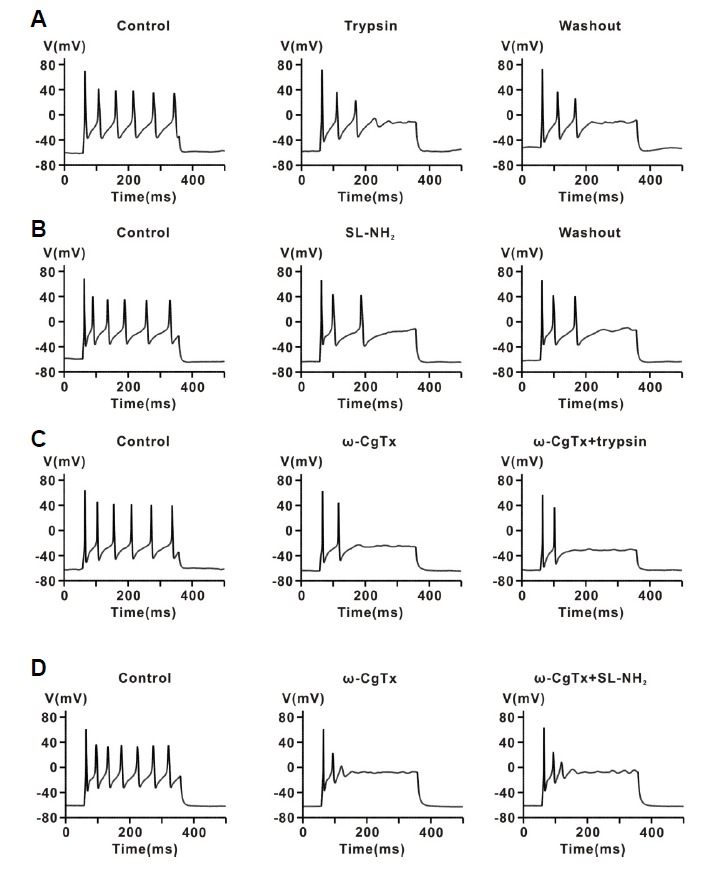
The protease-activated receptor (PAR)-2 is highly expressed in endothelial cells and vascular smooth muscle cells. It plays a crucial role in regulating blood pressure via the modulation of peripheral vascular tone. Although several mechanisms have been suggested to explain PAR-2-induced hypotension, the precise mechanism remains to be elucidated. To investigate this possibility, we investigated the effects of PAR-2 activation on N-type Ca(2+) currents (I(Ca-N)) in isolated neurons of the celiac ganglion (CG), which is involved in the sympathetic regulation of mesenteric artery vascular tone. PAR-2 agonists irreversibly diminished voltage-gated Ca(2+) currents (I(Ca)), measured using the patch-clamp method, in rat CG neurons, whereas thrombin had little effect on I(Ca). This PAR-2-induced inhibition was almost completely prevented by ω-CgTx, a potent N-type Ca(2+) channel blocker, suggesting the involvement of N-type Ca(2+) channels in PAR-2-induced inhibition. In addition, PAR-2 agonists inhibited I(Ca-N) in a voltage-independent manner in rat CG neurons. Moreover, PAR-2 agonists reduced action potential (AP) firing frequency as measured using the current-clamp method in rat CG neurons. This inhibition of AP firing induced by PAR-2 agonists was almost completely prevented by ω-CgTx, indicating that PAR-2 activation may regulate the membrane excitability of peripheral sympathetic neurons through modulation of N-type Ca(2+) channels. In conclusion, the present findings demonstrate that the activation of PAR-2 suppresses peripheral sympathetic outflow by modulating N-type Ca(2+) channel activity, which appears to be involved in PAR-2-induced hypotension, in peripheral sympathetic nerve terminals.
Keywords: N-type Ca2+ channel; celiac ganglion; hypotension; peripheral sympathetic output; protease-activated receptor 2.
Figures
References
-
- al-Ani B., Saifeddine M., Hollenberg M.D. Detection of functional receptors for the proteinase-activated-receptor-2-activating polypeptide, SLIGRL-NH2, in rat vascular and gastric smooth muscle. Can. J. Physiol. Pharmacol. 1995;73:1203–1207. - PubMed
-
- Carrier G.O., Ikeda S.R. TTX-sensitive Na+ channels and Ca2+ channels of the L- and N-type underlie the inward current in acutely dispersed coeliac-mesenteric ganglia neurons of adult rats. Pflugers Arch. 1992;421:7–16. - PubMed
-
- Cheung W.M., Andrade-Gordon P., Derian C.K., Damiano B.P. Receptor-activating peptides distinguish thrombin receptor (PAR-1) and protease activated receptor 2 (PAR-2) mediated hemodynamic responses in vivo. Can. J. Physiol. Pharmacol. 1998;76:16–25. - PubMed
-
- Chien E.K., Sweet L., Phillippe M., Marietti S., Kim T.T., Wolff D.A., Thomas L., Bieber E. Protease-activated receptor isoform expression in pregnant and nonpregnant rat myometrial tissue. J. Soc. Gynecol. Investig. 2003;10:460–468. - PubMed
-
- Chung S., Ahn D.S., Kim Y.H., Kim Y.S., Joeng J.H., Nam T.S. Modulation of N-type calcium currents by presynaptic imidazoline receptor activation in rat superior cervical ganglion neurons. Exp. Physiol. 2010;95:982–993. - PubMed
Publication types
MeSH terms
Substances
LinkOut - more resources
Full Text Sources
Other Literature Sources
Medical
Miscellaneous
