Phlebotomine fauna, natural infection rate and feeding habits of Lutzomyia cruzi in Jaciara, state of Mato Grosso, Brazil
- PMID: 25410993
- PMCID: PMC4296494
- DOI: 10.1590/0074-0276140112
Phlebotomine fauna, natural infection rate and feeding habits of Lutzomyia cruzi in Jaciara, state of Mato Grosso, Brazil
Abstract
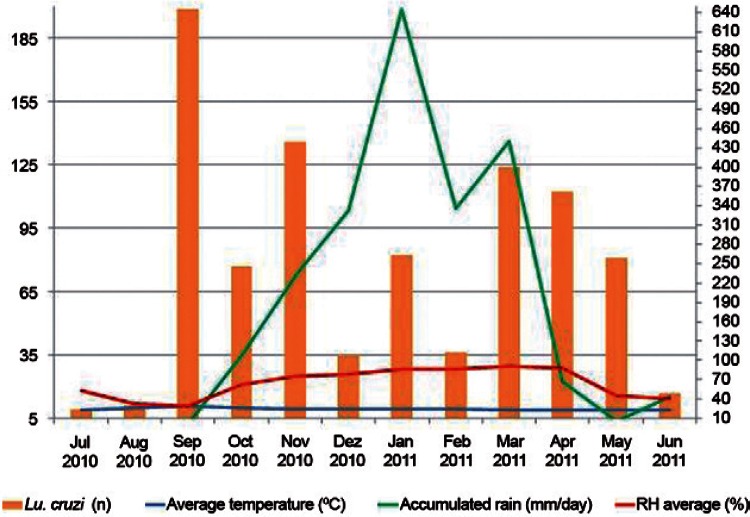
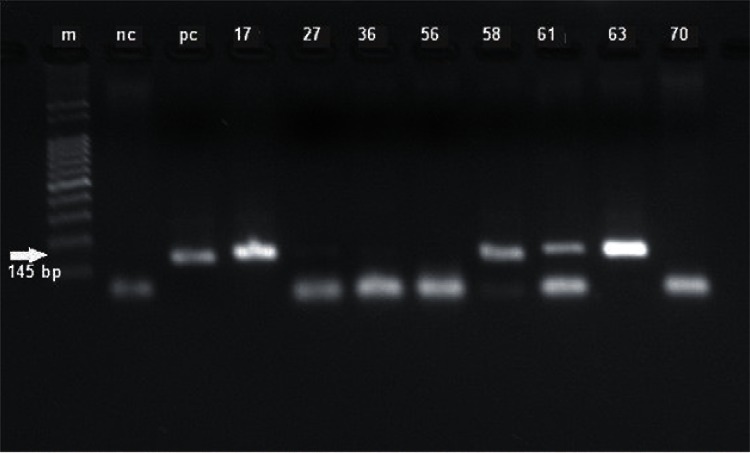
Visceral leishmaniasis (VL) in Brazil is transmitted by the phlebotomine Lutzomyia longipalpis and in some midwestern regions by Lutzomyia cruzi. Studies of the phlebotomine fauna, feeding habits and natural infection rate by Leishmania contribute to increased understanding of the epidemiological chain of leishmaniases and their vectorial capacity. Collections were performed in Jaciara, state of Mato Grosso from 2010-2013, during which time 2,011 phlebotomines (23 species) were captured (68.70% Lu. cruzi and 20.52% Lutzomyia whitmani). Lu. cruzi females were identified by observing the shapes of the cibarium (a portion of the mouthpart) and spermatheca, from which samples were obtained for polymerase chain reaction to determine the rates of natural infection. Engorged phlebotomines were assessed to identify the blood-meal host by ELISA. A moderate correlation was discovered between the number of Lu. cruzi and the temperature and the minimum rate of infection was 6.10%. Twenty-two females were reactive to the antisera of bird (28%), dog (3.30%) and skunk (1.60%). We conclude that Lu. cruzi and Lu. whitmani have adapted to the urban environment in this region and that Lu. cruzi is the most likely vector of VL in Jaciara. Moreover, maintenance of Leishmania in the environment is likely aided by the presence of birds and domestic and synanthropic animals.
Figures
References
-
- Acardi SA, Liotta DJ, Santini MS, Romagosa CM, Salomón OD. Detection of Leishmania infantum in naturally infected Lutzomyia longipalpis (Diptera: Psychodidae: Phlebotominae) and Canis familiaris in Misiones, Argentina: the first report of a PCR-RFLP and sequencing-based confirmation assay. Mem Inst Oswaldo Cruz. 2010;105:796–799. - PubMed
-
- Afonso MMS, Duarte R, Miranda JC, Caranha L, Rangel EF. Studies on the feeding habits of Lutzomyia (Lutzomyia) longipalpis (Lutz & Neiva, 1912) (Diptera: Psychodidae: Phlebotominae) populations from endemic areas of American visceral leishmaniasis in northeastern Brazil. J Trop Med. 2012;2012:1–5. - PMC - PubMed
-
- Afonso MMS, Gomes AC, Meneses CRV, Rangel EF. Studies on the feeding habits of Lutzomyia (N.) intermedia (Diptera: Psychodidae), vector of cutaneous leishmaniasis in Brazil. Cad Saude Publica. 2005;21:1816–1820. - PubMed
-
- Almeida PS, Nascimento JC, Ferreira AD, Minzão LD, Portes F, Miranda AM, Faccenda O, Filho JDA. Espécies de flebotomíneos (Diptera: Psychodidae) coletadas em ambiente urbano em municípios com transmissão de leishmaniose visceral do estado de Mato Grosso do Sul, Brasil. Rev Bras Entomol. 2010;54:304–310.
MeSH terms
Substances
LinkOut - more resources
Full Text Sources
Other Literature Sources
Miscellaneous