


Systematic review and meta-analysis of association of smokeless tobacco and of betel quid without tobacco with incidence of oral cancer in South Asia and the Pacific
- PMID: 25411778
- PMCID: PMC4239077
- DOI: 10.1371/journal.pone.0113385
Systematic review and meta-analysis of association of smokeless tobacco and of betel quid without tobacco with incidence of oral cancer in South Asia and the Pacific
Abstract
Aim: This systematic review and meta-analysis aimed to critically appraised data from comparable studies leading to quantitative assessment of any independent association between use of oral smokeless tobacco in any form, of betel quid without tobacco and of areca nut with incidence of oral cancer in South Asia and the Pacific.
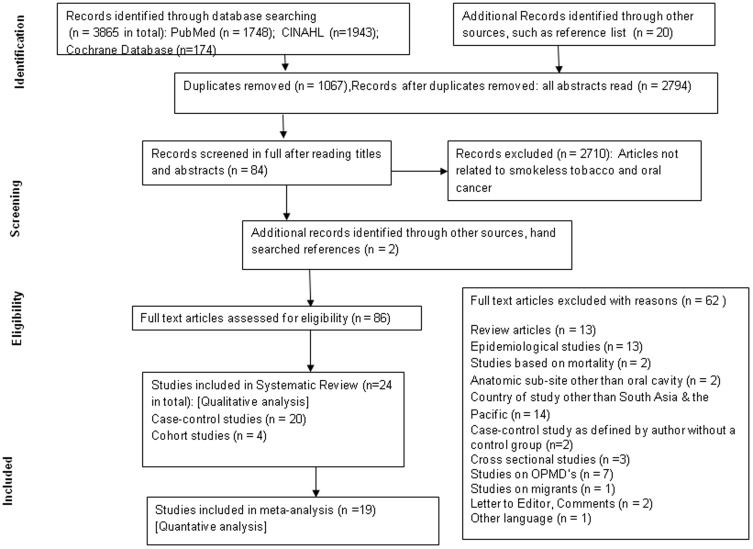
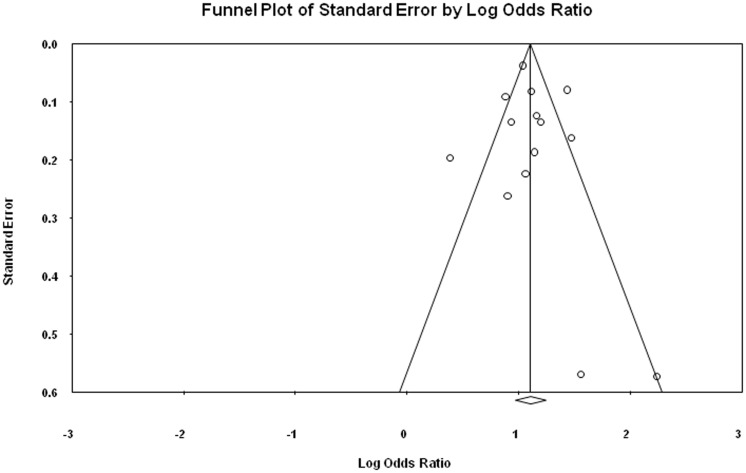
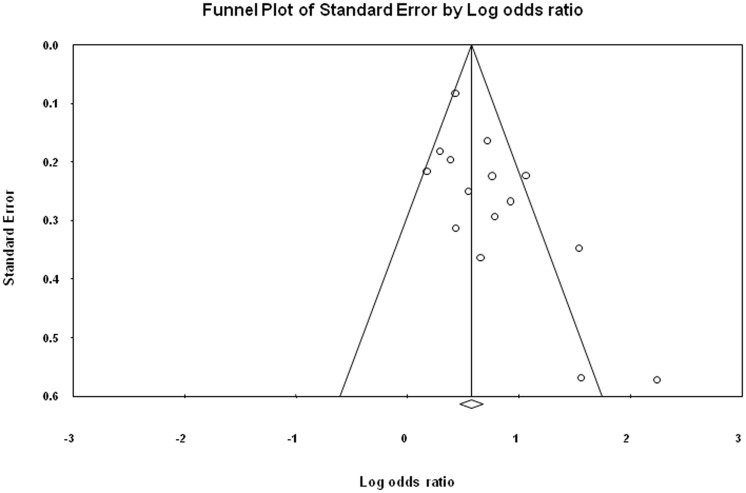
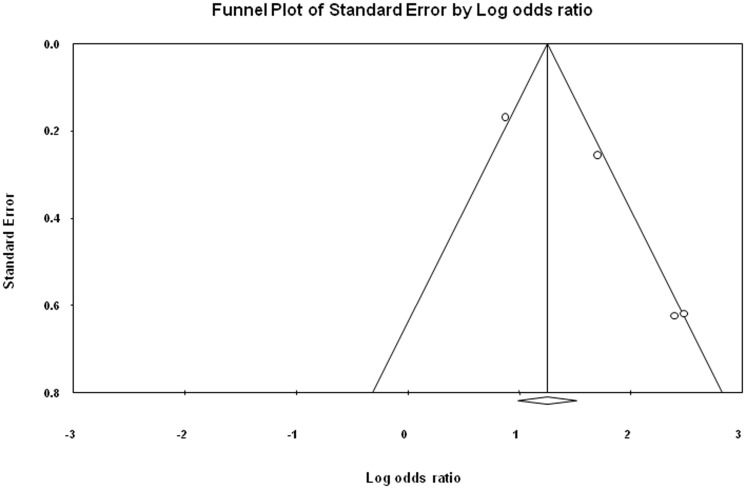
Methods: Studies (case control and/or cohort) were identified by searching Pub Med, CINAHL and Cochrane databases through June 2013 using the keywords oral cancer: chewing tobacco; smokeless tobacco; betel quid; betel quid without tobacco; areca nut; Asia, the Pacific and the reference lists of retrieved articles. A random effects model was used to compute adjusted summary OR(RE) for the main effect of these habits along with their corresponding 95% confidence intervals. To quantify the impact of between-study heterogeneity on adjusted main-effect summary OR(RE), Higgins' H and I2 statistics along with their 95% uncertainty intervals were used. Funnel plots and Egger's test were used to evaluate publication bias.
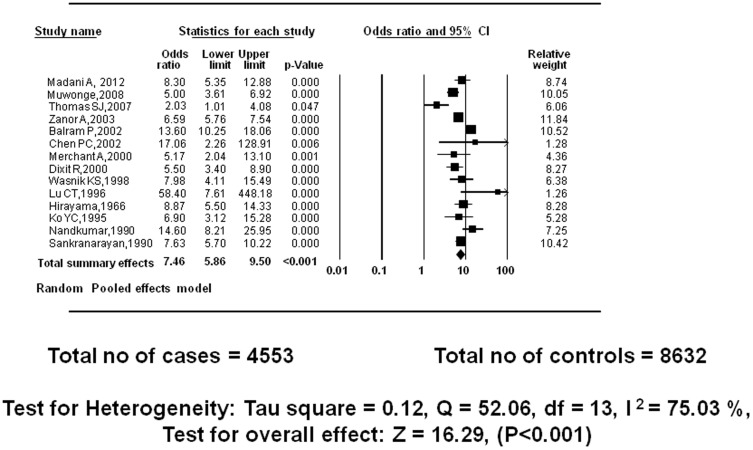
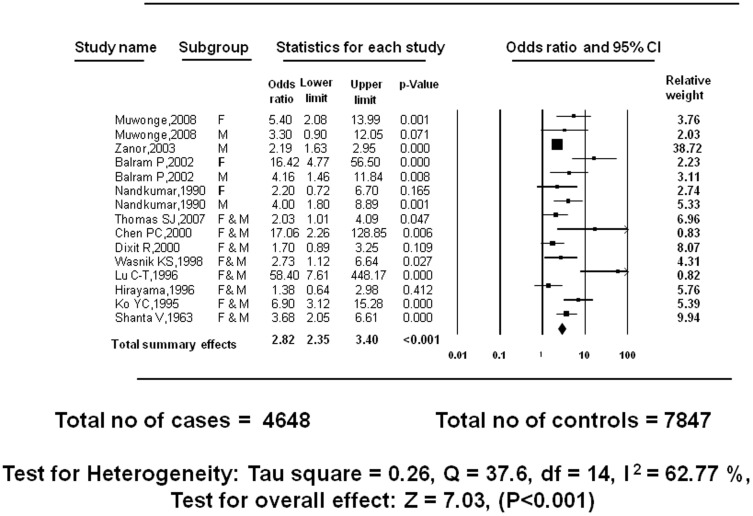
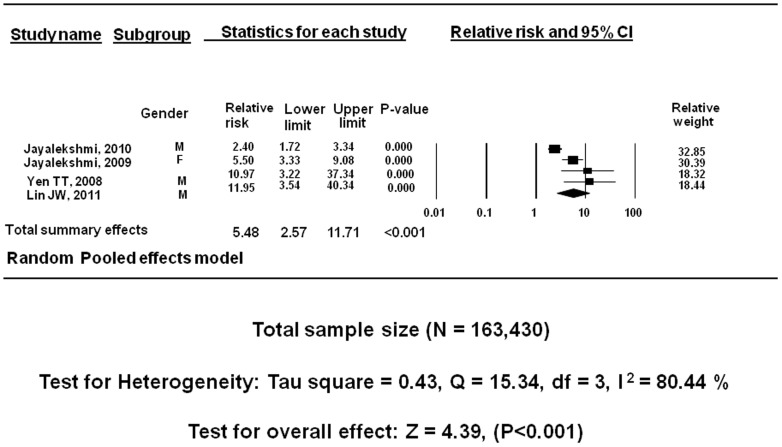
Results: Meta-analysis of fifteen case-control studies (4,553 cases; 8,632 controls) and four cohort studies (15,342) which met our inclusion criteria showed that chewing tobacco is significantly and independently associated with an increased risk of squamous-cell carcinoma of the oral cavity (adjusted main-effect summary for case- control studies OR(RE) = 7.46; 95% CI = 5.86-9.50, P<0.001), (adjusted main-effect summary for cohort studies RR = 5.48; 95% CI = 2.56-11.71, P<0.001). Furthermore, meta-analysis of fifteen case control studies (4,648 cases; 7,847 controls) has shown betel quid without tobacco to have an independent positive association with oral cancer, with OR = 2.82 (95% CI = 2.35-3.40, P<0.001). This is presumably due to the carcinogenicity of areca nut. There was no significant publication bias.
Conclusion: There is convincing evidence that smokeless (aka chewing) tobacco, often used as a component of betel quid, and betel quid without tobacco, are both strong and independent risk factors for oral cancer in these populations. However, studies with better separation of the types of tobacco and the ways in which it is used, and studies with sufficient power to quantify dose-response relationships are still needed.
Conflict of interest statement
Figures
References
-
- Gupta PC, Ray CS (2003) Smokeless tobacco and health in India and South Asia. Respirology 8: 419–431. - PubMed
-
- Bhonsle RB, Murti PR, Gupta PC (1992) Tobacco habits in India. In: Control of tobacco-related cancers and other diseases. Proceedings of an international symposium. In: Gupta PC, Hamner JEIII, Murti PR, editors.Bombay: Oxford University Press. 25–46.
-
- Pietrusewsky M, Douglas MT, Ikehara-Quebral RM (1997) An assessment of health and disease in the prehistoric inhabitants of the Mariana Islands. Am J Phys Anthropol 104: 315–342. - PubMed
-
- Marshall M (1990) Combining insights from epidemiological and ethnographic data to investigate substance use in Truk, Federated States of Micronesia. Br J Addict 85: 1457–1468. - PubMed
-
- Brady M (2002) Historical and cultural roots of tobacco use among Aboriginal and Torres Strait Islander people. Aust NZJ Public Health 26: 120–124. - PubMed
Publication types
MeSH terms
LinkOut - more resources
Full Text Sources
Other Literature Sources
Medical
Miscellaneous
