A systems genetics approach identifies CXCL14, ITGAX, and LPCAT2 as novel aggressive prostate cancer susceptibility genes
- PMID: 25411967
- PMCID: PMC4238980
- DOI: 10.1371/journal.pgen.1004809
A systems genetics approach identifies CXCL14, ITGAX, and LPCAT2 as novel aggressive prostate cancer susceptibility genes
Erratum in
-
Correction: A Systems Genetics Approach Identifies CXCL14, ITGAX, and LPCAT2 as Novel Aggressive Prostate Cancer Susceptibility Genes.PLoS Genet. 2015 May 1;11(5):e1005127. doi: 10.1371/journal.pgen.1005127. eCollection 2015 May. PLoS Genet. 2015. PMID: 25933217 Free PMC article. No abstract available.
Abstract
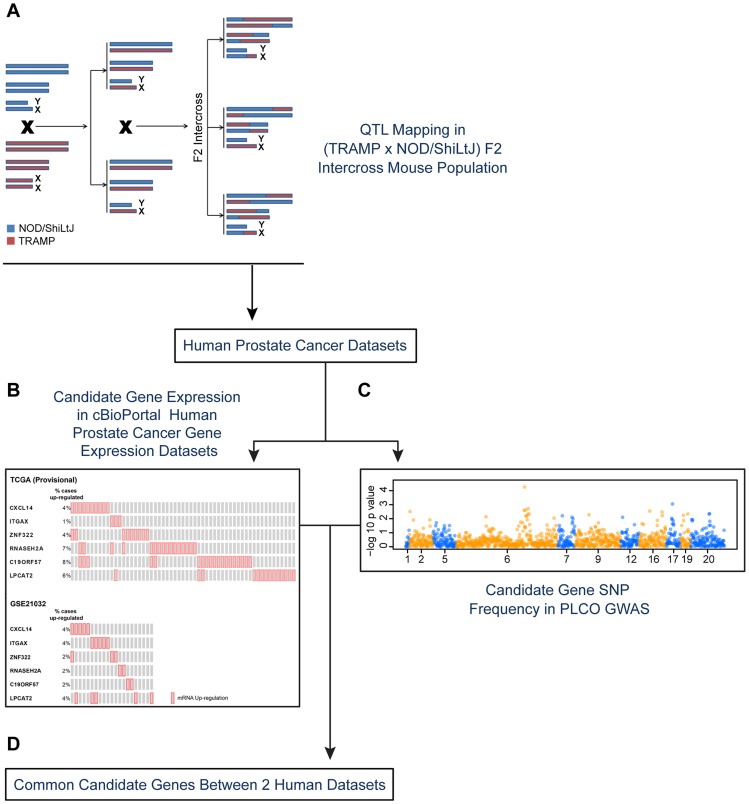
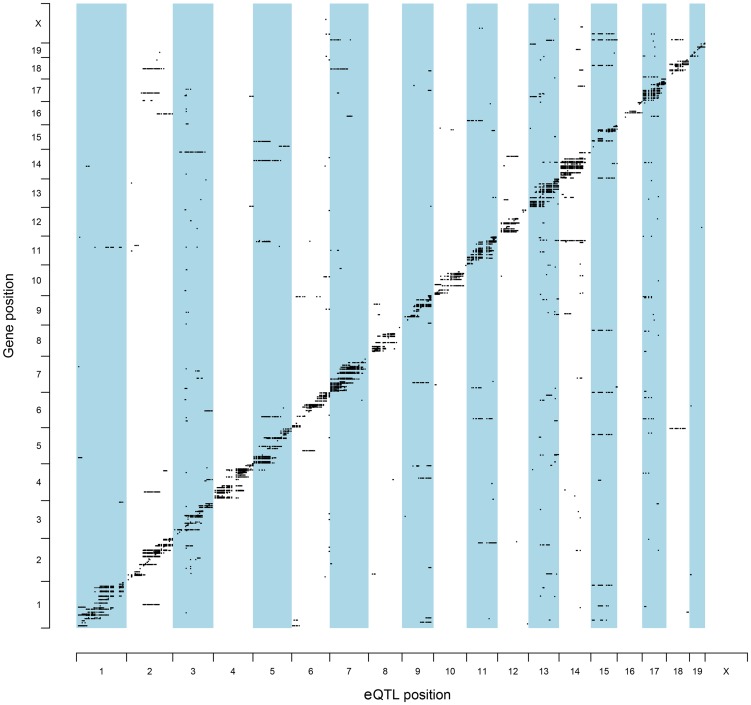
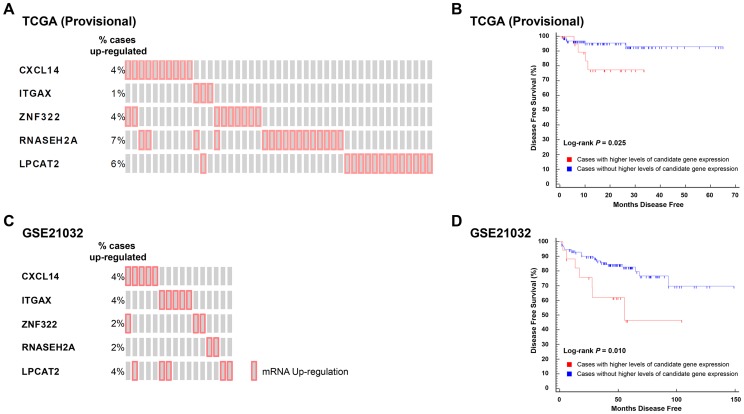
Although prostate cancer typically runs an indolent course, a subset of men develop aggressive, fatal forms of this disease. We hypothesize that germline variation modulates susceptibility to aggressive prostate cancer. The goal of this work is to identify susceptibility genes using the C57BL/6-Tg(TRAMP)8247Ng/J (TRAMP) mouse model of neuroendocrine prostate cancer. Quantitative trait locus (QTL) mapping was performed in transgene-positive (TRAMPxNOD/ShiLtJ) F2 intercross males (n = 228), which facilitated identification of 11 loci associated with aggressive disease development. Microarray data derived from 126 (TRAMPxNOD/ShiLtJ) F2 primary tumors were used to prioritize candidate genes within QTLs, with candidate genes deemed as being high priority when possessing both high levels of expression-trait correlation and a proximal expression QTL. This process enabled the identification of 35 aggressive prostate tumorigenesis candidate genes. The role of these genes in aggressive forms of human prostate cancer was investigated using two concurrent approaches. First, logistic regression analysis in two human prostate gene expression datasets revealed that expression levels of five genes (CXCL14, ITGAX, LPCAT2, RNASEH2A, and ZNF322) were positively correlated with aggressive prostate cancer and two genes (CCL19 and HIST1H1A) were protective for aggressive prostate cancer. Higher than average levels of expression of the five genes that were positively correlated with aggressive disease were consistently associated with patient outcome in both human prostate cancer tumor gene expression datasets. Second, three of these five genes (CXCL14, ITGAX, and LPCAT2) harbored polymorphisms associated with aggressive disease development in a human GWAS cohort consisting of 1,172 prostate cancer patients. This study is the first example of using a systems genetics approach to successfully identify novel susceptibility genes for aggressive prostate cancer. Such approaches will facilitate the identification of novel germline factors driving aggressive disease susceptibility and allow for new insights into these deadly forms of prostate cancer.
Conflict of interest statement
The authors have declared that no competing interests exist.
Figures
References
-
- Siegel R, Ma J, Zou Z, Jemal A (2014) Cancer statistics, 2014. CA Cancer J Clin 64: 9–29. - PubMed
-
- Aggarwal R, Zhang T, Small EJ, Armstrong AJ (2014) Neuroendocrine prostate cancer: subtypes, biology, and clinical outcomes. J Natl Compr Canc Netw 12: 719–726. - PubMed
-
- Humphrey PA (2012) Histological variants of prostatic carcinoma and their significance. Histopathology 60: 59–74. - PubMed
-
- Shappell SB, Thomas GV, Roberts RL, Herbert R, Ittmann MM, et al. (2004) Prostate pathology of genetically engineered mice: definitions and classification. The consensus report from the Bar Harbor meeting of the Mouse Models of Human Cancer Consortium Prostate Pathology Committee. Cancer Res 64: 2270–2305. - PubMed
Publication types
MeSH terms
Substances
Grants and funding
LinkOut - more resources
Full Text Sources
Other Literature Sources
Medical
Molecular Biology Databases
Research Materials
Miscellaneous