


CCl4 induced genotoxicity and DNA oxidative damages in rats: hepatoprotective effect of Sonchus arvensis
- PMID: 25412679
- PMCID: PMC4251693
- DOI: 10.1186/1472-6882-14-452
CCl4 induced genotoxicity and DNA oxidative damages in rats: hepatoprotective effect of Sonchus arvensis
Abstract
Background: Sonchus arvesis is traditionally reported in various human ailments including hepatotoxicity in Pakistan. Presently we designed to assess the protective effects of methanolic extract of Sonchus arvesis against carbon tetrachloride induced genotoxicity and DNA oxidative damages in hepatic tissues of experimental rats.
Methods: 36 male Sprague-Dawley rats were randomly divided into 6 groups to evaluate the hepatoprotective effects of Sonchus arvensis against CCl4 induced genotoxicity, DNA damages and antioxidant depletion. Rats of normal control group were given free access of food and water add labitum. Group II rats received 3 ml/kg of CCl4 (30% in olive oil v/v) via the intraperitoneal route twice a week for four weeks. Group III and IV received 1 ml of 100 mg/kg b.w. and 200 mg/kg b.w. SME via gavage after 48 h of CCl4 treatment whereas group V was given 1 ml of silymarin (100 mg/kg b.w.) after 48 h of CCl4 treatment. Group VI only received 200 mg/kg b.w. SME. Protective effects of SME were checked by measuring serum markers, activities of antioxidant enzymes, genotoxicity and DNA dmages.
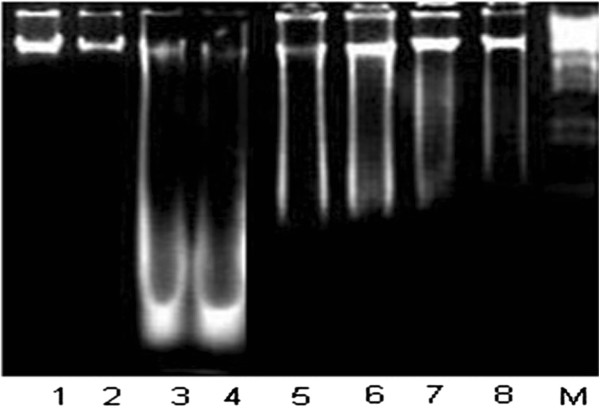
Results: Results of the present study showed that treatment of SME reversed the activities of serum marker enzymes and cholesterol profile as depleted with CCl4 treatment. Activities of endogenous antioxidant enzymes of liver tissue homogenate; catalase (CAT), superoxide dismutase (SOD), glutathione peroxidase (GSHpx), glutathione-S-transferase (GST) and glutathione reductase (GSR) were reduced with administration of CCl4, which were returned to the control level with SME treatment. CCl4-induced hepatic cirrhosis decreased hepatic glutathione (GSH) and increased lipid peroxidative products (TBARS), were normalized by treatment with SME. Moreover, administration of CCl4 caused genotoxicity and DNA fragmentation which were significantly restored towards the normal level with SME.
Conclusion: These results reveal that treatment of SME may be useful in the prevention of hepatic stress.
Figures
References
-
- Preethi KC, Kuttan R. Hepato and reno protective action of Calendula officinalis L. flower extract. Exp Biol. 2009;47:163–168. - PubMed
-
- Adewole SO, Salako AA, Doherty OW, Naicker T. Effect of melatonin on carbon tetrachloride-induced kidney injury in Wistar rats. Afr J Biomed Res. 2007;10:153–164.
-
- Adewole SO, Ojo SK, Adenowo TK, Salako AA, Naicker T, Ojewole JAO. Effects of Ficus exasperata Vahl. (Moraceae) leaf aqueous extract on the renal function of streptozotocin-treated rats. Folia Morphologica. 2012;71:1–9. - PubMed
Pre-publication history
-
- The pre-publication history for this paper can be accessed here:http://www.biomedcentral.com/1472-6882/14/452/prepub
MeSH terms
Substances
LinkOut - more resources
Full Text Sources
Other Literature Sources
Medical
Research Materials
Miscellaneous
