


Top-cited articles in traumatic brain injury
- PMID: 25414657
- PMCID: PMC4220681
- DOI: 10.3389/fnhum.2014.00879
Top-cited articles in traumatic brain injury
Abstract
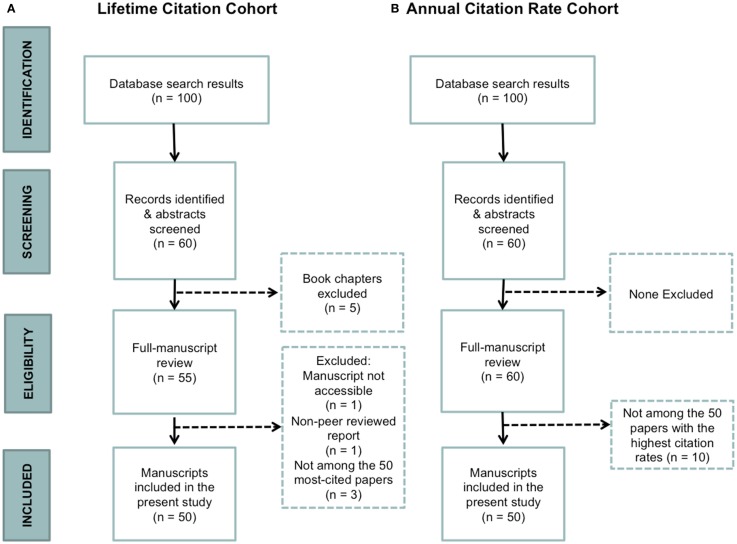
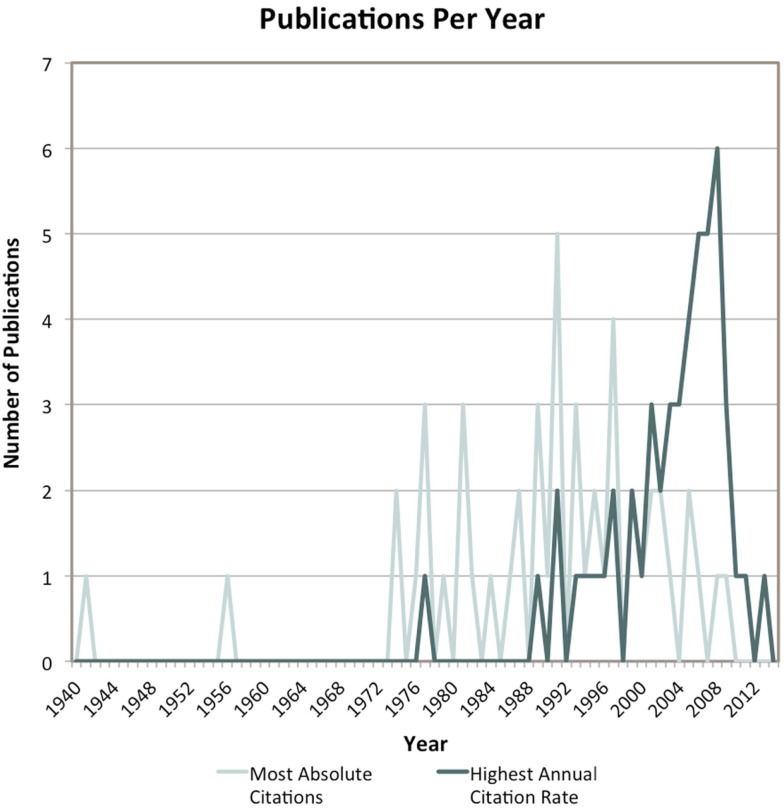
A review of the top-cited articles in a scientific discipline can identify areas of research that are well established and those in need of further development, and may, as a result, inform and direct future research efforts. Our objective was to identify and characterize the top-cited articles in traumatic brain injury (TBI). We used publically available software to identify the 50 TBI articles with the most lifetime citations, and the 50 TBI articles with the highest annual citation rates. A total of 73 articles were included in this review, with 27 of the 50 papers with the highest annual citation rates common to the cohort of 50 articles with the most lifetime citations. All papers were categorized by their primary topic or focus, namely: predictor of outcome, pathology/natural history, treatment, guidelines and consensus statements, epidemiology, assessment measures, or experimental model of TBI. The mean year of publication of the articles with the most lifetime citations and highest annual citation rates was 1990 ± 14.9 years and 2003 ± 6.7 years, respectively. The 50 articles with the most lifetime citations typically studied predictors of outcome (34.0%, 17/50) and were specific to severe TBI (38.0%, 19/50). In contrast, the most common subject of papers with the highest annual citation rates was treatment of brain injury (22.0%, 11/50), and these papers most frequently investigated mild TBI (36.0%, 18/50). These findings suggest an intensified focus on mild TBI, which is perhaps a response to the dedicated attention these injuries are currently receiving in the context of sports and war, and because of their increasing incidence in developing nations. Our findings also indicate increased focus on treatment of TBI, possibly due to the limited efficacy of current interventions for brain injury. This review provides a cross-sectional summary of some of the most influential articles in TBI, and a bibliometric examination of the current status of TBI research.
Keywords: bibliometric; citation; concussion; head injury; traumatic brain injury.
Figures
References
-
- European Commission. (2012). The International Initiative for Traumatic Brain Injury Research (InTBIR): Working Together to Improve Outcomes and Lessen the Global Burden of Traumatic Brain Injury by 2020. Geneva: European Commission.
Publication types
LinkOut - more resources
Full Text Sources
Other Literature Sources
