


Botulinum toxin therapy for cervical dystonia: the science of dosing
- PMID: 25414799
- PMCID: PMC4233211
- DOI: 10.7916/D84X56BF
Botulinum toxin therapy for cervical dystonia: the science of dosing
Abstract
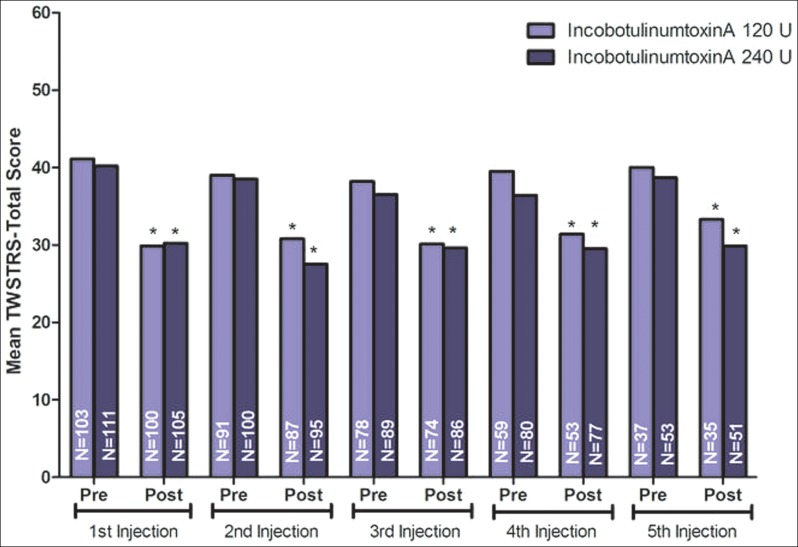
The first-line treatment for cervical dystonia (CD) is botulinum toxin type A (BoNT-A), which has been established as a highly effective and well-tolerated therapy. However, this treatment is also complex and challenging to apply in clinical practice. Approximately 20% of patients discontinue therapy due to treatment failure, adverse effects, and other reasons. In addition, expert consensus recommendations are lacking to guide physicians in the optimal use of BoNT-A for CD. Among the issues still to be clarified is the optimal dosing frequency. The generally accepted standard for intervals between BoNT-A injections is ≥12 weeks; however, this standard is based primarily on the methodology of pivotal trials for the BoNT-A products, rather than on evidence that it is optimal in comparison to other intervals. While some retrospective, observational studies of BoNT-A used in clinical practice appear to support the use of ≥12-week dosing intervals, it is often unclear in these studies how the need for reinjection was determined. In contrast, a prospective dose-ranging trial in which patients were allowed to request reinjection as early as 8 weeks showed that about half of patients receiving abobotulinumtoxinA, at the currently recommended initial dose of 500 U, requested reinjection at 8 weeks. Moreover, results from an open-label, 68-week extension phase of the pivotal trial of incobotulinumtoxinA showed that 47.1% of patients had received reinjection at ≤12 weeks. Ongoing studies, such as the Cervical Dystonia Patient Registry for Observation of BOTOX® Efficacy (CD PROBE), may help clarify this question of optimal dosing intervals for BoNT-A in CD.
Keywords: AbobotulinumtoxinA; cervical dystonia; incobotulinumtoxinA; onabotulinumtoxinA; rimabotulinumtoxinB.
Conflict of interest statement
Figures
References
LinkOut - more resources
Full Text Sources
Medical