Biochemical estimation of noncompliance with smoking of very low nicotine content cigarettes
- PMID: 25416718
- PMCID: PMC4323626
- DOI: 10.1158/1055-9965.EPI-14-1040
Biochemical estimation of noncompliance with smoking of very low nicotine content cigarettes
Abstract
Background: The reduction of the nicotine content of cigarettes to nonaddicting levels is a potential federal regulatory intervention to reduce the prevalence of cigarette smoking and related disease. Many clinical trials on the effects and safety of nicotine reduction are ongoing. An important methodologic concern is noncompliance with reduced nicotine content cigarettes in the context of freely available conventional cigarettes. We propose two approaches using biomarkers to estimate noncompliance in smokers of very low nicotine content (VLNC) cigarettes in a clinical trial.
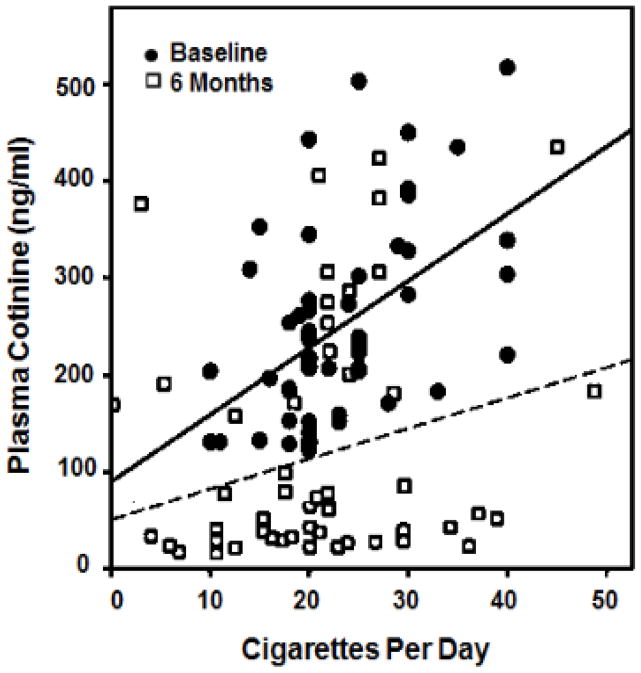
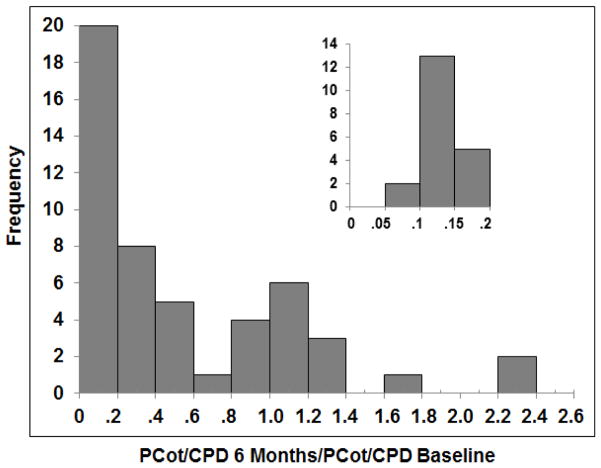
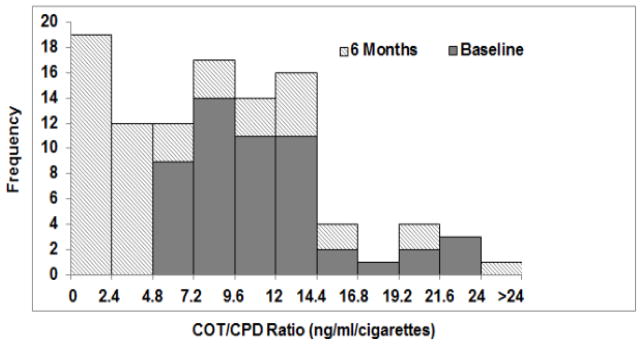
Methods: Data from 50 subjects in a study of gradual nicotine reduction were analyzed. Using plasma cotinine concentrations measured at baseline and while smoking VLNC cigarettes, we compared within-subject ratios of plasma cotinine comparing usual brand to VLNC in relation to nicotine content of these cigarettes. In another approach, we used nicotine pharmacokinetic data to estimate absolute plasma cotinine/cigarettes per day (CPD) threshold values for compliance based on the nicotine content of VLNC.
Results: The two approaches showed concordance, indicating at least 60% noncompliance with smoking VLNC. In a sensitivity analysis assuming extreme compensation and extreme values for nicotine metabolic parameters, noncompliance was still at least 40%, much higher than self-reported noncompliance.
Conclusion: Biomarker analysis demonstrates a high degree of noncompliance with smoking VLNC cigarettes, indicating that smokers are supplementing these with conventional cigarettes.
Impact: We propose a practical approach to assessing compliance with smoking VLNC in clinical trials of nicotine reduction.
©2014 American Association for Cancer Research.
Conflict of interest statement
Dr. Benowitz is a consultant to several pharmaceutical companies that market medications to aid smoking cessation and has served as a paid expert witness in litigation against tobacco companies. The other authors have no conflicts to declare.
Figures
References
-
- HHS. A Report of the Surgeon General. Atlanta, GA: U.S. Department of Health and Human Services, Centers for Disease Control and Prevention, Coordinating Center for Health Promotion, National Center for Chronic Disease Prevention and Health Promotion, Office on Smoking and Health; 2014. The Health Consequences of Smoking-50 Years of Progress. - PubMed
-
- Benowitz NL, Henningfield JE. Establishing a nicotine threshold for addiction. The implications for tobacco regulation. N Engl J Med. 1994;331(2):123–5. - PubMed
Publication types
MeSH terms
Substances
Grants and funding
LinkOut - more resources
Full Text Sources
Other Literature Sources
Medical