. 2014 Nov 6;159(4):751-65.
doi: 10.1016/j.cell.2014.09.056.

Encoding of both analog- and digital-like behavioral outputs by one C. elegans interneuron

Affiliations

Encoding of both analog- and digital-like behavioral outputs by one C. elegans interneuron

Zhaoyu Li et al. Cell. .

Abstract

Model organisms usually possess a small nervous system but nevertheless execute a large array of complex behaviors, suggesting that some neurons are likely multifunctional and may encode multiple behavioral outputs. Here, we show that the C. elegans interneuron AIY regulates two distinct behavioral outputs: locomotion speed and direction-switch by recruiting two different circuits. The "speed" circuit is excitatory with a wide dynamic range, which is well suited to encode speed, an analog-like output. The "direction-switch" circuit is inhibitory with a narrow dynamic range, which is ideal for encoding direction-switch, a digital-like output. Both circuits employ the neurotransmitter ACh but utilize distinct postsynaptic ACh receptors, whose distinct biophysical properties contribute to the distinct dynamic ranges of the two circuits. This mechanism enables graded C. elegans synapses to encode both analog- and digital-like outputs. Our studies illustrate how an interneuron in a simple organism encodes multiple behavioral outputs at the circuit, synaptic, and molecular levels.


Figures
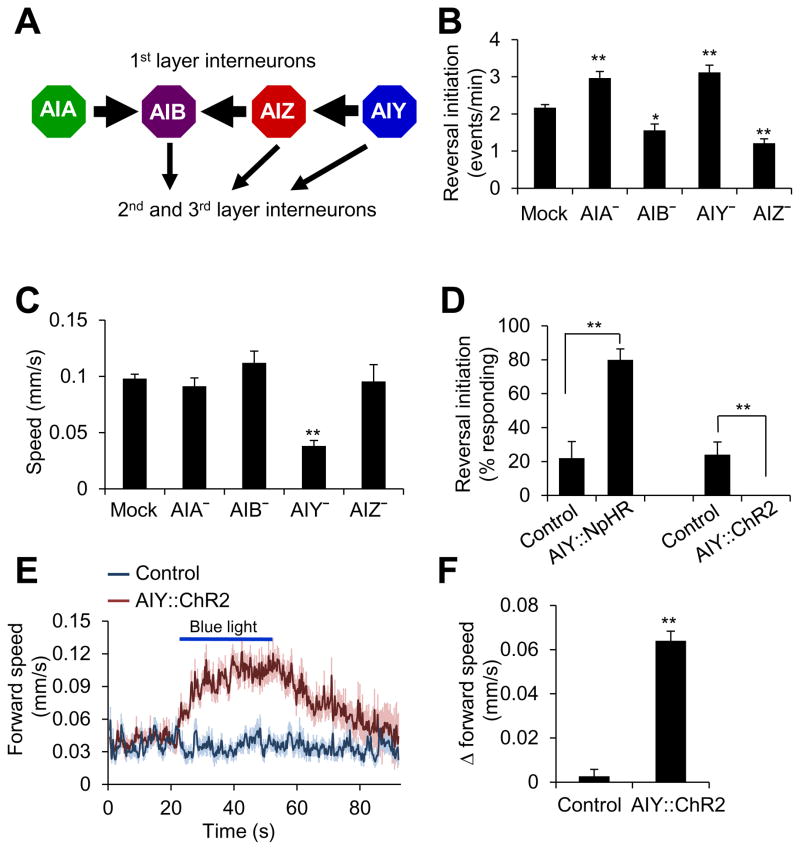
Figure 1
Figure 1. AIY regulates locomotion speed and direction-switch
(A) Schematic showing the connectivity of the 1st layer interneurons. (B) Laser ablation. n ≥5. *p<0.03; **p<0.0005 (ANOVA with Tukey’s HSD test). (C) Laser ablation shows that AIY is important for locomotion speed. n ≥5. **p<0.0001 (ANOVA with Tukey’s HSD test). (D) Optogenetic inhibition or stimulation of AIY promotes or suppress reversal initiation, respectively. Worms expressing NpHR or ChR2 as a transgene specifically in AIY were tested for reversal initiation triggered by yellow or blue light (5 s pulse). Control: non-transgenic siblings (a similar control result was obtained by assaying the transgenic animals reared on retinal-free plates). The low level of reversal events in the control resulted from spontaneous reversals. n=5. **p<0.0001 (t test). (E–F) Optogenetic stimulation of AIY promotes locomotion speed. Worms expressing ChR2 as a transgene specifically in AIY were tested under blue light (30 s pulse). Control: non-transgenic siblings. (E) Forward speed traces. The shades along the traces represent error bars. For clarity, the very few reversal events were removed. (F) Bar graph. n ≥22. **p<0.0001 (t test). All error bars: SEM. Also see Figure S1.
Figure 2
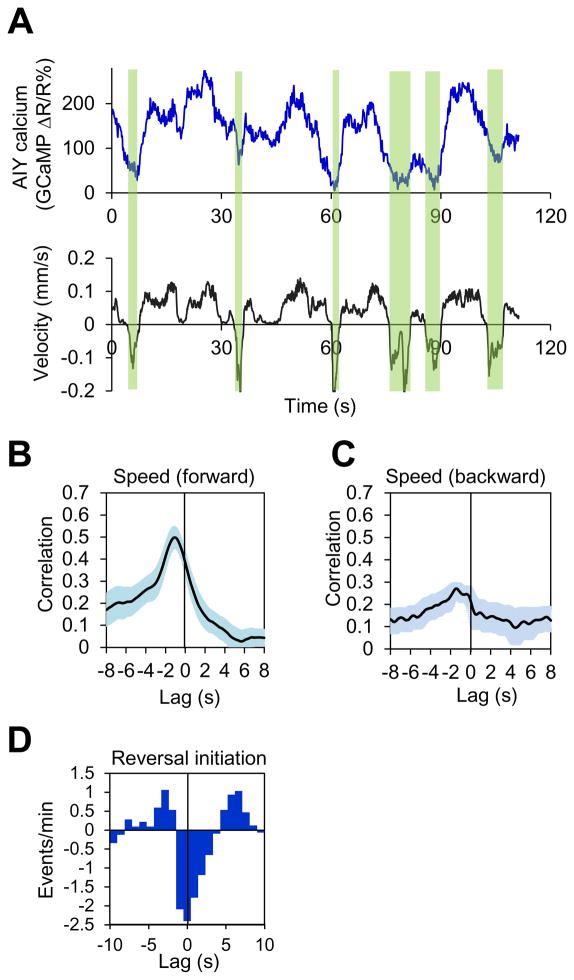
Figure 2. The calcium activity pattern of AIY correlates with locomotion speed and direction-switch in freely-behaving worms
(A) Calcium and locomotion velocity traces acquired with the CARIBN system. The windows highlighted in green denote reversals. (B–C) Cross-correlation analysis shows that AIY calcium activity correlates with forward but not backward locomotion speed. The shades along the curves represent error bars (SEM). n=8. (D) Cross-correlogram showing that reversal initiation correlates with AIY activity decrease. Since reversal initiation occurs in an all-or-none fashion, cross-correlogram was used to analyze correlation using a method similar to that reported previously (Brown et al., 2004). The occurrence of a reversal event and the decrease/increase in calcium level at a given time point were analyzed for correlation. A negative value indicates that a reversal event coincided with a decrease in calcium level, and vice versa. Also see Figure S2 and Supplemental Movie 1.
Figure 3
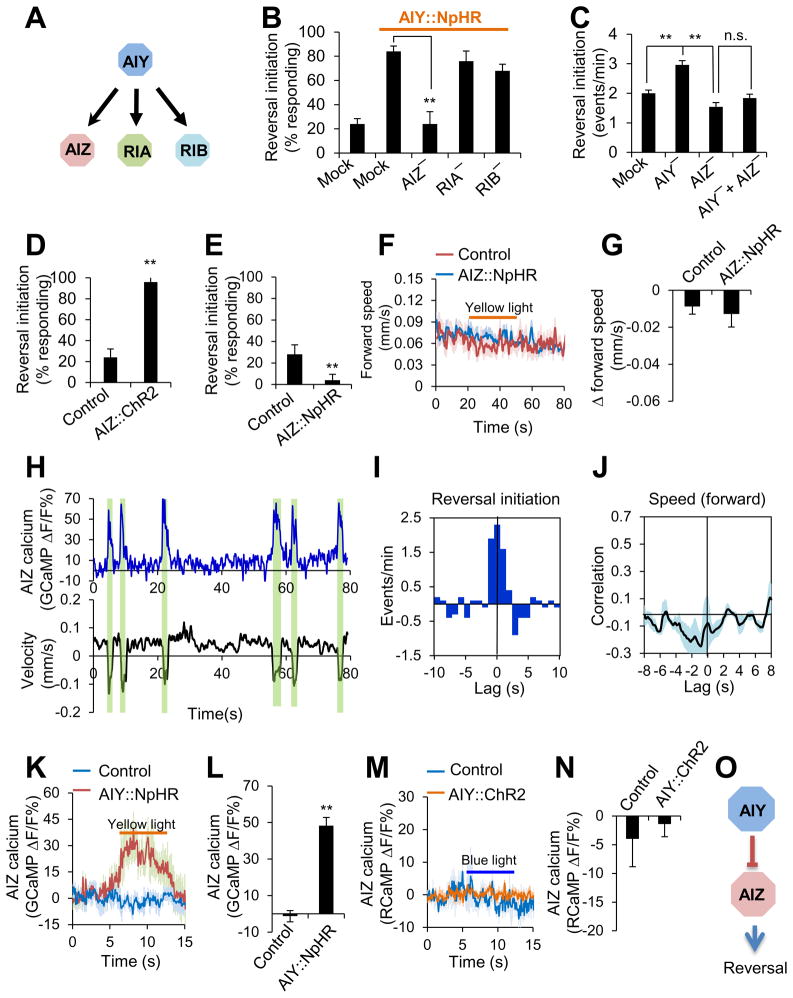
Figure 3. AIY regulates direction-switch by forming an inhibitory circuit with its downstream neuron AIZ
(A) Schematic showing the major downstream synaptic partners of AIY. (B) Laser ablation shows that AIZ is required for AIY to promote reversal initiation. Worms expressing NpHR as a transgene in AIY were tested for reversal initiation triggered by yellow light. n=5. **p<0.0001 (ANOVA with Tukey’s HSD test). (C) Double ablation of AIZ and AIY suppresses the effect of AIY single ablation on promoting reversal initiation. n ≥5. **p<0.0001 (ANOVA with Tukey’s HSD test). (D–E) Optogenetic inhibition of AIZ activity promotes reversal initiation (D), while optogenetic stimulation of AIZ suppresses it (E). ChR2 and NpHR was expressed as a transgene specifically in AIZ. Control: non-transgenic siblings. n=5. **p<0.0001 (t test) (F–G) Optogenetic inhibition of AIZ does not affect locomotion speed. Since optogenetic stimulation of AIZ triggered reversal initiation, we were unable to test its effect on locomotion speed. (F) Speed traces. (G) Bar graph. n ≥18. (H) Calcium and locomotion velocity traces acquired with the CARIBN system. The windows highlighted in green denote reversals. (I) Cross-correlogram showing that reversal initiation correlates with AIZ activity increase. n=5. (J) Cross-correlation analysis shows that AIZ calcium activity does not show a strong correlation with locomotion speed. n=5. (K–L) Inhibition of AIY activates AIZ. Worms carrying two transgenes (one expressing NpHR in AIY and the other expressing GCaMP3.0 in AIZ) were imaged with the CARIBN system. Control: worms carrying the AIZ::GCaMP3.0 transgene only. (K) AIZ GCaMP calcium traces. (l) Bar graph. n ≥6. **p<0.0001 (t test). (M–N) Stimulation of AIY does not affect the activity of AIZ. Worms carrying two transgenes (one expressing ChR2 in AIY and the other expressing RCaMP in AIZ) were imaged with the CARIBN system. Control: worms carrying the AIZ::RCaMP transgene only. (M) AIZ RCaMP calcium traces. (N) Bar graph. n=6. (O) Schematic model showing that AIY forms an inhibitory circuit with AIZ to regulate reversal initiation. All error bars: SEM
Figure 4
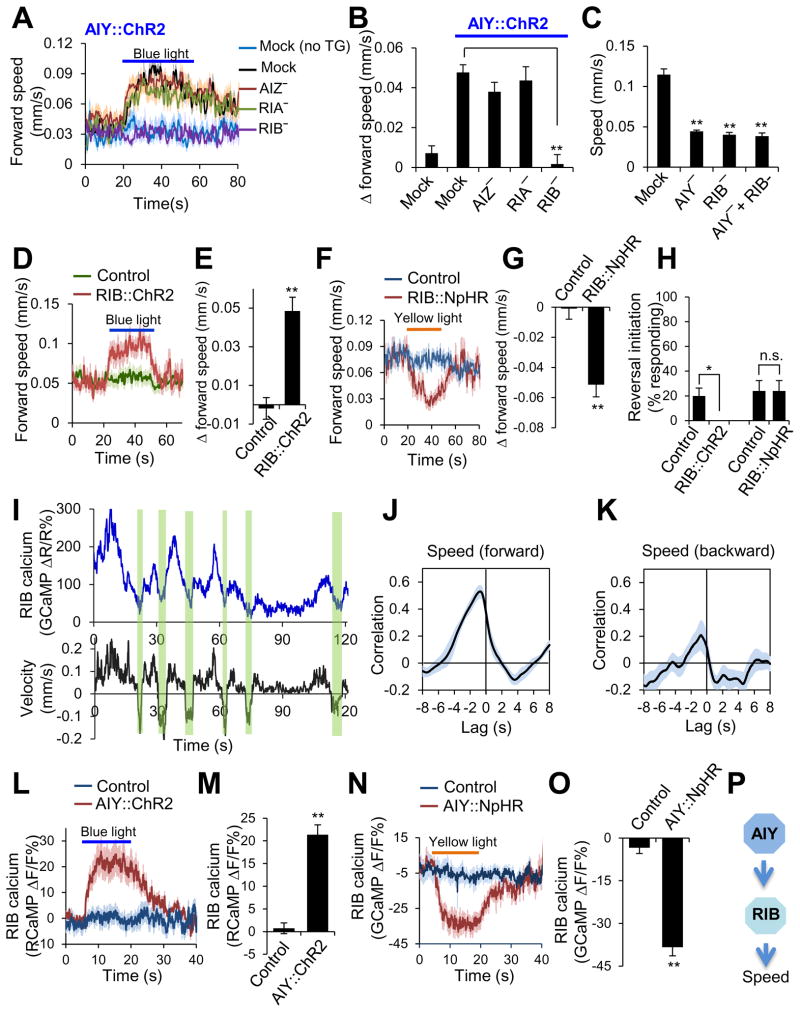
Figure 4. AIY regulates locomotion speed by forming an excitatory circuit with its downstream neuron RIB
(A–B) Laser ablation shows that RIB is required for AIY to promote locomotion speed. Worms expressing ChR2 as a transgene in AIY were assayed for locomotion speed in response to blue light. (A) Speed traces. no TG: non-transgenic siblings. (B) Bar graph. n ≥16. **p<0.0001 (ANOVA with Tukey’s HSD test). (C) Double and single ablations of AIY and RIB yield a similar phenotype in locomotion speed. n ≥6. **p<0.0001 (ANOVA with Tukey’s HSD test). (D–E) Optogenetic stimulation of RIB promotes locomotion speed. ChR2 was expressed as a transgene specifically in RIB. Control: non-transgenic siblings. (D) Speed traces. (E) Bar graph. n ≥12. **p<0.0001 (t test). (F–G) Optogenetic inhibition of RIB suppresses locomotion speed. NpHR was expressed as a transgene specifically in RIB. (F) Speed traces. (G) Bar graph. n ≥22. **p<0.0001 (t test). (H) Optogenetic manipulation of RIB activity does not trigger reversals. Neither stimulation of RIB by ChR2 nor inhibition of RIB by NpHR triggered reversals. The value for RIB::ChR2 is zero under this condition. n=5. **p<0.02 (t test). (I) Calcium and locomotion velocity traces acquired with the CARIBN system. The windows highlighted in green denote reversals. (J–K) Cross-correlation analysis shows that RIB calcium activity exhibits a strong correlation with forward locomotion speed (J) but not with backward locomotion speed (K). n=5. (L–M) Stimulation of AIY promotes the activity of RIB. Worms carrying two transgenes (one expressing ChR2 in AIY and the other expressing RCaMP in RIB) were imaged with the CARIBN system. Control: worms carrying the RIB::RCaMP transgene only. (L) RIB RCaMP calcium traces. (M) Bar graph. n ≥17. **p<0.0001 (t test) (N–O) Inhibition of AIY suppresses the activity of RIB. Worms carrying two transgenes (one expressing NpHR in AIY and the other expressing GCaMP3.0 in RIB) were imaged with the CARIBN system. Control: worms carrying the RIB::GCaMP3.0 transgene only. (N) RIB GCaMP3.0 calcium traces. (O) Bar graph. n ≥10. **p<0.0001 (t test) (P) Schematic model showing that AIY forms an excitatory circuit with RIB to regulate locomotion speed. All error bars: SEM. Also see Figure S3.
Figure 5
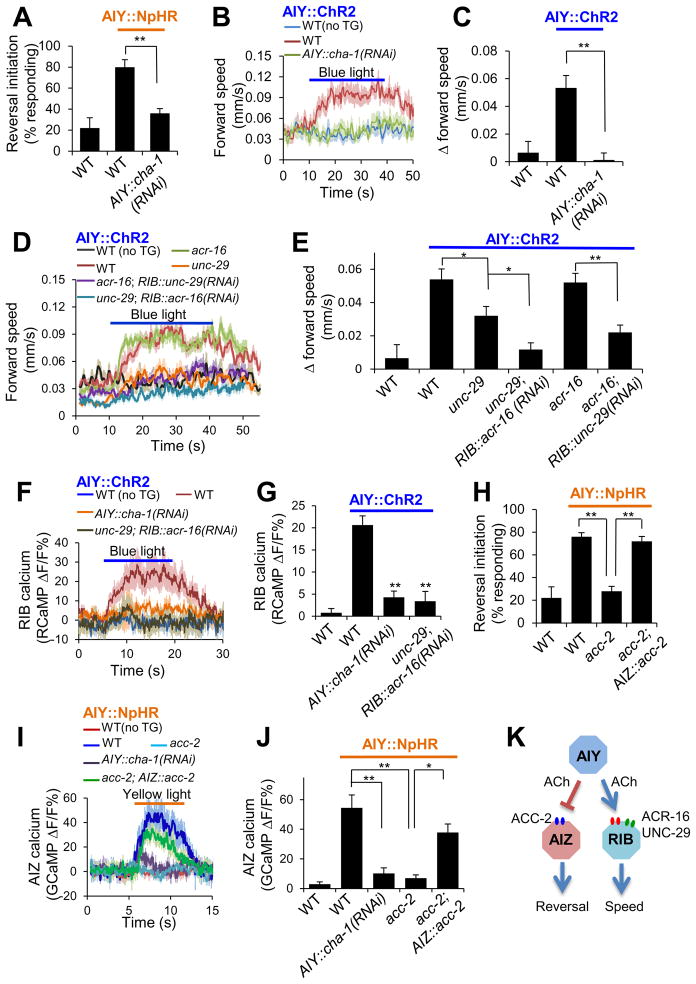
Figure 5. AIY employs ACh as a key neurotransmitter but recruits two distinct types of postsynaptic ACh receptors in AIZ and RIB
(A) RNAi of cha-1 blunted the ability of AIY to promote reversal initiation. NpHR and cha-1 RNAi were expressed as separate transgenes specifically in AIY and crossed together. n=5. **p<0.0001 (ANOVA with Tukey’s HSD test). (B–C) RNAi of cha-1 in AIY blunted the ability of AIY to promote locomotion speed. ChR2 and cha-1 RNAi were expressed as separate transgenes specifically in AIY and crossed together. no TG: non-transgenic siblings. n ≥11. **p<0.0006 (ANOVA with Tukey’s HSD test). (D–E) unc-29 and acr-16 act redundantly to promote locomotion speed in RIB. acr-16 RNAi was introduced as a transgene specifically in RIB. n ≥12. *p<0.02; **p<0.0001 (ANOVA with Tukey’s HSD test). (F–G) Calcium imaging shows that cha-1, unc-29 and acr-16 mediate the synaptic transmission between AIY and RIB. All worms carried two transgenes with one expressing ChR2 in AIY and the other expressing RCaMP in RIB. (F) RIB RCaMP calcium traces. (G) Bar graph. n ≥11. **p<0.0001 (ANOVA with Tukey’s HSD test). (H) acc-2 acts in AIZ to promote reversal initiation. n=5. **p<0.0001 (ANOVA with Tukey’s HSD test). (I–J) Calcium imaging shows that cha-1 and acc-2 mediate the synaptic transmission between AIY and AIZ. All worms carried two transgenes with one expressing NpHR in AIY and the other expressing GCaMP in AIZ. (I) AIZ GCaMP calcium traces. (J) Bar graph. n ≥8. **p<0.0006 (ANOVA with Tukey’s HSD test). (K) Schematic model. All error bars: SEM.
Figure 6
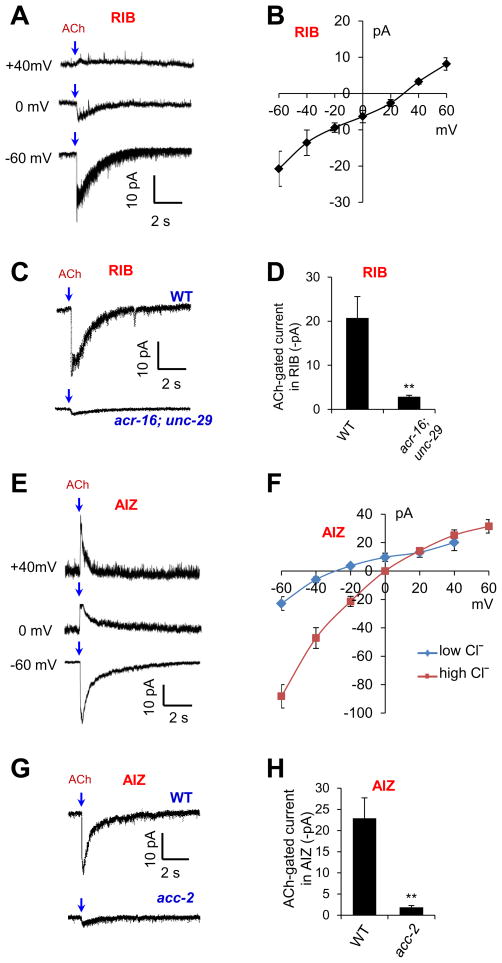
Figure 6. UNC-29/ACR-16 and ACC-2 are required for ACh-gated cation and Cl current in RIB and AIZ, respectively
(A–B) Patch-clamp recording shows that ACh evokes a cation current in RIB. (A) Sample traces. (B) I-V relationship. n ≥7. (C–D) ACh-gated current in RIB requires UNC-29 and ACR-16. Voltage: -60 mV. (C) Sample traces. (D) Bar graph. n=6. **p<0.002 (t test). (E–F) Patch-clamp recording shows that ACh evokes a Cl current in AIZ. Shown in (E) are sample traces. (F) I–V relationship. Low Cl: 25 mM. High Cl: 140 mM. n ≥5. (G–H) ACh-gated Cl current requires ACC-2. Voltage: −60 mV. (G) Sample traces. (H) Bar graph. n ≥6. **p<0.009 (t test). All error bars: SEM. ACh: 1 mM.
Figure 7
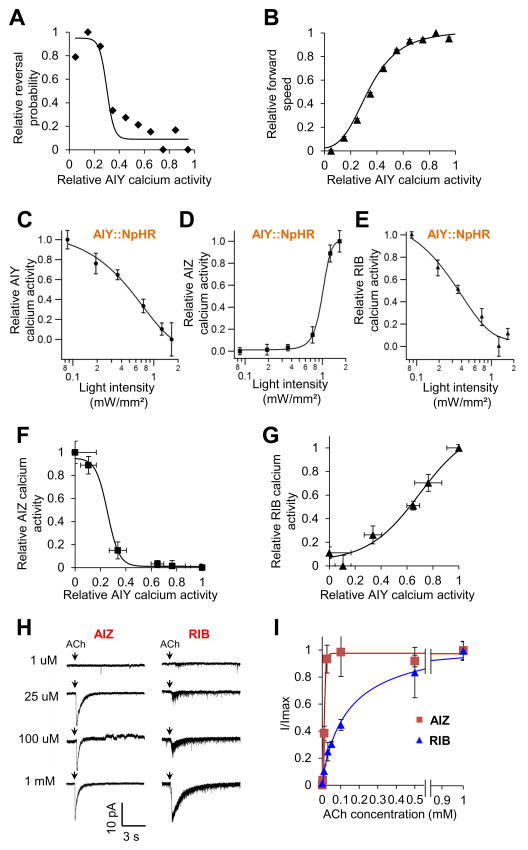
Figure 7. Differential processing of AIY signals by the AIY-AIZ and AIY-RIB synapses
(A–B) The input-output relations between AIY activity (input) and reversal initiation (output) or locomotion speed (output). We analyzed the data from AIY calcium imaging and behavioral traces obtained with the CARIBN system (e.g. Figure 2A). AIY calcium data points were extracted from the CARIBN traces, normalized, and binned into ten groups (bin width: 0.1). Reversal probability and locomotion speed was tabulated for each group based on the data from the behavioral traces, normalized, and plotted as a function of the relative AIY calcium activity of individual groups to make (A) and (B), respectively. Both data were fit with a sigmoidal equation: Youtput=1/(1+exp((X1/2-Xinput)/slope))). X1/2 represents the X value where Y shows 50% of its maximal value. slope describes the steepness of the curve. (C–E) Calcium responses in AIY, AIZ and RIB triggered by optogenetic tuning of AIY activity. Freely-behaving worms carrying separate transgenes, which expressed NpHR in AIY (i.e. AIY::NpHR) and GCaMP3 in AIY, AIZ and RIB, were challenged with varying intensities of yellow light to tune the activity of AIY. Both the presynaptic calcium activity in AIY and the postsynaptic calcium responses in AIZ and RIB were recorded with the CARIBN system. The resulting calcium activities in AIY, AIZ and RIB were normalized and plotted as a function of yellow light intensities. (C) AIY calcium response curve. (D) AIZ calcium response curve. (E) RIB calcium response curve. n ≥4. (F–G) The input-output relations of the AIY-AIZ and AIY-RIB synapses. Data in (C–E) were re-plotted to derive the input-output relations of the two synapses. Specifically, the relative AIZ and RIB calcium activity values (output) shown in (D) and (E) were re-plotted as a function of the relative AIY calcium activity values (input), which were shown in (C), to generate (F) and (G), respectively. Both data were fit with a sigmoidal equation: Youtput=1/(1+exp((X1/2-Xinput)/slope))). (H–I) The postsynaptic ACh receptors in AIZ and RIB show distinct biophysical properties. (H) Sample traces of AIZ and RIB whole-cell currents evoked by different concentrations of ACh. Voltage: −60 mV. (I) ACh-gated currents in AIZ and RIB were plotted as a function of ACh concentrations. Data were fit with a Hill equation: I/Imax=1/[1+(EC50/[ACh])n], where n represents Hill slope (Hill coefficient). All error bars: SEM.

Comment in

References

    1. Akerboom J, Carreras Calderon N, Tian L, Wabnig S, Prigge M, Tolo J, Gordus A, Orger MB, Severi KE, Macklin JJ, et al. Genetically encoded calcium indicators for multi-color neural activity imaging and combination with optogenetics. Front Mol Neurosci. 2013;6:2. - PMC - PubMed
    1. Alfonso A, Grundahl K, Duerr JS, Han HP, Rand JB. The Caenorhabditis elegans unc-17 gene: a putative vesicular acetylcholine transporter. Science. 1993;261:617–619. - PubMed
    1. Bargmann CI. Beyond the connectome: how neuromodulators shape neural circuits. Bioessays. 2012;34:458–465. - PubMed
    1. Bargmann CI, Marder E. From the connectome to brain function. Nat Methods. 2013;10:483–490. - PubMed
    1. Berkowitz A, Roberts A, Soffe SR. Roles for multifunctional and specialized spinal interneurons during motor pattern generation in tadpoles, zebrafish larvae, and turtles. Frontiers in behavioral neuroscience. 2010;4:36. - PMC - PubMed

Publication types