Seroconversion for infectious pathogens among UK military personnel deployed to Afghanistan, 2008-2011
- PMID: 25418685
- PMCID: PMC4257834
- DOI: 10.3201/eid2012.131830
Seroconversion for infectious pathogens among UK military personnel deployed to Afghanistan, 2008-2011
Abstract
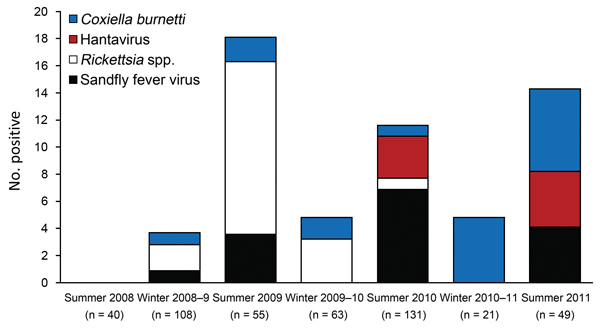
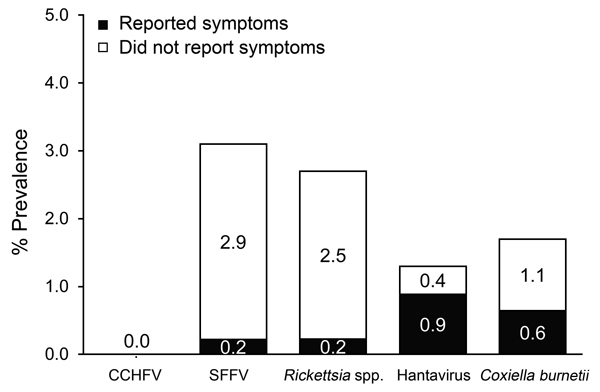
Military personnel are at high risk of contracting vector-borne and zoonotic infections, particularly during overseas deployments, when they may be exposed to endemic or emerging infections not prevalent in their native countries. We conducted seroprevalence testing of 467 UK military personnel deployed to Helmand Province, Afghanistan, during 2008-2011 and found that up to 3.1% showed seroconversion for infection with Rickettsia spp., Coxiella burnetii, sandfly fever virus, or hantavirus; none showed seroconversion for infection with Crimean-Congo hemorrhagic fever virus. Most seroconversions occurred in personnel who did not report illness, except for those with hantavirus (70% symptomatic). These results indicate that many exposures to infectious pathogens, and potentially infections resulting from those exposures, may go unreported. Our findings reinforce the need for continued surveillance of military personnel and for education of health care providers to help recognize and prevent illnesses and transmission of pathogens during and after overseas deployments.
Figures
References
-
- Fowler CE. The prevention of malaria among troops under peace conditions. In: Ross R, editor. The prevention of malaria. New York: Dutton; 1910.
-
- Johnston JH, Lloyd J, McDonald J, Waitkins S. Leptospirosis—an occupational disease of soldiers. J R Army Med Corps. 1983;129:111–4. - PubMed
Publication types
MeSH terms
Grants and funding
LinkOut - more resources
Full Text Sources
Other Literature Sources
Medical
Miscellaneous