


Mitochondrial serine protease HTRA2 p.G399S in a kindred with essential tremor and Parkinson disease
- PMID: 25422467
- PMCID: PMC4280582
- DOI: 10.1073/pnas.1419581111
Mitochondrial serine protease HTRA2 p.G399S in a kindred with essential tremor and Parkinson disease
Abstract
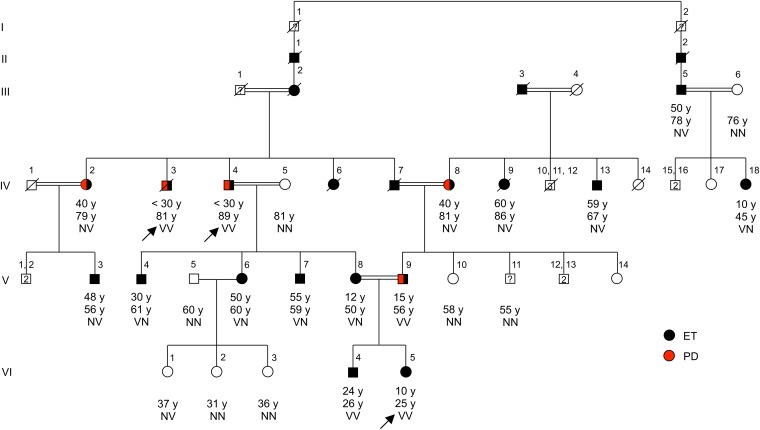
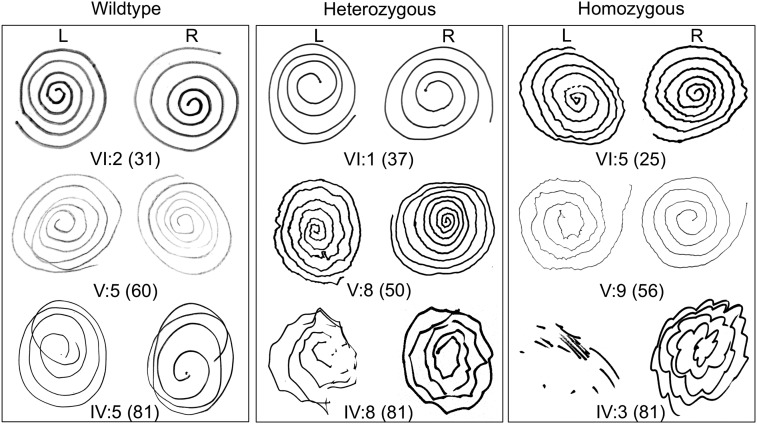
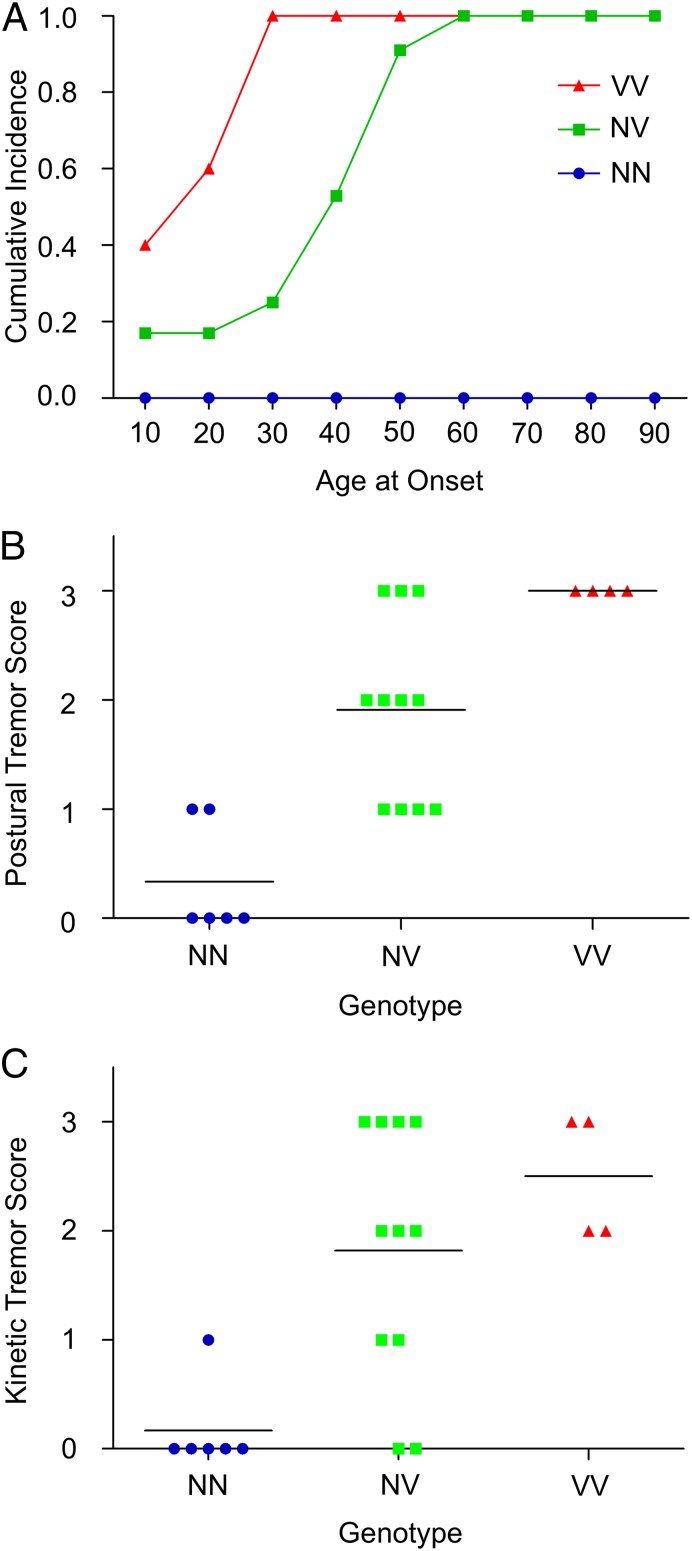
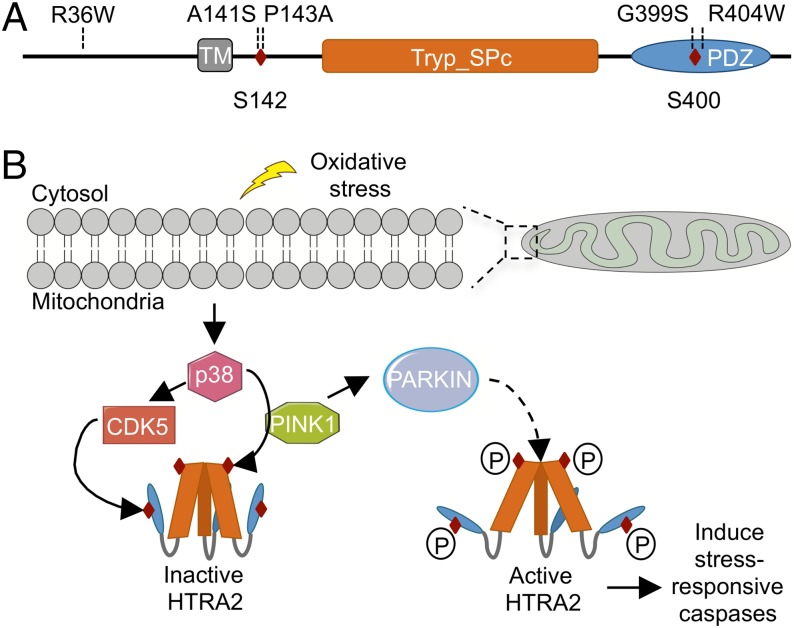
Essential tremor is one of the most frequent movement disorders of humans and can be associated with substantial disability. Some but not all persons with essential tremor develop signs of Parkinson disease, and the relationship between the conditions has not been clear. In a six-generation consanguineous Turkish kindred with both essential tremor and Parkinson disease, we carried out whole exome sequencing and pedigree analysis, identifying HTRA2 p.G399S as the allele likely responsible for both conditions. Essential tremor was present in persons either heterozygous or homozygous for this allele. Homozygosity was associated with earlier age at onset of tremor (P < 0.0001), more severe postural tremor (P < 0.0001), and more severe kinetic tremor (P = 0.0019). Homozygotes, but not heterozygotes, developed Parkinson signs in the middle age. Among population controls from the same Anatolian region as the family, frequency of HTRA2 p.G399S was 0.0027, slightly lower than other populations. HTRA2 encodes a mitochondrial serine protease. Loss of function of HtrA2 was previously shown to lead to parkinsonian features in motor neuron degeneration (mnd2) mice. HTRA2 p.G399S was previously shown to lead to mitochondrial dysfunction, altered mitochondrial morphology, and decreased protease activity, but epidemiologic studies of an association between HTRA2 and Parkinson disease yielded conflicting results. Our results suggest that in some families, HTRA2 p.G399S is responsible for hereditary essential tremor and that homozygotes for this allele develop Parkinson disease. This hypothesis has implications for understanding the pathogenesis of essential tremor and its relationship to Parkinson disease.
Keywords: DNA sequencing; gene identification; mitochondrial dysfunction; mutation; neurodegenerative disease.
Conflict of interest statement
The authors declare no conflict of interest.
Figures
Comment in
-
Reply to Tzoulis et al.: Genetic and clinical heterogeneity of essential tremor.Proc Natl Acad Sci U S A. 2015 May 5;112(18):E2269. doi: 10.1073/pnas.1503756112. Epub 2015 Mar 30. Proc Natl Acad Sci U S A. 2015. PMID: 25825780 Free PMC article. No abstract available.
-
HTRA2 p.G399S in Parkinson disease, essential tremor, and tremulous cervical dystonia.Proc Natl Acad Sci U S A. 2015 May 5;112(18):E2268. doi: 10.1073/pnas.1503105112. Epub 2015 Mar 30. Proc Natl Acad Sci U S A. 2015. PMID: 25825781 Free PMC article. No abstract available.
References
-
- Louis ED, Ferreira JJ. How common is the most common adult movement disorder? Update on the worldwide prevalence of essential tremor. Mov Disord. 2010;25(5):534–541. - PubMed
-
- Benito-León J, Louis ED. Essential tremor: Emerging views of a common disorder. Nat Clin Pract Neurol. 2006;2(12):666–678, quiz 2p following 691. - PubMed
-
- Gulcher JR, et al. Mapping of a familial essential tremor gene, FET1, to chromosome 3q13. Nat Genet. 1997;17(1):84–87. - PubMed
-
- Higgins JJ, Pho LT, Nee LE. A gene (ETM) for essential tremor maps to chromosome 2p22-p25. Mov Disord. 1997;12(6):859–864. - PubMed
-
- Shatunov A, et al. Genomewide scans in North American families reveal genetic linkage of essential tremor to a region on chromosome 6p23. Brain. 2006;129(Pt 9):2318–2331. - PubMed
Publication types
MeSH terms
Substances
LinkOut - more resources
Full Text Sources
Other Literature Sources
Medical
Molecular Biology Databases
