


Observed and expected incidence of cervical cancer in lusaka and the southern and Western provinces of Zambia, 2007 to 2012
- PMID: 25423318
- PMCID: PMC4272632
- DOI: 10.1097/IGC.0000000000000325
Observed and expected incidence of cervical cancer in lusaka and the southern and Western provinces of Zambia, 2007 to 2012
Abstract
Objectives: Cervical cancer is increasing but underestimated in developing countries. We calculated the observed and expected incidence of cervical cancer in Lusaka and Southern and Western provinces of Zambia.
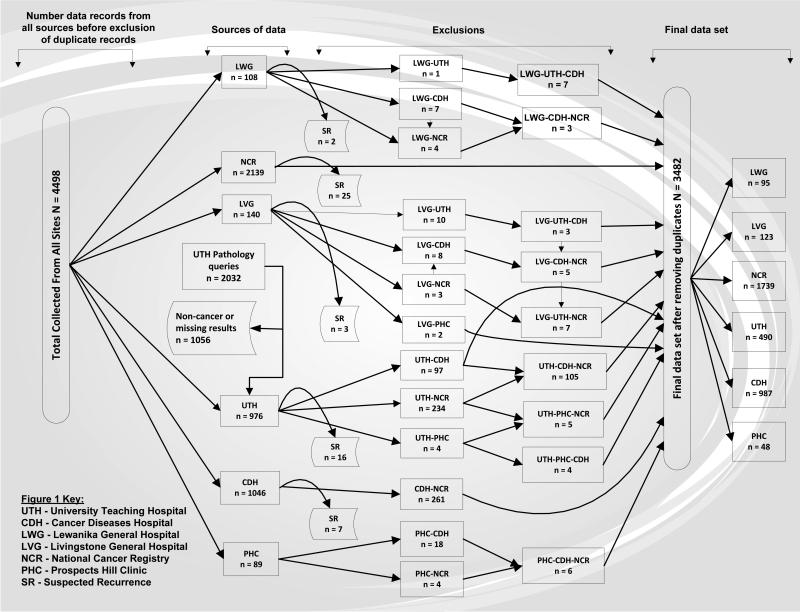
Methods/materials: Data for 2007 to 2012 were obtained for the 3 provinces. Data included age, residence, year of diagnosis, marital status, occupation, human immunodeficiency virus (HIV), stage, radiotherapy, and chemotherapy. Expected incidence in Southern and Western provinces was calculated based on observed incidence for Lusaka province, adjusting for HIV.
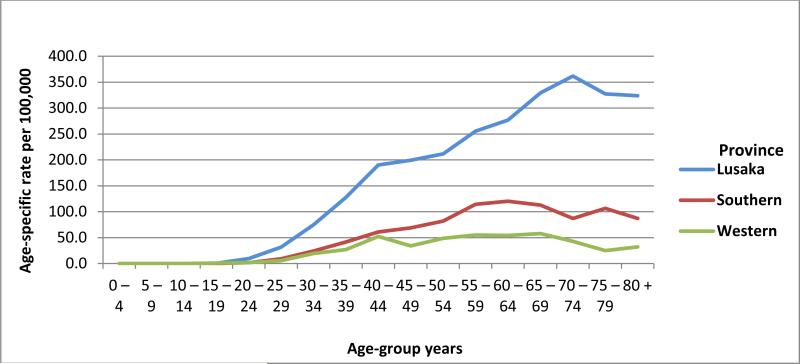
Results: Crude and age-standardized incidence rates (ASRs) in Lusaka were 2 to 4 times higher than incidence in the other 2 provinces. Lusaka had a rate of 54.1 per 10(5) and ASR of 82.1 per 10(5) in the age group of 15 to 49 years. The Southern province had a rate of 17.1 per 10(5) and ASR of 25.5 per 10(5); the Western province had a rate of 12.3 per 10(5) and ASR rate of 17.2 per 10(5). The observed cervical cancer incidence rates in the Southern and Western provinces were lower than the rate in Lusaka, possibly because of the uncertainty of underreporting/underdiagnosis or actual lower risk for reasons yet unclear. The HIV seroprevalence rates in patients from the 3 provinces were 46% to 93% higher than seroprevalence in the respective general populations.
Conclusions: Cervical cancer is significantly underestimated in Zambia, and HIV has a significant role in pathogenesis. Future studies should establish methods for case ascertainment and better utilization of hospital- and population-based registries in Zambia and other similar developing countries.
Figures
References
-
- Ferlay J, Soerjomataram I, Ervik M. GLOBOCAN 2012 v1.0, Cancer Incidence and Mortality Worldwide: IARC CancerBase No. 10 [Internet] 2012.
-
- Ferlay J, Shin HR, Bray F, Forman D, Mathers C, Parkin DM. GLOBOCAN 2008 v1.2, Cancer Incidence and Mortality Worldwide: IARC CancerBase No. 10 [Internet] 2010.
-
- Parkin DM, Bray F, Ferlay J, Pisani P. Global cancer statistics, 2002. CA Cancer J Clin. 2005;55(2):74–108. Mar-Apr. - PubMed
-
- Anorlu RI. Cervical cancer: the sub-Saharan African perspective. Reprod Health Matters. 2008 Nov;16(32):41–49. - PubMed
-
- Soliman AS, Schottenfeld D, Boffetta P. Cancer Epidemiology: Low- and Middle-Income Countries and Special Populations. Oxford University Press; New York, New York: 2013.
