Invasive breast carcinoma cells from patients exhibit MenaINV- and macrophage-dependent transendothelial migration
- PMID: 25429076
- PMCID: PMC4266931
- DOI: 10.1126/scisignal.2005329
Invasive breast carcinoma cells from patients exhibit MenaINV- and macrophage-dependent transendothelial migration
Abstract
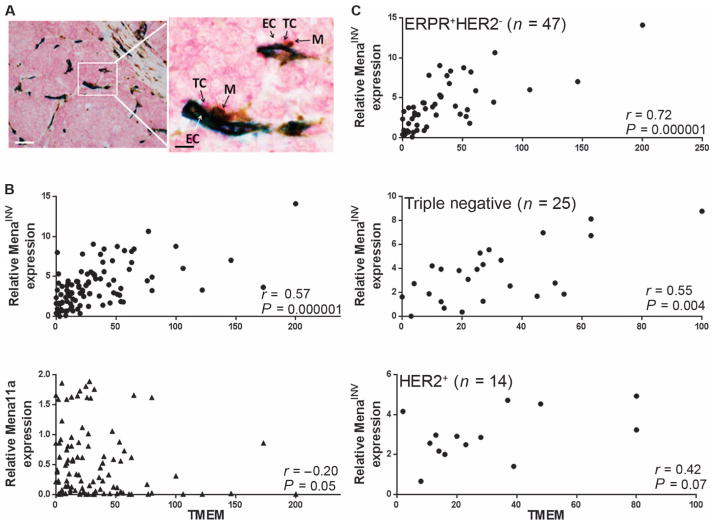
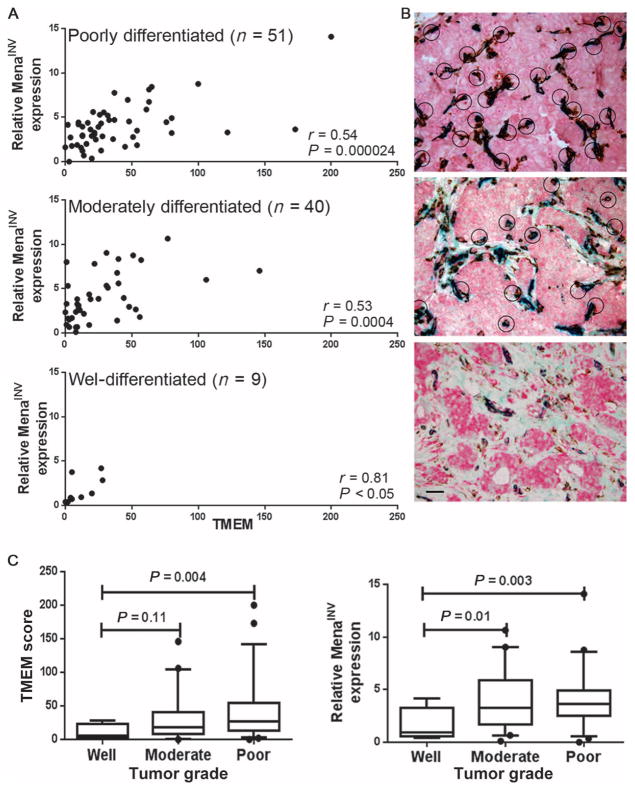
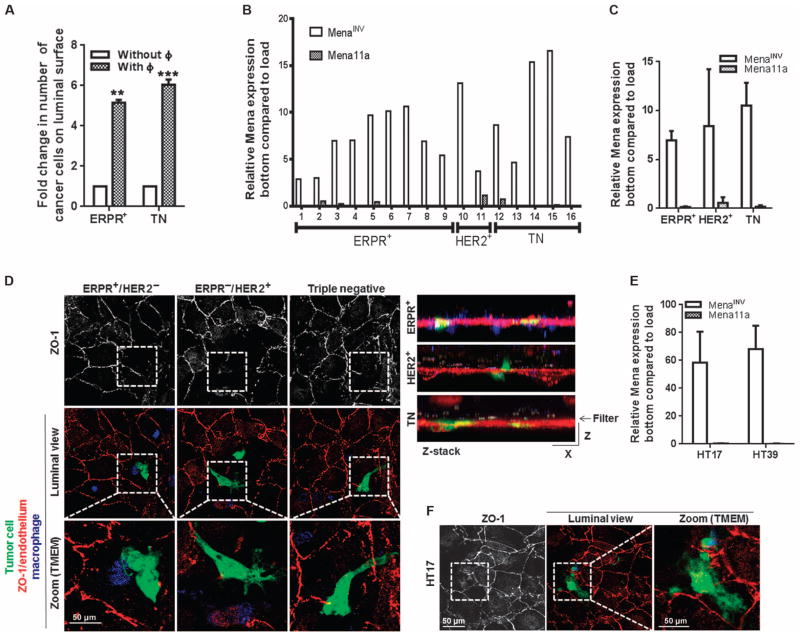
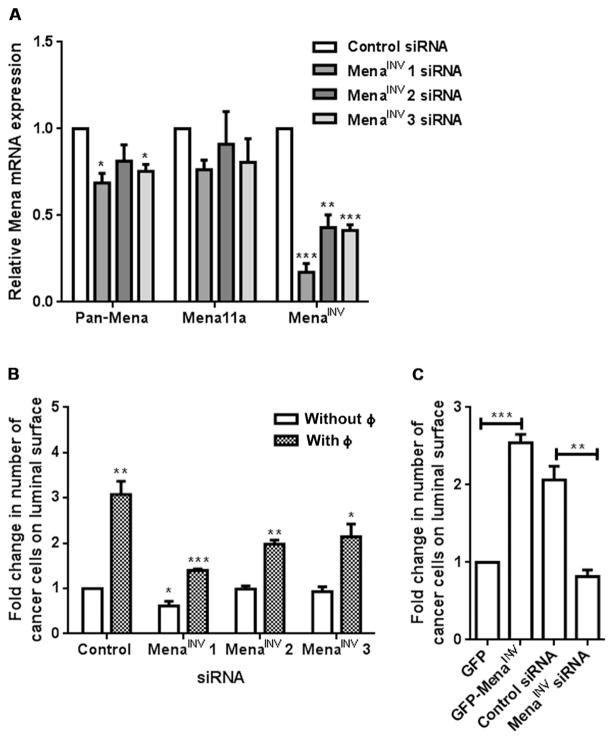
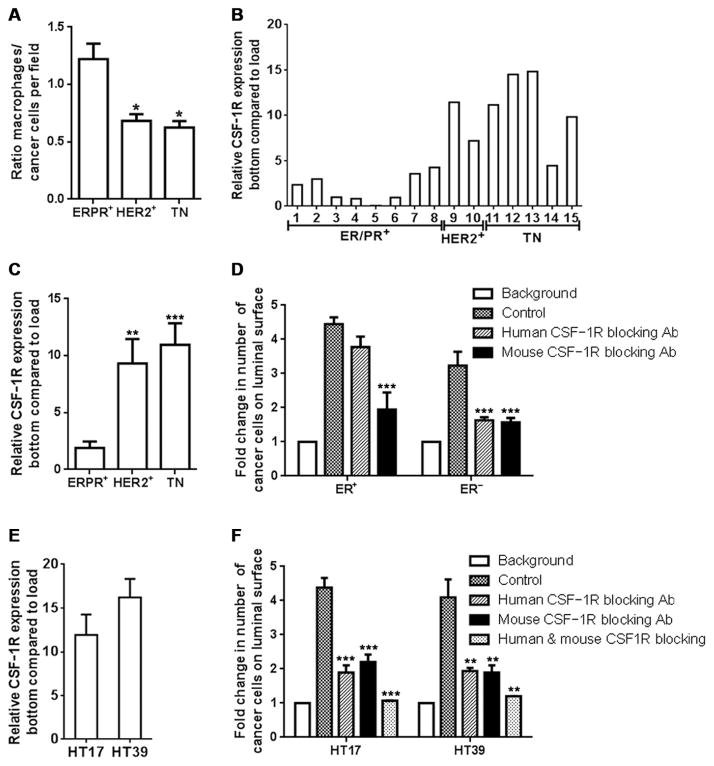
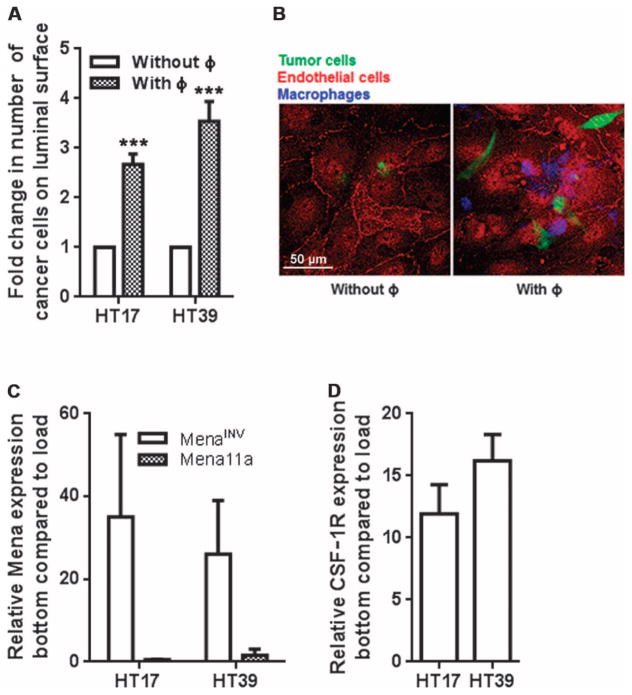
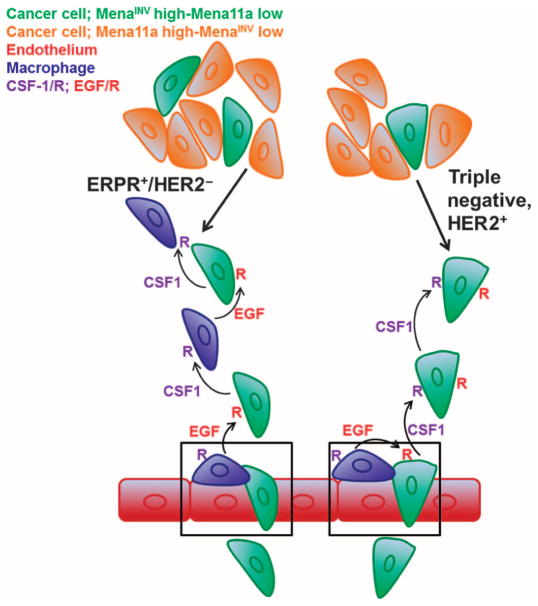
Metastasis is a complex, multistep process of cancer progression that has few treatment options. A critical event is the invasion of cancer cells into blood vessels (intravasation), through which cancer cells disseminate to distant organs. Breast cancer cells with increased abundance of Mena [an epidermal growth factor (EGF)-responsive cell migration protein] are present with macrophages at sites of intravasation, called TMEM sites (for tumor microenvironment of metastasis), in patient tumor samples. Furthermore, the density of these intravasation sites correlates with metastatic risk in patients. We found that intravasation of breast cancer cells may be prevented by blocking the signaling between cancer cells and macrophages. We obtained invasive breast ductal carcinoma cells of various subtypes by fine-needle aspiration (FNA) biopsies from patients and found that, in an in vitro transendothelial migration assay, cells that migrated through a layer of human endothelial cells were enriched for the transcript encoding Mena(INV), an invasive isoform of Mena. This enhanced transendothelial migration required macrophages and occurred with all of the breast cancer subtypes. Using mouse macrophages and the human cancer cells from the FNAs, we identified paracrine and autocrine activation of colony-stimulating factor-1 receptor (CSF-1R). The paracrine or autocrine nature of the signal depended on the breast cancer cell subtype. Knocking down Mena(INV) or adding an antibody that blocks CSF-1R function prevented transendothelial migration. Our findings indicate that Mena(INV) and TMEM frequency are correlated prognostic markers and CSF-1 and Mena(INV) may be therapeutic targets to prevent metastasis of multiple breast cancer subtypes.
Copyright © 2014, American Association for the Advancement of Science.
Figures
Comment in
-
Targeting cell-intrinsic and cell-extrinsic mechanisms of intravasation in invasive breast cancer.Sci Signal. 2014 Nov 25;7(353):pe28. doi: 10.1126/scisignal.aaa2104. Sci Signal. 2014. PMID: 25429075
References
-
- Chaffer CL, Weinberg RA. A perspective on cancer cell metastasis. Science. 2011;331:1559–1564. - PubMed
-
- Tevaarwerk AJ, Gray RJ, Schneider BP, Smith ML, Wagner LI, Fetting JH, Davidson N, Goldstein LJ, Miller KD, Sparano JA. Survival in patients with metastatic recurrent breast cancer after adjuvant chemotherapy: Little evidence of improvement over the past 30 years. Cancer. 2013;119:1140–1148. - PMC - PubMed
-
- Wang W, Wyckoff JB, Frohlich VC, Oleynikov Y, Huttelmaier S, Zavadil J, Cermak L, Bottinger EP, Singer RH, White JG, Segall JE, Condeelis JS. Single cell behavior in metastatic primary mammary tumors correlated with gene expression patterns revealed by molecular profiling. Cancer Res. 2002;62:6278–6288. - PubMed
-
- Wyckoff JB, Wang Y, Lin EY, Li JF, Goswami S, Stanley ER, Segall JE, Pollard JW, Condeelis J. Direct visualization of macrophage-assisted tumor cell intravasation in mammary tumors. Cancer Res. 2007;67:2649–2656. - PubMed
MeSH terms
Substances
Grants and funding
LinkOut - more resources
Full Text Sources
Other Literature Sources
Medical
Research Materials
Miscellaneous