


A brief elevation of serum amyloid A is sufficient to increase atherosclerosis
- PMID: 25429103
- PMCID: PMC4306683
- DOI: 10.1194/jlr.M054015
A brief elevation of serum amyloid A is sufficient to increase atherosclerosis
Abstract
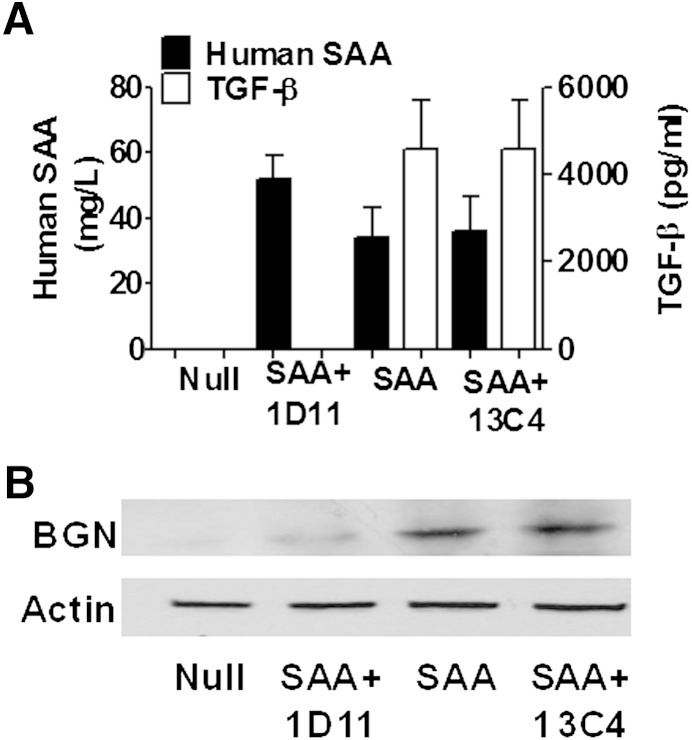
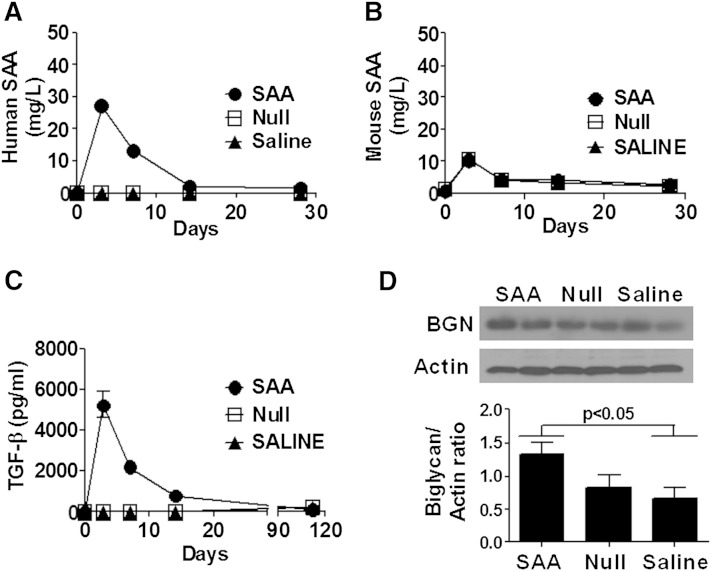
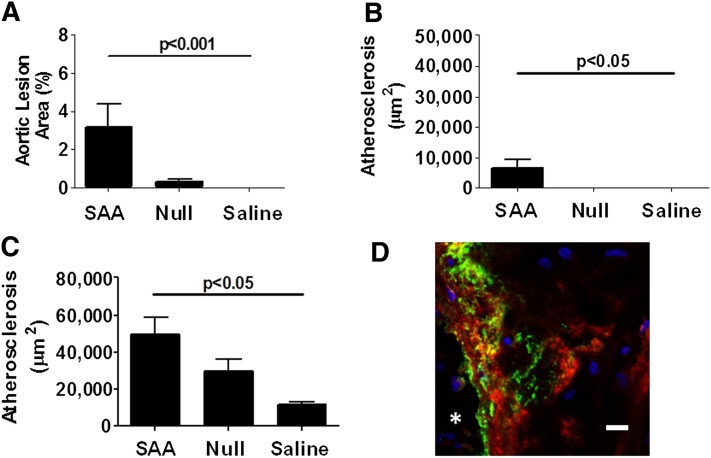
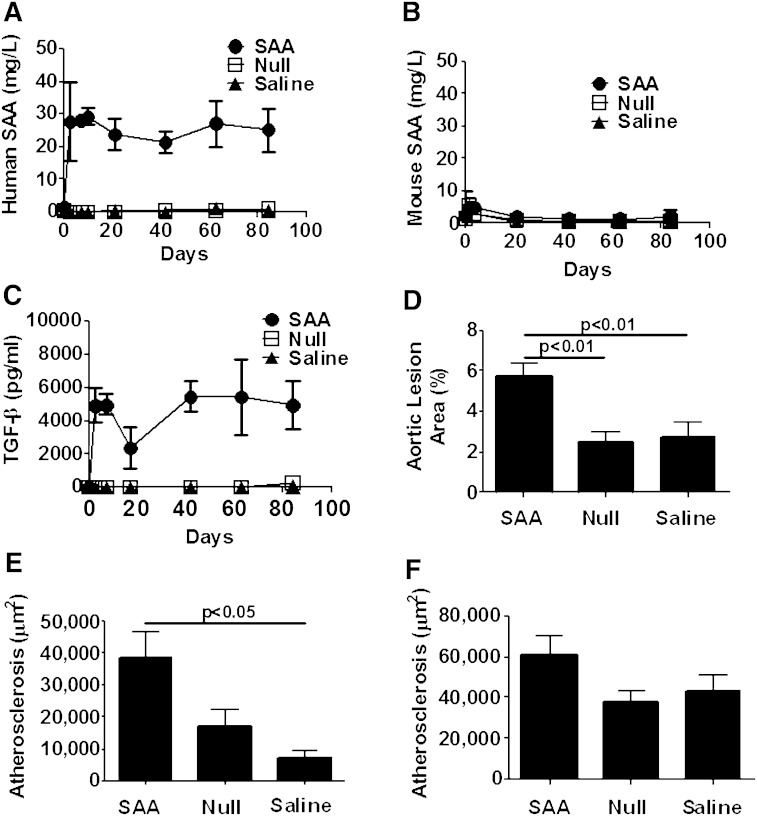
Serum amyloid A (SAA) has a number of proatherogenic effects including induction of vascular proteoglycans. Chronically elevated SAA was recently shown to increase atherosclerosis in mice. The purpose of this study was to determine whether a brief increase in SAA similarly increased atherosclerosis in a murine model. The recombination activating gene 1-deficient (rag1(-/-)) × apolipoprotein E-deficient (apoe(-/-)) and apoe(-/-) male mice were injected, multiple times or just once respectively, with an adenoviral vector encoding human SAA1 (ad-SAA); the injected mice and controls were maintained on chow for 12-16 weeks. Mice receiving multiple injections of ad-SAA, in which SAA elevation was sustained, had increased atherosclerosis compared with controls. Strikingly, mice receiving only a single injection of ad-SAA, in which SAA was only briefly elevated, also had increased atherosclerosis compared with controls. Using in vitro studies, we demonstrate that SAA treatment leads to increased LDL retention, and that prevention of transforming growth factor beta (TGF-β) signaling prevents SAA-induced increases in LDL retention and SAA-induced increases in vascular biglycan content. We propose that SAA increases atherosclerosis development via induction of TGF-β, increased vascular biglycan content, and increased LDL retention. These data suggest that even short-term inflammation with concomitant increase in SAA may increase the risk of developing CVD.
Keywords: apolipoproteins; cardiovascular disease; extracellular matrix; free-form: biglycan; lipoproteins; proteoglycans; transforming growth factor beta; vascular biology.
Figures

References
-
- Uhlar C. M., Burgess C. J., Sharp P. M., Whitehead A. S. 1994. Evolution of the serum amyloid A (SAA) protein superfamily. Genomics. 19: 228–235. - PubMed
-
- Coetzee G. A., Strachan A. F., van der Westhuyzen D. R., Hoppe H. C., Jeenah M. S., de Beer F. C. 1986. Serum amyloid A-containing human high density lipoprotein 3. Density, size, and apolipoprotein composition. J. Biol. Chem. 261: 9644–9651. - PubMed
-
- Leinonen E., Hurt-Camejo E., Wiklund O., Hulten L. M., Hiukka A., Taskinen M. R. 2003. Insulin resistance and adiposity correlate with acute-phase reaction and soluble cell adhesion molecules in type 2 diabetes. Atherosclerosis. 166: 387–394. - PubMed
-
- O’Brien K. D., Brehm B. J., Seeley R. J., Bean J., Wener M. H., Daniels S., D’Alessio D. A. 2005. Diet-induced weight loss is associated with decreases in plasma serum amyloid A and C-reactive protein independent of dietary macronutrient composition in obese subjects. J. Clin. Endocrinol. Metab. 90: 2244–2249. - PubMed
Publication types
MeSH terms
Substances
Grants and funding
LinkOut - more resources
Full Text Sources
Other Literature Sources
Medical
Miscellaneous
