


Osmotic demyelination syndrome as the initial manifestation of a hyperosmolar hyperglycemic state
- PMID: 25431711
- PMCID: PMC4241748
- DOI: 10.1155/2014/652523
Osmotic demyelination syndrome as the initial manifestation of a hyperosmolar hyperglycemic state
Abstract
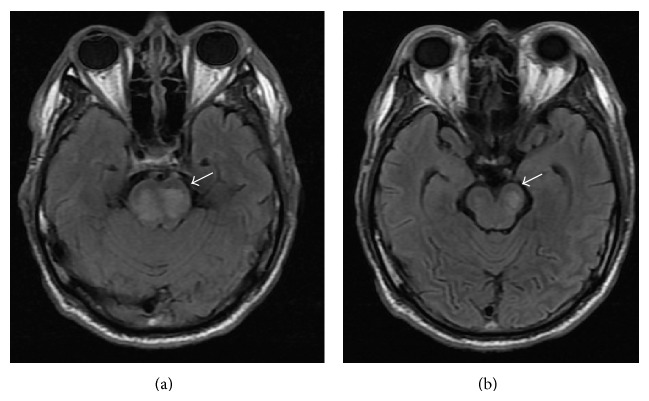
Osmotic demyelination syndrome (ODS) is a life-threatening demyelinating syndrome. The association of ODS with hyperosmolar hyperglycemic state (HHS) has been seldom reported. The aim of this study was to present and discuss previous cases and the pathophysiological mechanisms involved in ODS secondary to HHS. A 47-year-old man arrived to the emergency room due to generalized tonic-clonic seizures and altered mental status. The patient was lethargic and had a Glasgow coma scale of 11/15, muscle strength was 4/5 in both lower extremities, and deep tendon reflexes were diminished. Glucose was 838 mg/dL; serum sodium and venous blood gas analyses were normal. Urinary and plasma ketones were negative. Brain magnetic resonance revealed increased signal intensity on T2-weighted FLAIR images with restricted diffusion on the medulla and central pons. Supportive therapy was started and during the next 3 weeks the patient progressively regained consciousness and muscle strength and was able to feed himself. At 6-month follow-up, the patient was asymptomatic and MRI showed no residual damage. In conclusion, the association of ODS with HHS is extremely rare. The exact mechanism by which HHS produces ODS still needs to be elucidated, but we favor a rapid hypertonic insult as the most plausible mechanism.
Figures
References
-
- Karp B. I., Laureno R. Pontine and extrapontine myelinolysis: a neurologic disorder following rapid correction of hyponatremia. Medicine. 1993;72(6):359–373. - PubMed
LinkOut - more resources
Full Text Sources
Other Literature Sources
