


Review
doi: 10.3390/molecules191219610.
Recent advances in the chemical composition of propolis
Affiliations
- PMID: 25432012
- PMCID: PMC6271758
- DOI: 10.3390/molecules191219610
Item in Clipboard
Review
Recent advances in the chemical composition of propolis
Molecules.
.
Abstract
Propolis is a honeybee product with broad clinical applications. Current literature describes that propolis is collected from plant resins. From a systematic database search, 241 compounds were identified in propolis for the first time between 2000 and 2012; and they belong to such diverse chemical classes as flavonoids, phenylpropanoids, terpenenes, stilbenes, lignans, coumarins, and their prenylated derivatives, showing a pattern consistent with around 300 previously reported compounds. The chemical characteristics of propolis are linked to the diversity of geographical location, plant sources and bee species.
Conflict of interest statement
The authors declare no conflict of interest.
Figures
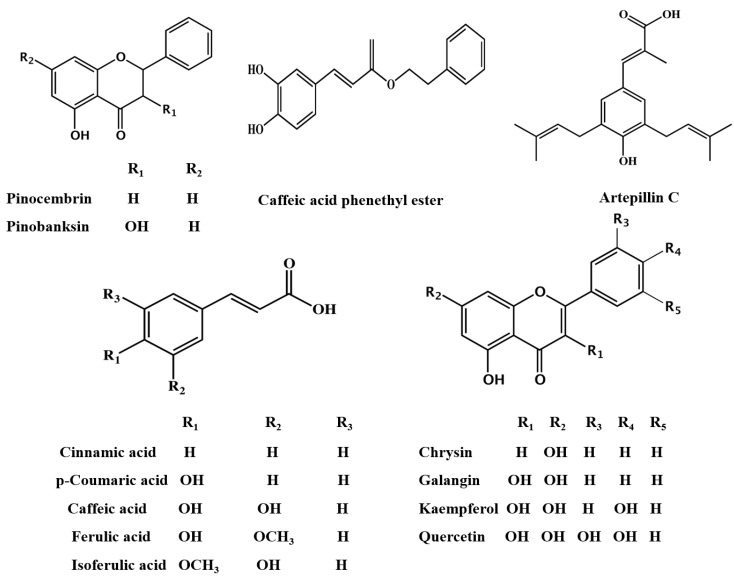
Representative chemical components in propolis.
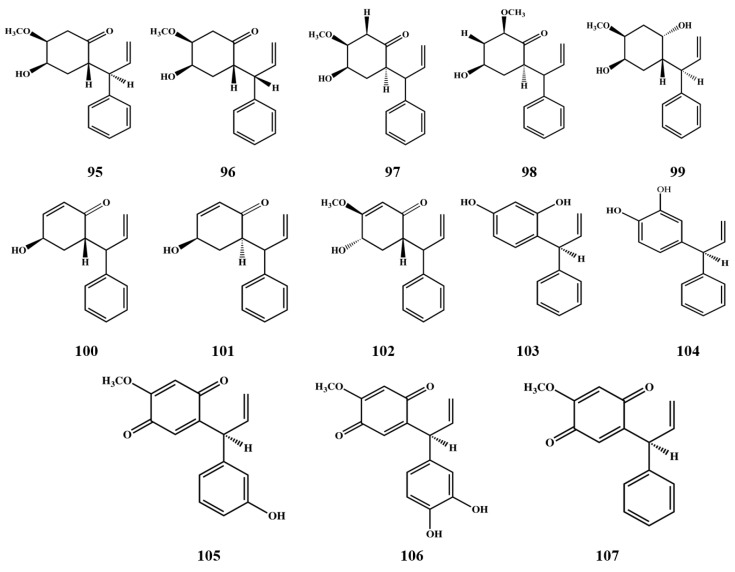
Open-chain neoflavonoids in propolis.
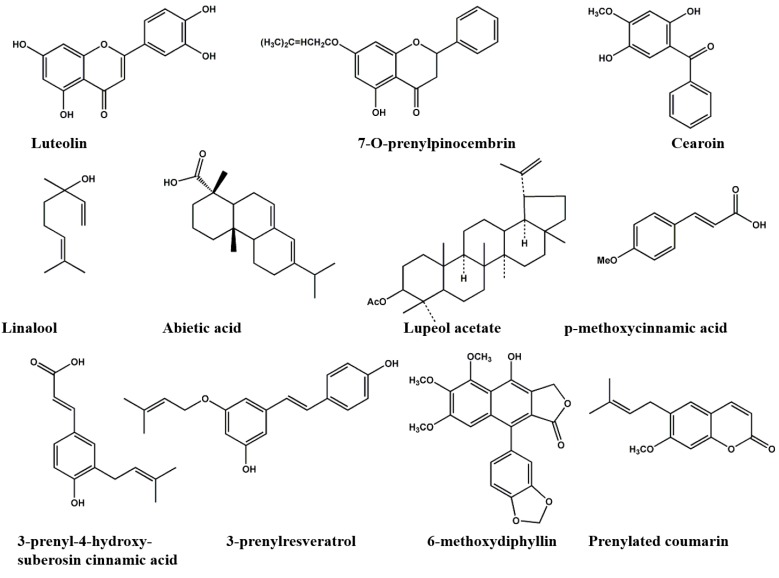
Representative chemical components identified in propolis since 2000.
References
-
- Mello B.C.B.S., Hubinger M.D. Antioxidant activity and polyphenol contents in Brazilian green propolis extracts prepared with the use of ethanol and water as solvents in different pH values. Int. J. Food Sci. Technol. 2012;47:2510–2518. doi: 10.1111/j.1365-2621.2012.03129.x. - DOI
-
- Kosalec I., Bakmaz M., Pepeljnjak S., Vladimir-Knezevic S. Quantitative analysis of the flavonoids in raw propolis from northern Croatia. Acta Pharm. 2004;54:65–72. - PubMed
-
- Bankova V.S., de Castro S.L., Marcucci M.C. Propolis: Recent advances in chemistry and plant origin. Apidologie. 2000;31:3–15. doi: 10.1051/apido:2000102. - DOI
Publication types
MeSH terms
Substances
LinkOut - more resources
Full Text Sources
Other Literature Sources
