


Levosimendan attenuates multiple organ injury and improves survival in peritonitis-induced septic shock: studies in a rat model
- PMID: 25432865
- PMCID: PMC4274679
- DOI: 10.1186/s13054-014-0652-4
Levosimendan attenuates multiple organ injury and improves survival in peritonitis-induced septic shock: studies in a rat model
Abstract
Introduction: The aim of this study was to investigate the effects of levosimendan on rodent septic shock induced by cecal ligation and puncture (CLP).
Methods: Three hours after peritonitis-induced sepsis, male Wistar rats were randomly assigned to receive an intravenous infusion of levosimendan (1.2 μg/kg/min for 10 min and then 0.3 μg/kg/min for 6 h) or an equivalent volume of saline and vehicle (5% dextrose) solution.
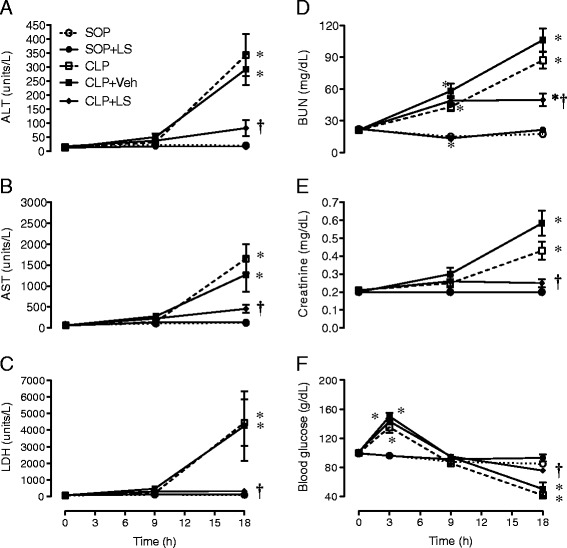
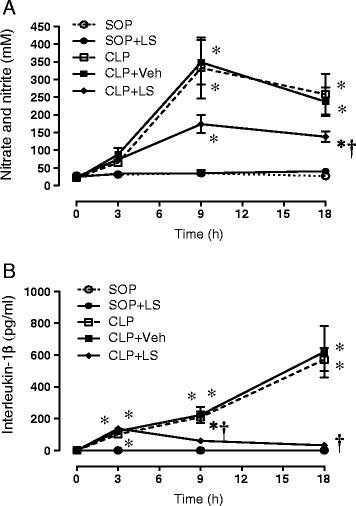
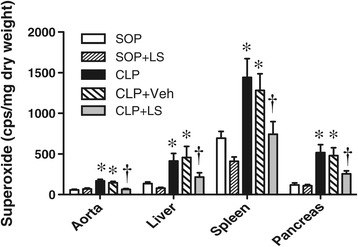
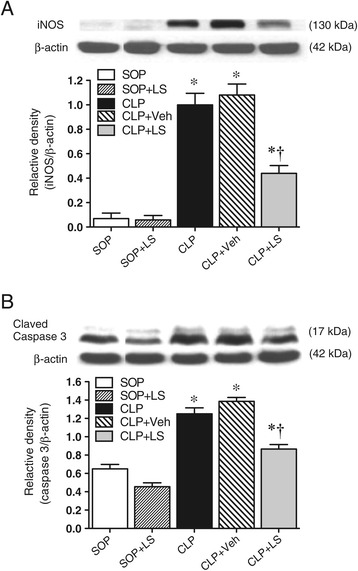
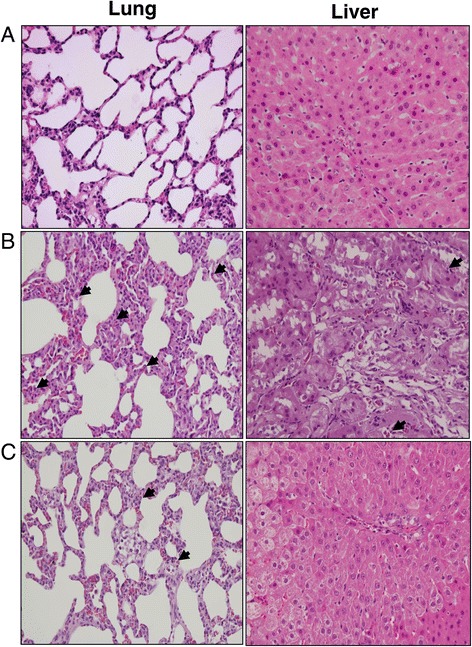
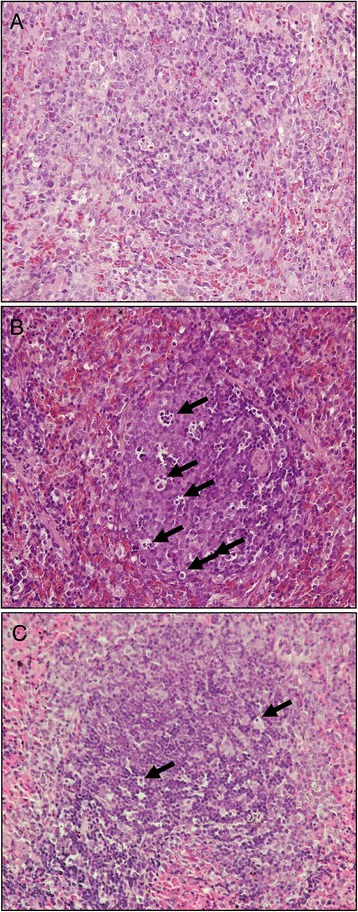
Results: The levosimendan-treated CLP animals had significantly higher arterial pressure and lower biochemical indices of liver and kidney dysfunction compared to the CLP animals (P < 0.05). Plasma interleukin-1β, nitric oxide and organ superoxide levels in the levosimendan-treated CLP group were less than those in CLP rats treated with vehicle (P < 0.05). In addition, the inducible nitric oxide synthase (iNOS) in lung and caspase-3 expressions in spleen were significantly lower in the levosimendan-treated CLP group (P < 0.05). The administration of CLP rats with levosimendan was associated with significantly higher survival (61.9% vs. 40% at 18 h after CLP, P < 0.05). At postmortem examination, the histological changes and neutrophil filtration index in liver and lung were significantly attenuated in the levosimendan-treated CLP group (vs. CLP group, P < 0.05).
Conclusions: In this clinically relevant model of septic shock induced by fecal peritonitis, the administration of levosimendan had beneficial effects on haemodynamic variables, liver and kidney dysfunction, and metabolic acidosis. (1) Lower levels of interleukin-1β, nitric oxide and superoxide, (2) attenuation of iNOS and caspase-3 expressions, and (3) decreases of neutrophil infiltration by levosimendan in peritonitis-induced sepsis animals suggest that anti-inflammation and anti-apoptosis effects of levosimendan contribute to prolonged survival.
Figures
References
-
- Ani C, Farshidpanah S, Bellinghausen Stewart A, Nguyen HB: Variations in Organism-Specific Severe Sepsis Mortality in the United States: 1999-2008.Crit Care Med 2014, in press. - PubMed
-
- ProCESS Investigators. Yealy DM, Kellum JA, Huang DT, Barnato AE, Weissfeld LA, Pike F, Terndrup T, Wang HE, Hou PC, LoVecchio F, Filbin MR, Shapiro NI, Angus DC. A randomized trial of protocol-based care for early septic shock. N Engl J Med. 2014;370:1683–1693. doi: 10.1056/NEJMoa1401602. - DOI - PMC - PubMed
-
- Zhou J, Qian C, Zhao M, Yu X, Kang Y, Ma X, Ai Y, Xu Y, Liu D, An Y, Wu D, Sun R, Li S, Hu Z, Cao X, Zhou F, Jiang L, Lin J, Mao E, Qin T, He Z, Zhou L, Du B, China Critical Care Clinical Trials Group (CCCCTG) Epidemiology and outcome of severe sepsis and septic shock in intensive care units in mainland china. PLoS One. 2014;9:e107181. doi: 10.1371/journal.pone.0107181. - DOI - PMC - PubMed
-
- Trzeciak S, Cinel I, Phillip Dellinger R, Shapiro NI, Arnold RC, Parrillo JE, Hollenberg SM, Microcirculatory Alterations in Resuscitation and Shock (MARS) Investigators Resuscitating the microcirculation in sepsis: the central role of nitric oxide, emerging concepts for novel therapies, and challenges for clinical trials. Acad Emerg Med. 2008;15:399–413. doi: 10.1111/j.1553-2712.2008.00109.x. - DOI - PMC - PubMed
Publication types
MeSH terms
Substances
LinkOut - more resources
Full Text Sources
Other Literature Sources
Research Materials
Miscellaneous
