


Familial aggregation and childhood blood pressure
- PMID: 25432901
- PMCID: PMC4476022
- DOI: 10.1007/s11906-014-0509-x
Familial aggregation and childhood blood pressure
Abstract
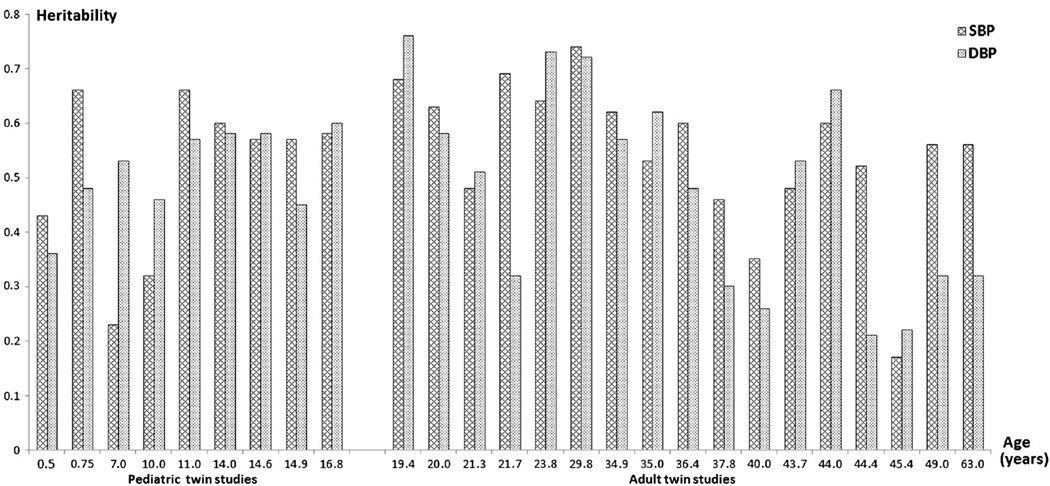
There is growing concern about elevated blood pressure (BP) in children. The evidence for familial aggregation of childhood BP is substantial. Twin studies have shown that a large part of the familial aggregation of childhood BP is due to genes. The first part of this review provides the latest progress in gene finding for childhood BP, focusing on the combined effects of multiple loci identified from the genome-wide association studies on adult BP. We further review the evidence on the contribution of the genetic components of other family risk factors to the familial aggregation of childhood BP including obesity, birth weight, sleep quality, sodium intake, parental smoking, and socioeconomic status. At the end, we emphasize the promise of using genomic-relatedness-matrix restricted maximum likelihood (GREML) analysis, a method that uses genome-wide data from unrelated individuals, in answering a number of unsolved questions in the familial aggregation of childhood BP.
Conflict of interest statement
Figures
References
-
- Din-Dzietham R, et al. High blood pressure trends in children and adolescents in national surveys, 1963 to 2002. Circulation. 2007;116(13):1488–1496. - PubMed
-
- Zinner SH, Levy PS, Kass EH. Familial aggregation of blood pressure in childhood. N Engl J Med. 1971;284(8):401–404. - PubMed
-
- Hennekens CH, et al. Aggregation of blood pressure in infants and their siblings. Am J Epidemiol. 1976;103(5):457–463. - PubMed
-
- Lee YH, et al. Familial aggregation of blood pressures of newborn infants and their mother. Pediatrics. 1976;58(5):722–729. - PubMed
Publication types
MeSH terms
Grants and funding
LinkOut - more resources
Full Text Sources
Other Literature Sources
Medical
